
The Recruitment Graph Model: Precision Headhunting via Social Media Mining
Recruitment Graph Model for Hiring Unique Competencies using Social Media Mining
This paper introduces the Recruitment Graph Model, a social media mining framework specifically designed for LinkedIn to identify candidates with unique competencies. By narrowing the search space to the professional communities of an existing "repertoire node" and applying group centrality metrics, the model efficiently recommends high-potential talent.
TL;DR
Recruiting for highly specialized "unique competencies" is often like finding a needle in a haystack. This paper proposes the Recruitment Graph Model, which leverages LinkedIn's community structure to find candidates similar to existing top performers. By focusing on local "professional communities" and evaluating candidate influence via Group Centrality, the system reduces computational overhead by over 80% while improving recommendation quality.
Problem & Motivation: The Global Search Fallacy
In modern HR, LinkedIn is the gold mine, boasting over 433 million members. However, traditional search methods suffer from two major flaws:
- Computational Explosion: Mining the entire global graph for a niche role (like a "Data Scientist" with specific domain expertise) is prohibitively slow and noisy.
- Context Blindness: Keyword matching alone doesn't account for professional influence or the "birds of a feather" principle—the idea that experts in a niche usually know other experts in that same niche.
The authors' insight is simple yet powerful: If you have an expert (the Repertoire Node) who is currently unavailable, their immediate professional community is the most statistically likely place to find a replacement with a similar skill set.
Methodology: Community-Centric Discovery
The Recruitment Graph Model follows a multi-stage pipeline to transform a massive social graph into a shortlist of high-priority candidates.
1. Identifying the Professional Sub-graph
Instead of scanning the whole network, the algorithm extracts information from the Communities that the repertoire node belongs to. This drastically prunes the search space from millions of nodes to a few hundred or thousand relevant peers.
2. Decision Tree Ranking
Candidates within these communities are filtered using a Decision Tree. The tree considers two primary features:
- Experience (Years)
- Percentage of Matching Keywords (derived from professional details like skills, patents, and publications).
3. Group Centrality: The Influence Factor
Once top candidates are ranked by similarity, the model applies Group Centrality. This metric measures how well-connected a group of recommended nodes is to the rest of the network. High group centrality implies that the candidate is not just skilled on paper, but is a recognized "influencer" or central figure within their professional circle.
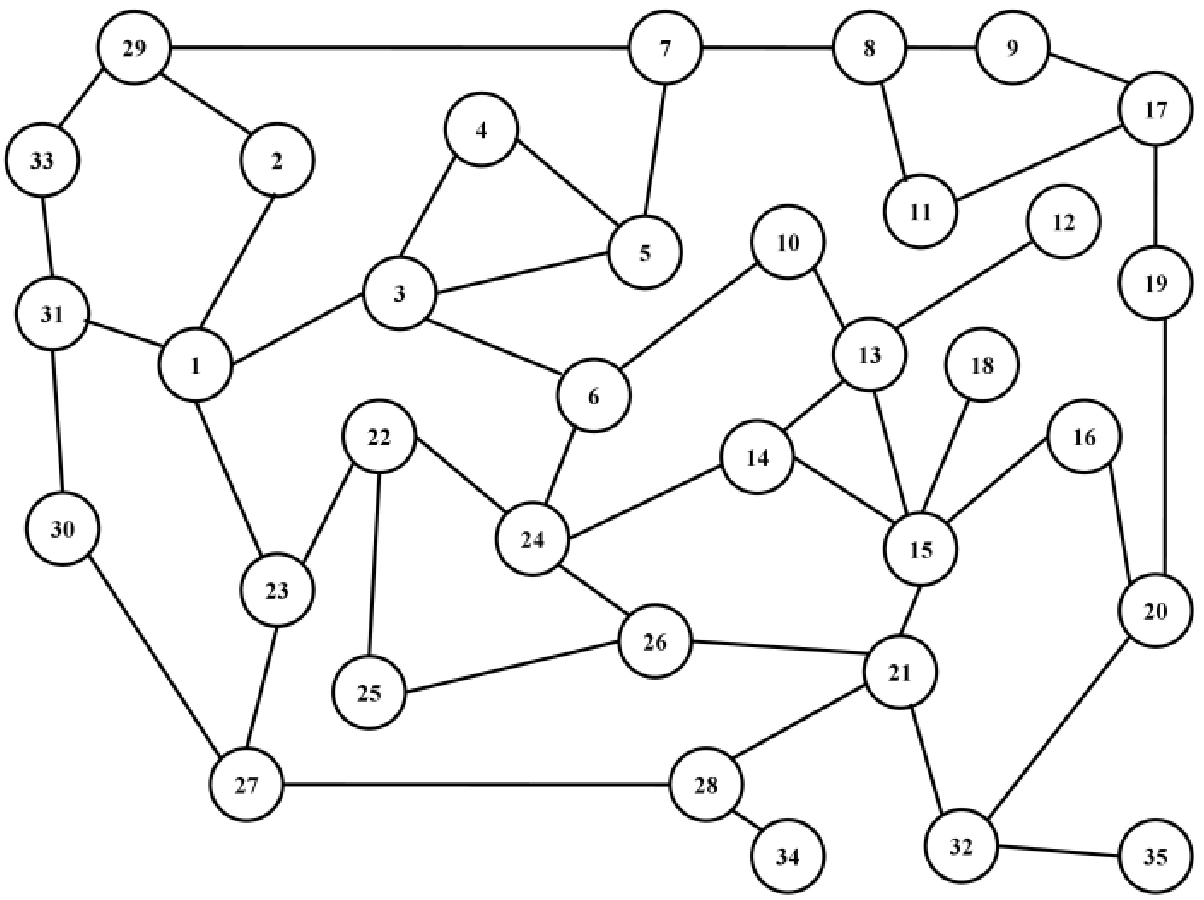 Figure 1: Representation of the LinkedIn public graph where nodes are users and edges denote connections.
Experiments & Results: Efficiency Gains
The authors compared their community-based approach against a traditional "all-node" processing method. Utilizing Python and libraries like snap and sklearn, they tested scaling performance.
| Number of Nodes | Global Processing (s) | Community Processing (s) | Improvement |
|---|---|---|---|
| 500 | 7.536 | 1.221 | ~84% |
| 1000 | 15.515 | 2.445 | ~84% |
| 2000 | 31.287 | 5.436 | ~83% |
The data clearly shows that the time complexity is reduced significantly, making real-time recruiter suggestions feasible even as the database grows.
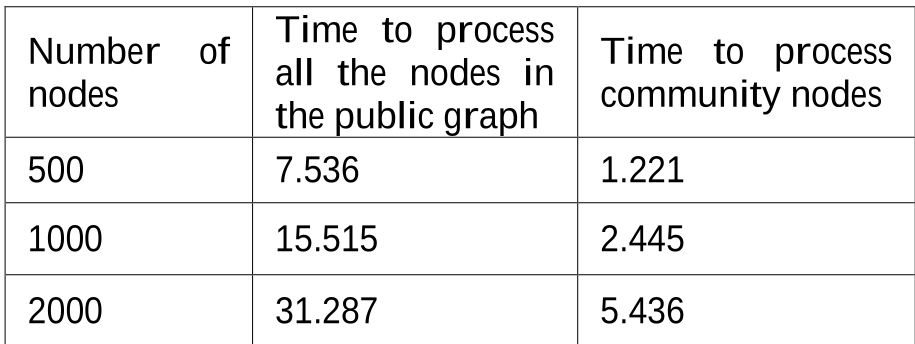 Table 6: Comparison of processing times showing the superiority of the community-based approach.
Critical Analysis & Conclusion
Takeaway
The Recruitment Graph Model proves that for specialized hiring, local context beats global volume. By leveraging the sociological structure of professional networks (communities), HR tools can become faster and more accurate.
Limitations & Future Work
While effective, the model relies heavily on the quality of a single "repertoire node." If the starting node is an outlier, the recommendations may be skewed. Future iterations could benefit from:
- Multi-seed starting: Using a group of experts to define the search space.
- Dynamic Weighting: Incorporating temporal data (e.g., how recently a skill was used).
- NLP Integration: Moving beyond basic keyword matching to semantic understanding of experience.
In conclusion, this research provides a scalable blueprint for building the next generation of "Intelligent Headhunting" tools that understand the social fabric of expertise.