
RFI-CNN: Bridging Temporal Drift and Spatial Variation in CMP Virtual Metrology
Recurrent feature-incorporated convolutional neural network for virtual metrology of the chemical mechanical planarization process
This paper introduces RFI-CNN (Recurrent Feature-Incorporated Convolutional Neural Network), a deep learning-based Virtual Metrology (VM) model for the Chemical Mechanical Planarization (CMP) process. By integrating LSTM and CNN architectures, the model achieves SOTA performance in predicting wafer edge thickness under nonlinear process drift.
TL;DR
Wait-to-wait variation and equipment drift are the "silent killers" of yield in semiconductor manufacturing. This paper presents RFI-CNN, a hybrid deep learning architecture that fuses LSTM (for time-series drift) and CNN (for wafer-specific features). Tested on real fab data, it slashes process variability by 8.48% over classical methods, offering a robust path for Advanced Process Control (APC).
The Invisible Challenge: Nonlinear Process Drift
In Chemical Mechanical Planarization (CMP), the goal is perfect flatness. However, two things change constantly:
- Equipment Drift: Polishing pads wear out and slurry chemistry shifts over thousands of wafers (Long-term).
- Wafer-to-Wafer Variation: Subtle changes in recipe execution for individual wafers (Short-term).
Standard linear models (like Regression) and even simple Non-linear models (like SVR) struggle because they either ignore the time-series nature of the drift or overfit to recent noise. The authors identified that a successful Virtual Metrology (VM) model must be "time-aware" without losing its ability to analyze the current wafer's unique trace data.
Methodology: The RFI-CNN Architecture
The core innovation lies in the Recurrent Feature-Incorporated CNN (RFI-CNN). Instead of using a single network, the authors split the labor:
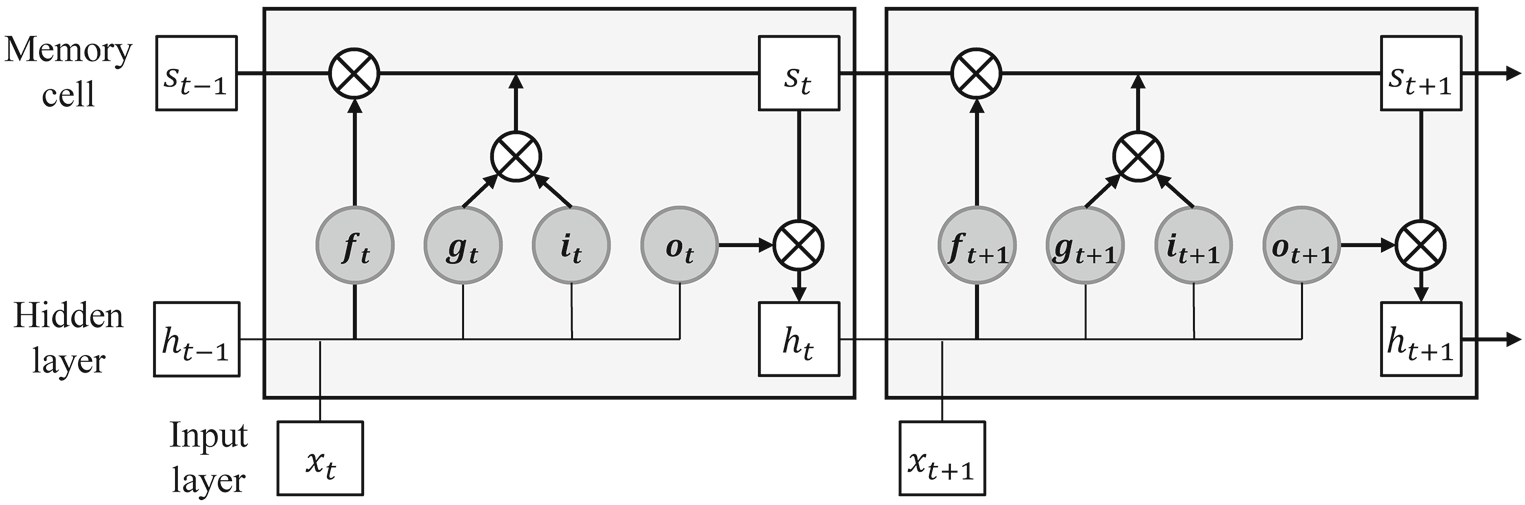
- The RNN Part (LSTM): Processes previous time steps to generate a "drift vector." It understands the equipment's current state of wear.
- The CNN Part: Takes the raw input of the current wafer and the drift vector from the RNN. It applies convolutional filters to find spatial patterns and correlations between the recipe and the drift state.
- Two-Stage Training: Instead of standard end-to-end backpropagation, they use a decoupled training approach. The RNN is trained first to ensure it learns meaningful process patterns before the CNN begins optimizing for specific thickness predictions.
Why Two-Stage Training?
The authors found that end-to-end training actually restricted the RNN's ability to learn long-term patterns. By using the two-stage method, the RNN focuses on mapping sequences to historical outputs, while the CNN focuses on the final prediction. This synergy resulted in a 2.36% improvement in SD over standard end-to-end methods.
Experimental Mastery
The model was validated using massive datasets (over 20,000 wafers) from two identical tools (C1 and C2).
Performance Comparison
| Model | SD (Variability) | MSE (Accuracy) |
|---|---|---|
| Baseline (Current Fab APC) | 322.02 | 107,202 |
| Elastic Nets (Best ML) | 246.93 | 60,990 |
| RFI-CNN (Proposed) | 225.99 | 51,083 |
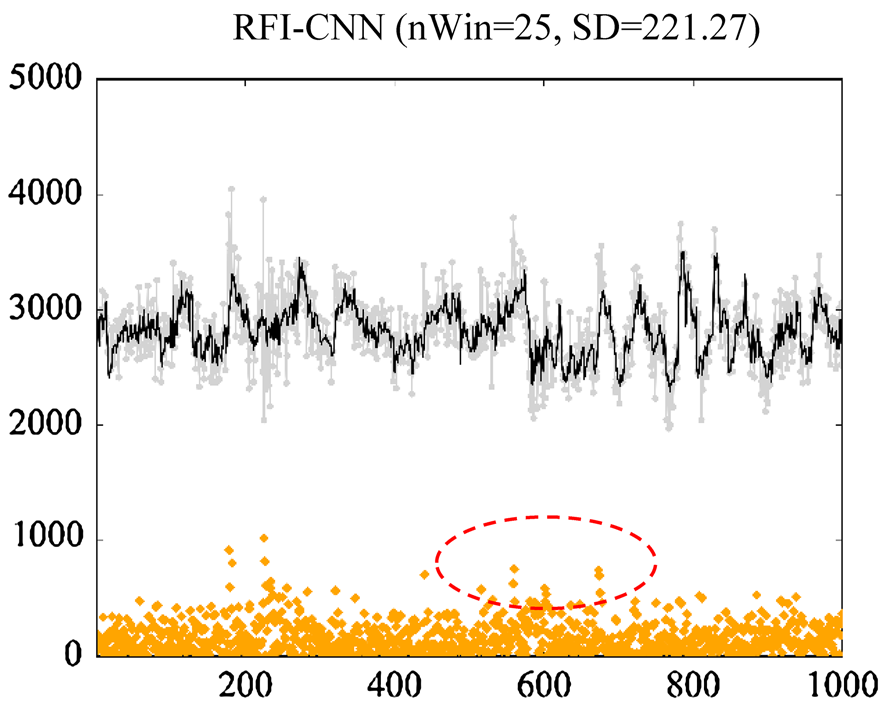
As shown in the prediction plots, linear models like MLR and Elastic Nets frequently "miss" the peaks and troughs of the process drift. RFI-CNN, however, tightly tracks the IM (Integrated Metrology) measurements, even when the drift enters non-linear phases.
Critical Analysis & Conclusion
RFI-CNN represents a significant leap from "black-box" machine learning to architectural-aware deep learning in manufacturing. By acknowledging that process data is both a sequence (time) and a snapshot (feature), the authors created a model that is both stable and highly accurate.
Limitations:
- Computational Cost: Deep learning models are heavier than Elastic Nets. The authors suggest a "fine-tuning" strategy to mitigate re-training time.
- Hyperparameter Sensitivity: The choice of window size () remains critical; too large a window makes the model sluggish to sudden shifts, while too small causes overfitting.
Future Outlook: The logical next step is exploring Attention Mechanisms (Transformers) to replace LSTMs, potentially capturing even longer-range dependencies without the vanishing gradient issues of RNNs. Furthermore, adaptive window sizing based on "drift-cycle detection" could lead to an even more autonomous APC system.