
RwP: Neutralizing Location Inference in Geo-Social Commerce
Redeem with privacy (RWP): privacy protecting framework for geo-social commerce
The paper introduces Redeem with Privacy (RwP), a privacy-protecting framework for Geo-social networks (GSNs) that secures user location data during merchant deal redemptions. It combines a "Minimum Information Disclosure" mechanism with a recommendation engine to prevent merchants from inferring suppressed check-in histories.
TL;DR
The Redeem with Privacy (RwP) framework addresses a critical vulnerability in Geo-social networks: the "Check-in for Discounts" trap. While users enjoy financial incentives, merchants gain a dangerous window into their private lives. RwP solves this by disclosing only the absolute minimum data required for a transaction and using a Recommendation Engine to guide user behavior into patterns that are mathematically "invisible" to common data mining-based inference attacks.
Context: The Hidden Cost of "Mayorship"
In the ecosystem of GSNs (Geo-social Networks), the "deal" is the primary currency. A user checks in five times to receive a 30% discount. Simple, right? However, behind this convenience lies a major privacy leak. Once a merchant receives your check-in history, they don't just see a customer; they see a predictable mathematical pattern. Previous research (Cho et al.) proved that human mobility is highly periodic. By owning your check-in list, a merchant—or a third party they sell it to—can predict where you will be tomorrow with alarming accuracy.
The "Minimum Information" Mirage
The authors first attempt a logical solution: Data Suppression. If a deal requires 5 check-ins (M=5), the framework only shows the 5th (the purchase day) and tells the merchant "Trust us, they did the other 4."
But is suppression enough? The answer is a resounding NO. The authors built three "Adversary Engines"—including a Markov Model (MM) and a Smart Apriori Engine—to see if they could "guess" the suppressed dates.
- The Result: On the Gowalla and Brightkite datasets, the Apriori engine recovered the "hidden" check-ins with ~59% accuracy.
- The Insight: Because you usually visit a coffee shop or gym on a routine (e.g., "Mondays and Thursdays"), a simple algorithm can fill in the blanks you tried to hide.
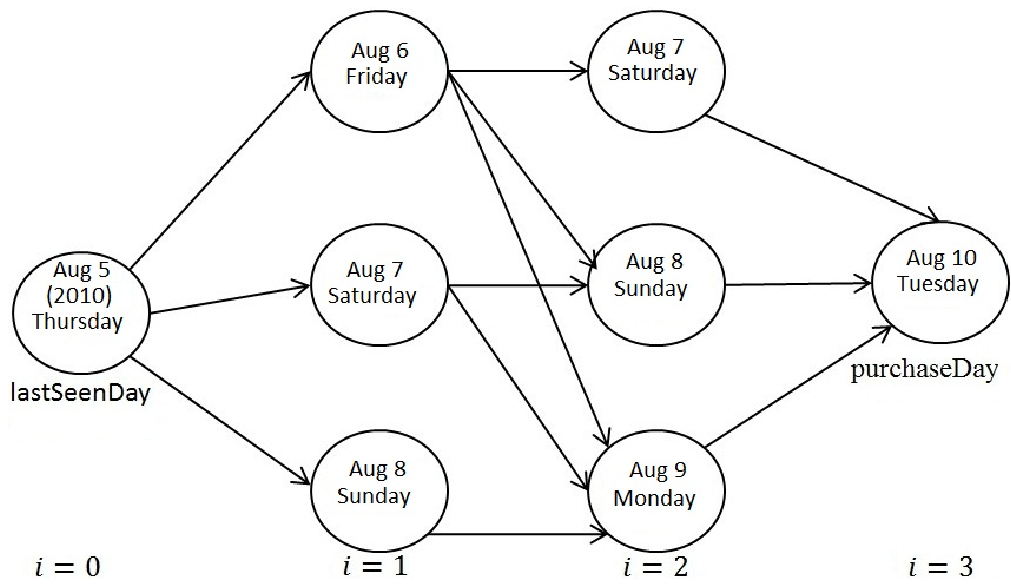 Figure 1: Potential candidate date sequences an adversary evaluates to fill in suppressed gaps.
The Core Innovation: Recommendation as a Privacy Shield
If behavior is predictable, the solution is to change the behavior. RwP introduces a Recommendation Engine that doesn't just block data; it suggests when you should check in.
How it Works (The Math of Divergence)
The engine maintains two sets of probabilities for your mobility:
- (Real Probability): Your actual habits.
- (Adversary’s Belief): What the merchant thinks your habits are based on limited data.
The engine calculates a weight: . It then recommends a sequence of check-in dates that maximizes this difference. By following these suggestions, you are essentially "gaslighting" the merchant’s AI. You appear to be following a new routine that contradicts the adversary's predictive model.
Experimental Results: Breaking the Inference
The effectiveness of RwP is staggering. When users redeemed deals randomly, the adversary was quite successful. But once the Recommendation Engine took over:
- Adversary Accuracy (Original): ~59%
- Adversary Accuracy (With RwP): 9.63%
Essentially, the merchant's ability to track or predict the user's next visit was reduced to nearly zero—lower even than a random-guess baseline.
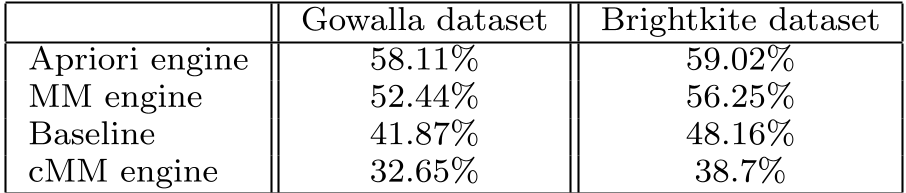 Table 1: Accuracy comparison showing the failure of inference engines against RwP-guided behavior.
Critical Analysis & Future Outlook
Takeaway
RwP shifts the privacy paradigm from "Defensive Blocking" to "Active Obfuscation." It proves that in an era of Big Data and SOTA machine learning, hiding data isn't enough; we must manipulate the statistical signals we leave behind.
Limitations
- User Friction: The framework assumes users are willing to visit stores on "recommended" days rather than whenever is most convenient.
- Trust in GSN: The framework requires the GSN provider (the middleman) to be fully trusted, as they hold the key to all data.
The Future
As we move toward Decentralized Social Networks, the role of RwP could evolve into a local agent on a user's phone, managing multiple personas and check-in identities across platforms, ensuring that the "Physical Internet" becomes just as private as an encrypted chat.
Conclusion
RwP is a sophisticated answer to the "Geo-social Privacy Paradox." It provides the financial benefits of commerce without the high cost of location-tracking, proving that with the right algorithms, we can indeed "Redeem with Privacy."