
REENACT: Transforming Historical Learning into an Immersive AR Experience
REENACT: A step forward in immersive learning about Human History by augmented reality, role playing and social networking q
The paper introduces REENACT, a technology-enhanced pedagogical framework that utilizes Augmented Reality (AR), role-playing games (RPG), and social networking to teach Human History. Validated through the Battle of Thermopylae in collaboration with the Foundation of the Hellenic World, the system transforms historical learning into an immersive, multi-stage collective experience.
TL;DR
The REENACT project represents a significant shift in historical education, moving away from rote memorization toward a three-stage immersive experience. By blending handheld Augmented Reality (AR), localized role-playing, and expert-led debates, the system allows participants to "live" historical events—specifically the Battle of Thermopylae—and then critically analyze their choices against the actual records of historians.
Background Positioning
In the landscape of Technology-Enhanced Learning (TEL), REENACT sits at the intersection of Ubiquitous Computing and Collaborative Learning. Unlike purely virtual simulations, it emphasizes "in-person" social dynamics, using technology as a layer over the physical world rather than a replacement for it.
Problem & Motivation: Beyond "Dates and Names"
The authors argue that traditional history teaching is fundamentally flawed. It often simplifies the "why" behind conflicts, ignoring the complex web of alliances, supply chains, and tactical terrain advantages. Worse, cinematic portrayals (like the movie 300) perpetuate myths of "superhuman" warriors versus "abnormal" villains.
The insight behind REENACT is that Empathy + Agency = Deeper Understanding. By forcing a student to choose whether to guard a secret mountain pass (as the Greeks did) or attempt a bribe (as the Persians did), the history stops being a story and starts being a problem-solving exercise.
Methodology: The Three Pillars of REENACT
The system operates in a structured workflow designed to move the user from subjective action to objective reflection.
1. Reenactment (The "Inside" View)
Participants use Android tablets to assume roles (e.g., King Leonidas, Xerxes, or a simple phalanx soldier). They move between physical zones marked with QR codes.
- AR Visuals: Scanning markers triggers 3D models of camps or ancient walls.
- Interactivity: "Fighting" is simulated by shaking the device or engaging in AR duels.
- Branching Scripts: The battle can actually diverge from history (e.g., if Xerxes kills the traitor Ephialtes), providing "what-if" scenarios.
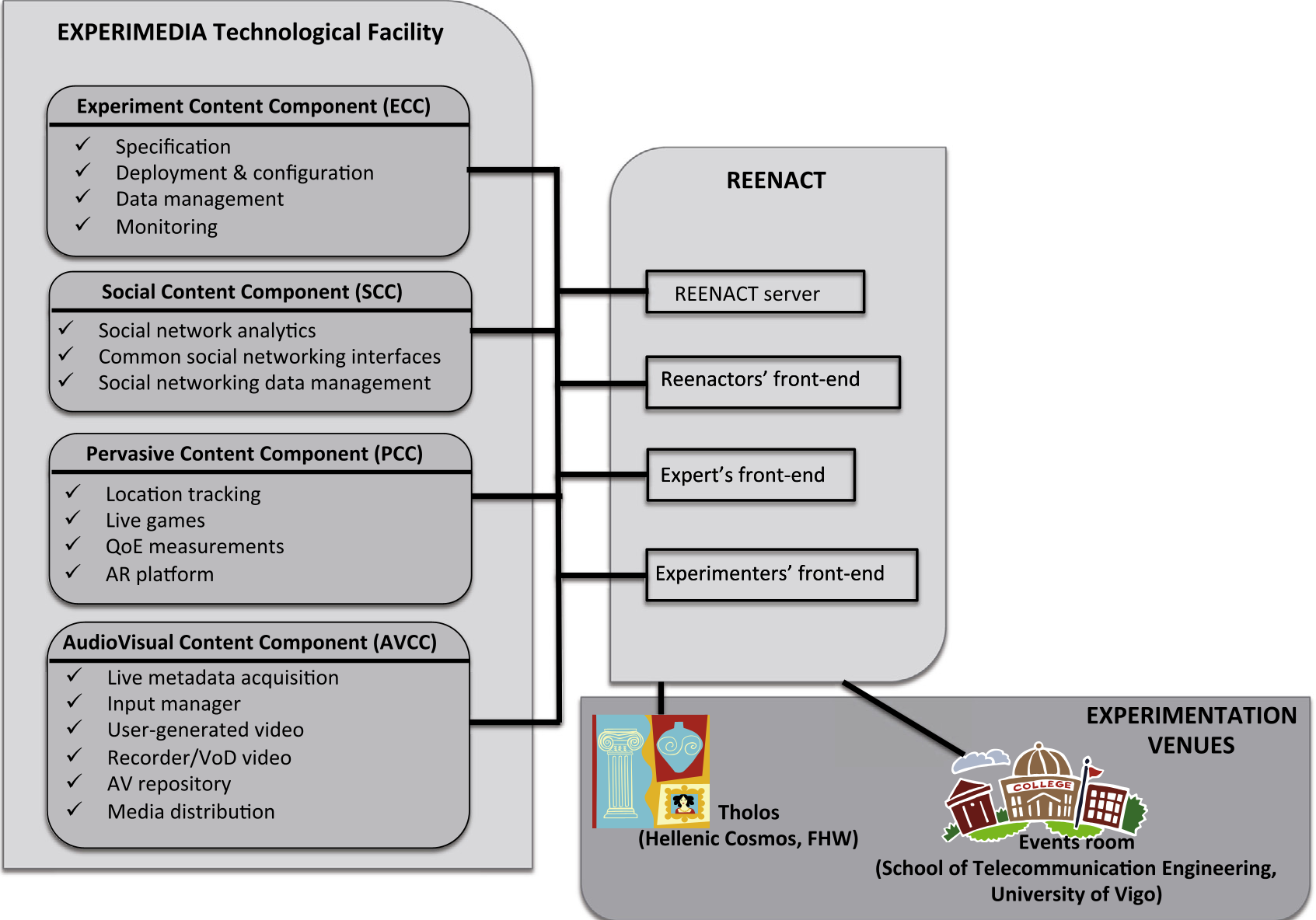 Figure 1: The REENACT technical ecosystem linking the server, experts, and participants.
2. Replay (The "Outside" View)
Participants move to a projection room where an expert (remote or local) replays their movements. This stage uses a Smart Agent to find multimedia content that matches the specific actions participants took, highlighting where their "fake" history deviated from the "real" history.
3. Debate (The "Consequence" View)
Finally, the "Social Room" interface allows for a facilitated brainstorming session. Users vote on "Counter-factual history" questions, such as: "Would science have developed differently if the Persians had won?"
Experimental Results & Critical Analysis
The system was trialed at the Hellenic Cosmos in Athens and the University of Vigo.
- Performance: Despite the complexity of the AR components (Metaio framework), the system maintained solid Quality of Service.
- Engagement: Users rated the "360° views" (4.6/5) and "Reenactment Game" (4.4/5) as the most valuable features.
- Social Dynamics: Interestingly, "Quality of Community" data showed that while strangers kept their physical distance during the game, they were actually more positive toward each other in the digital rating/debate phase than acquaintances were (74% vs 61% positive ratio).
 Table 1: User Experience (QoE) ratings showcasing high educational potential.
Critical Insight & Future Outlook
The core value of REENACT is its modular state-machine architecture. By separating the "logic" of the battle from the "content" (images/3D models), the authors have created a framework that could theoretically be applied to any historical event—from the French Revolution to the Space Race.
Limitations:
- Idle Time: The study found that secondary roles (like soldiers) often felt "idle" while leaders made decisions. Future iterations must ensure "micro-tasks" to keep all users engaged.
- Hardware Barriers: The 2014-era tech suffered from 20-second AR loading times; modern WebXR or ARCore technologies would likely solve this today.
Conclusion: REENACT proves that history shouldn't just be read—it should be reenacted, replayed, and debated. It provides a blueprint for museums transitioning from passive galleries to active "Experience Centers."