
Beyond Co-Authorship: How Social Network Position Dictates Engineering Research Impact
A regression analysis of researchers’ social network metrics on their citation performance in a college of engineering
This study investigates the impact of social network metrics (centrality, tie strength, clustering) on the research performance (h-index) of 100 engineering faculty members. By constructing four distinct networks—communication, joint publications, grant proposals, and patents—using self-reported data and Poisson regression, it reveals that scientific impact is significantly driven by a researcher's position within multiple collaborative spheres.
TL;DR
Is your research impact defined only by what you publish? This study argues "no." By analyzing 100 engineering faculty members, researchers found that your position in communication, grant-seeking, and patenting networks is just as vital as your co-authorship list. Crucially, it status that connecting with "academic superstars" (high Eigenvector Centrality) significantly boosts your h-index, debunking previous theories that such connections might hinder performance.
The "Invisible College" Problem
For decades, we have measured scientific collaboration through the lens of co-authorship. But as any academic knows, a paper is often the end of a long road of informal chats, failed grant proposals, and coffee-room brainstorms. Prior work often missed these "invisible" ties. Furthermore, some studies suggested that being around too many "big shots" could actually hurt a young researcher's visibility. This paper sets out to prove that these informal and multi-layered connections are the true engine of scientific success.
Methodology: Mapping the Multi-Layered Network
The researchers didn't just scrape Google Scholar. They went door-to-door (and inbox-to-inbox) in a College of Engineering to collect self-reported data on four specific networks:
- Communication: Who do you talk to about ideas?
- Joint Publications: The classic co-authorship tie.
- Grant Proposals: Who are you asking for money with?
- Patents: Who are you inventing with?
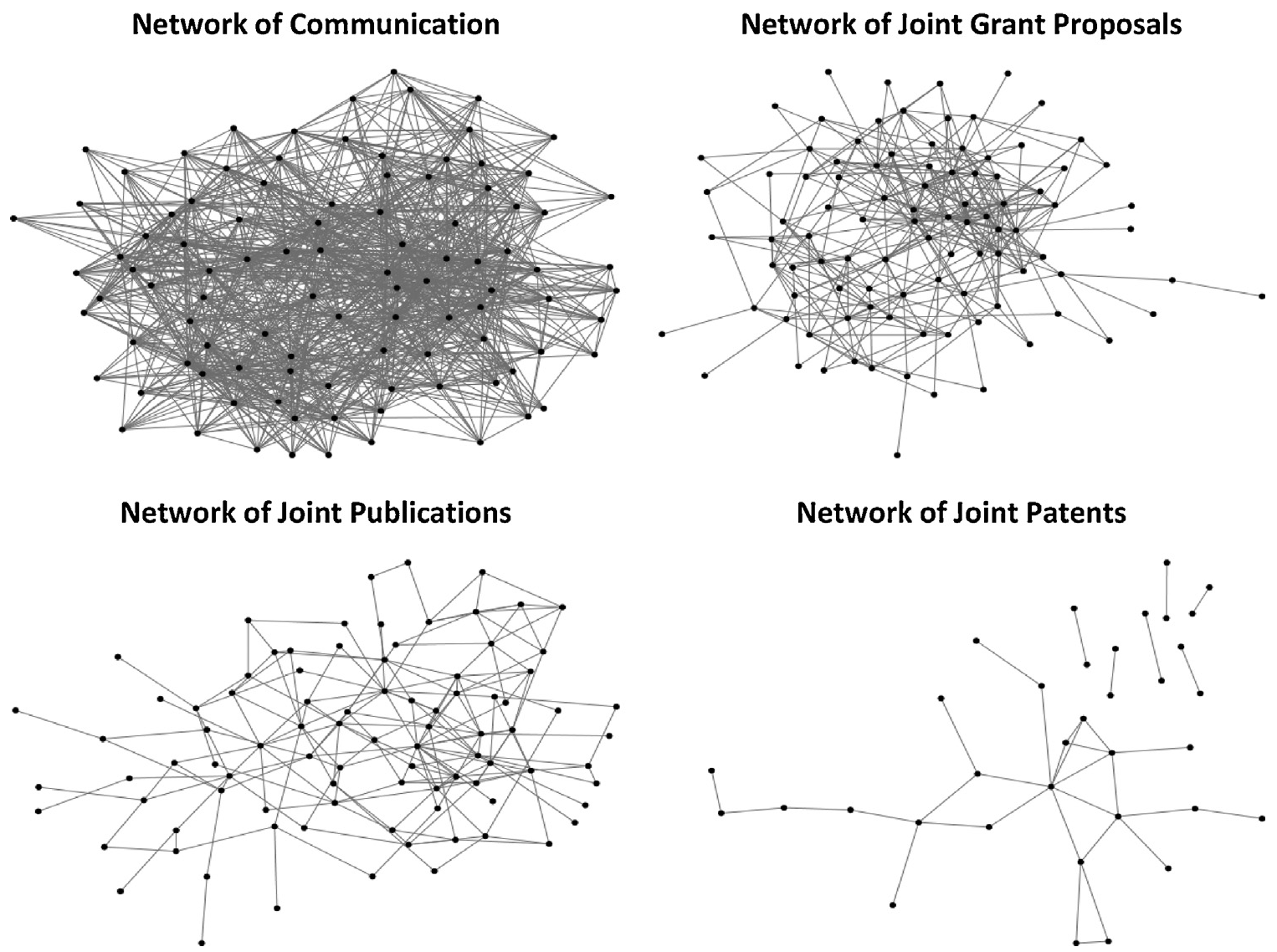 Figure 1: Comparison of the four networks. Notice how the Communication network (a) is significantly denser than the Patent network (d).
Key Insight: The Power of Prestige
The most striking finding involves Eigenvector Centrality. In social network theory, this isn't just about how many people you know (Degree Centrality), but how well-connected the people you know are.
While earlier studies suggested that "superstar" connections might shadow or limit a researcher, this study found the opposite. In the College of Engineering:
- Eigenvector Centrality was a significant positive predictor of h-index across all four networks.
- Closeness Centrality (being "few handshakes away" from everyone else) also showed a universal positive impact.
This suggests that in engineering, being part of a high-status "inner circle" facilitates better information flow, resource access, and ultimately, higher citation counts.
The Diversity Gap: A Sobering Result
The study also integrated demographic variables, revealing a persistent and significant gender gap. Even when controlling for network position, female researchers were expected to have a 29% to 55% lower h-index than their male colleagues. This suggests that structural or systemic biases remain that social networking alone cannot bridge.
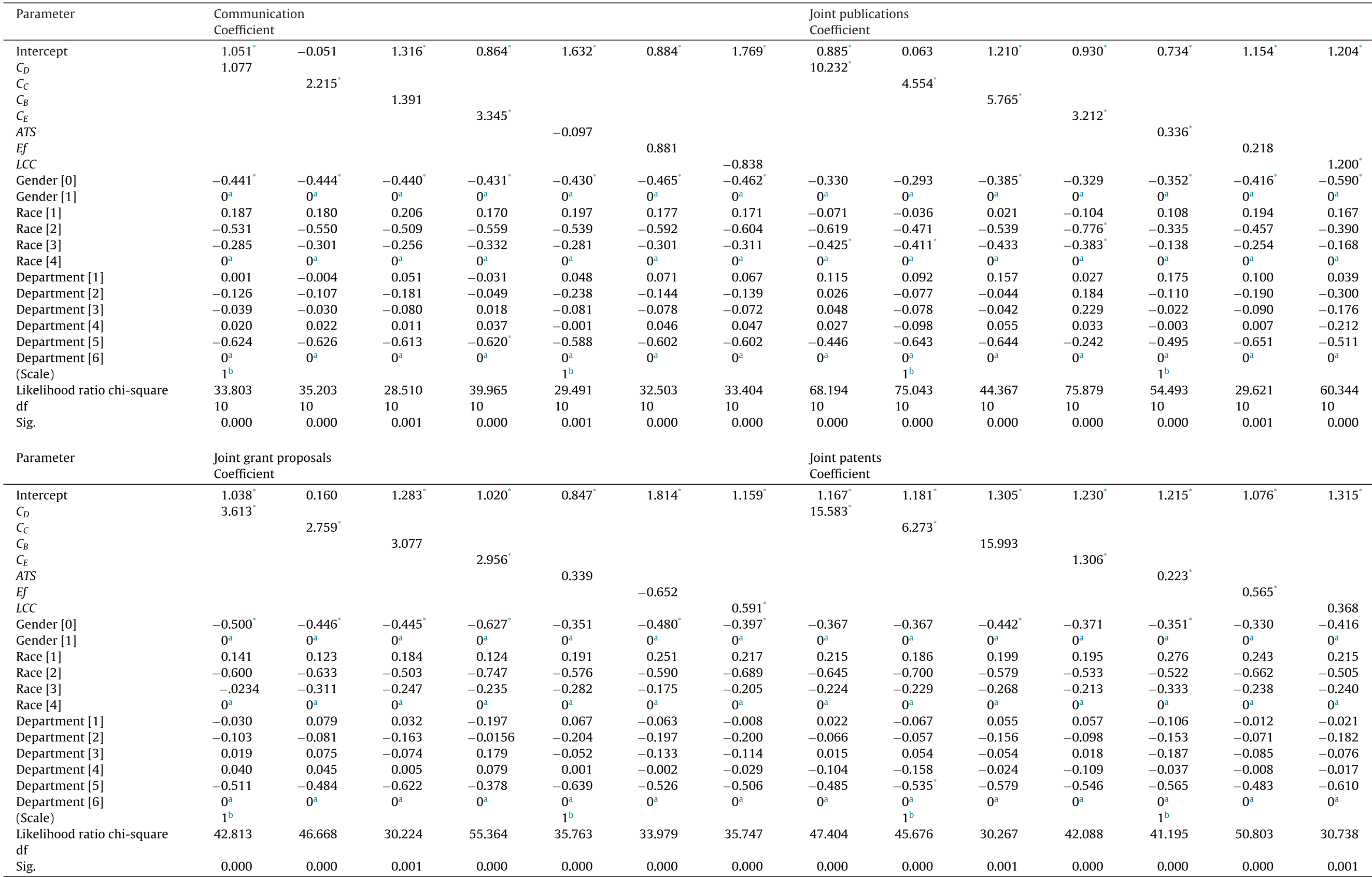 Table 8: The regression coefficients highlight the strong positive impact of Eigenvector Centrality (CE) and the negative coefficient for Gender (0 = Female).
Conclusion and Actionable Takeaways
The findings provide a clear roadmap for both researchers and university administrators:
- For Researchers: Don't just focus on the paper. Invest in the "pre-collaboration" phase—communicate and draft grants with well-connected peers. Your "prestige" by association is a quantifiable driver of impact.
- For Admins: Promote inter-departmental mixers and "seed grants" that force researchers to expand their communication networks.
- Limitations: The study is limited to a single College of Engineering. Humanistic disciplines, where single-author work is the norm, likely operate under very different network dynamics.
In the modern academy, your h-index is a reflection of your social capital. To be cited, you first need to be heard within the right circles.