
Beyond Viral: How Reinvention and Weak Ties Drive Critical Mass in Social Networks
Exploring the effect of reinvention on critical mass formation and the diffusion of information in a social network
This paper explores information diffusion by integrating Diffusion of Innovations (DOI) and Critical Mass Theory (CMT) within an agent-based simulation on a real-world scale-free network (Hollywood actors). It identifies "reinvention"—the modification of information by users—as a key catalyst that accelerates production functions and extends information reach far beyond traditional inflection points.
TL;DR
Information doesn't just "spread"—it evolves. By combining Critical Mass Theory with the concept of "reinvention," this study proves that allowing users to modify information actually makes it propagate further and last longer. The real breakthrough? In scale-free networks, you don't need 16% of the population to reach an inflection point; you just need to hit a single "Hub."
The "Virus" Fallacy in Information Diffusion
Most digital marketing and sociological models use the "epidemic" analogy: if you are exposed to a message, you are "infected" and pass it on. This paper argues that this is fundamentally flawed. Information diffusion is a series of cognitive hurdles: Exposure -> Consumption -> Modification (Reinvention) -> Retransmission.
The authors identify a gap in current SOTA (State of the Art) models: they ignore the "Subjective Receiver." Unlike a virus, information can be improved, remixed, or "reinvented" by the person receiving it, which changes its value for the next person in the chain.
The Anatomy of Reinvention
The study defines two types of reinvention modeled after production functions:
- Absolute Reinvention (ARI): A constant value change (Decelerating).
- Relative Reinvention (RRI): A percentage-based change where subsequent modifications have compounding effects (Accelerating).
Methodology: The Hollywood Actor Network
Rather than using a synthetic random graph, the authors used the Hollywood Actor collaboration network (374,511 nodes). This is a Scale-Free Network, meaning it follows a power law where a few "Hubs" have massive connectivity while most "Peripheral" nodes have very few links.
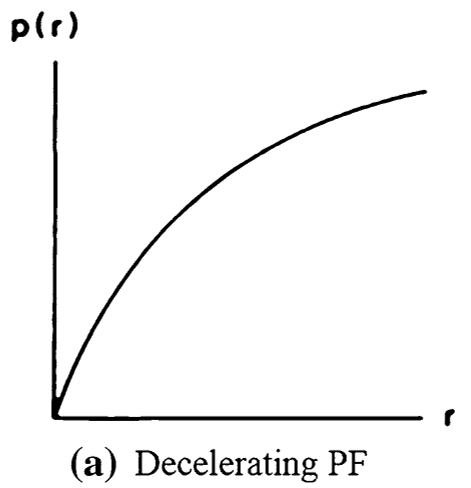 Fig 1: The decision states of an agent—from receiving to reinventing and sharing.
Key Insight 1: The "Point of No Return" vs. The Inflection Point
Traditional theory (Rogers' DOI) suggests that a "critical mass" is reached at 16% adoption. This paper blows that apart. In scale-free networks, the "inflection point" is secondary to reaching a Hub.
Once a high-degree node (a hub) consumes and shares the information, the spread becomes self-sustained. This "Point of No Return" occurred at only 8-10% in their simulations.
 Table 1: Quantitative results showing that reinvented information (RRI) reaches a significantly larger % of the network than static information.
Key Insight 2: The Power of Weak Ties in Innovation
The study found that reinvention has its most dramatic effect when transmitted via Weak Ties.
- Strong Ties (Friends/Close Colleagues): Diffusion is "bursty" and abrupt. Reinvention actually lowered the collective outcome here because the spread happened too fast for evolutionary value to build up.
- Weak Ties (Acquaintances): Diffusion is slower, but this "slowness" allows information to undergo an evolutionary process. Only high-value, reinvented information persists, eventually reaching remote clusters that static information could never touch.
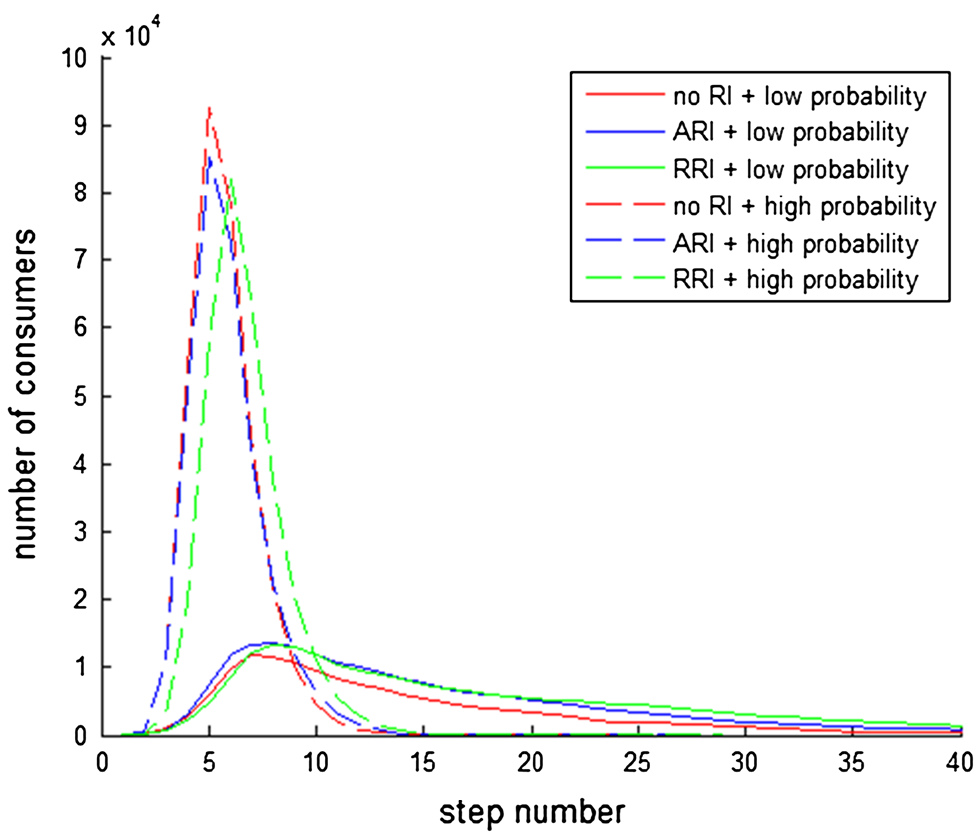 Fig 2: Diffusion of information via weak vs. strong ties. Note the sustained propagation in weak tie scenarios with reinvention.
Deep Insight: Why "Free Form" Matters
The most profound takeaway for product designers and content creators is the Free Form Principle. If you want your information to reach the "periphery" (the total market), you must allow the audience to own and change it.
- Closed Form: A PDF or a "No-Derivatives" license.
- Open Form: A Wiki, a TikTok "Duet," or a Creative Commons license.
By allowing Relative Reinvention, you enable an accelerating production function where the community creates a "Collective Good" that is more valuable than the original seed message.
Conclusion & Limitations
This work shifts the focus of Critical Mass Theory from "how many people" to "who and how it's changed." While the study is limited by its undirected graph and simplified numeric value assignment, it provides a rigorous mathematical foundation for why user-generated content and modifiable information are the true drivers of sustainable digital growth.
Final Takeaway: To go viral, stop trying to find 16% of the crowd. Find a Hub, and give them the tools to change your message.