
Beyond Co-occurrence: Identifying Strong Ties via Relation Context and k-Connectivity
A relation context oriented approach to identify strong ties in social networks
This paper introduces a relation context-oriented approach to identify "strong ties" in large-scale social networks using an edge-dual graph transformation and k-connectivity analysis. By integrating 450 GB of real-world law enforcement data, the authors demonstrate a robust method for distinguishing reliable relationships from noisy data in criminal justice domains.
TL;DR
In the high-stakes world of criminal justice, distinguishing a "chance encounter" from a "criminal partnership" is a massive data challenge. This paper moves beyond simple frequency-based metrics to propose a Relation Context Oriented Edge-Dual Graph. By transforming relationships into explicit context nodes and calculating local k-connectivity, the authors provide a robust, noise-resilient way to identify strong ties in a massive dataset of 211 million edges.
Background: The Noise in the Machine
Most Social Network Analysis (SNA) tools fall into one of two traps:
- The Frequency Trap: They assume that if Joe and Bob appear in four reports, their bond is four times stronger. But what if those four reports all stem from the same single robbery? The context is redundant, not additive.
- The Noise Trap: In massive databases, data entry errors or common addresses (like large apartment complexes) create "false" ties. Traditional shortest-path algorithms are highly sensitive to these "dirty" edges.
The authors' insight is simple yet powerful: The strength of a relationship is proportional to its structural redundancy across distinct contexts.
Methodology: The Edge-Dual Transformation
The core innovation is the transformation of a standard graph into a Relation Context Oriented Graph.
1. Context Extraction
Instead of a simple line between Person A and Person B, the system creates a specialized Context Node. This node represents a unique reason for the connection:
- A specific street address.
- A unique Vehicle Identification Number (VIN).
- A specific criminal case number.
2. Graph Transformation
As shown in the architecture, the original graph (where A and B are linked) is transformed. If A and B share two different addresses, they are both linked to two separate context nodes.
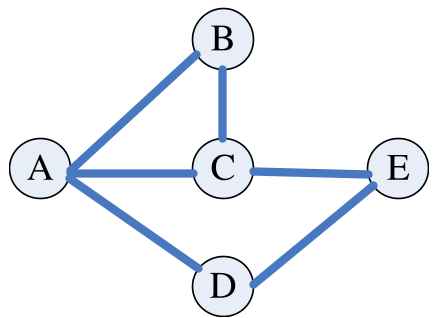 Fig 1: Original Graph (Left) vs. Edge-Dual Graph with Context Nodes (Right)
3. Measuring Strength via k-Connectivity
The authors use local k-connectivity (the minimum number of nodes to remove to disconnect two people). In this dual graph, k-connectivity represents how many independent contexts link two people.
- k=1: Vulnerable to noise (e.g., a shared apartment building that was incorrectly recorded).
- k≥2: A "Strong Tie." It means the individuals are linked by at least two independent platforms (e.g., they share a car AND were arrested together).
Experimental Evidence: Predicting Crime
To prove the "physical intuition" that k-connectivity equals relationship strength, the authors integrated 450 GB of data from the State of Alabama (including driver licenses, vehicle registrations, and arrest records).
Key Findings:
- Accuracy: Using a historical snapshot to predict future co-offenses, "Strong Ties" (k≥2) achieved a match rate significantly higher than weak ties.
- Noise Filtering: By setting a threshold for shared addresses (eliminating addresses with >8 residents), the system effectively pruned "coincidental" connections.
- Performance: Despite the massive scale (4.9M nodes), the use of BFS-based max-flow adaptations allowed for an average query time of just 1.96 seconds.
 Fig 2: Comparison of Prediction Accuracy between Strong (k≥2) and Weak (k=1) Ties.
Critical Insight: Why This Works
The brilliance of this approach lies in its Inductive Bias. In the criminal world, trust is a prerequisite for collaboration. Evidence of that trust is rarely found in a single data point; it is found in the overlap of disparate life facets. By requiring , the algorithm forces the data to reveal "entangled" lives, which are far less likely to be the result of a database typo or a coincidental shared loyalty to a large apartment complex.
Limitations & Future Work
While highly effective for structured data, the current model struggles with unstructured data (like the narrative text in police reports). The authors note that the next frontier is integrating Natural Language Processing (NLP) to extract context nodes from free-text descriptions, which would likely increase the "k" values of many true criminal associations.
Conclusion
This work provides a scalpels-not-sledgehammers approach to SNA. By focusing on the robustness of ties through the lens of k-connectivity, it offers law enforcement a mathematically sound way to prioritize targets in a sea of noisy data.