
Decoding TPA Trust: Using Fuzzy Logic to Safeguard Social Media Privacy
Reliability score inference and recommendation using fuzzy-based technique for social media applications
The paper introduces a Reliability Inference Application (RIA) and an Application Recommender system designed to evaluate Third-Party Applications (TPAs) on Social Media. Using a Fuzzy Inference System (FIS), it calculates a reliability score based on user ratings, number of raters, sentiment analysis of comments, and data access behavior (DAB) to provide personalized recommendations.
TL;DR
This research presents a novel Fuzzy Inference System (FIS) that acts as a "digital expert" to judge the reliability of Third-Party Applications (TPAs). By analyzing raw data like ratings, the sheer volume of users, comment sentiment, and the sensitivity of requested permissions, the system provides tailored recommendations (e.g., "Recommended with Risk") based on an individual's unique privacy tolerance.
The "Monetization Fuel" Problem
In the modern OSN ecosystem, personal data is the currency. We often click "Allow" on TPA permission pop-ups just to access a game or utility, unaware that 75% of tested apps share our data with at least six different domains. The core issue is twofold:
- Asymmetry of Information: Users can't easily quantify the risk of a TPA.
- Vagueness of Feedback: A 4-star rating from 10 users is vastly different from a 4-star rating from 1 million users, yet traditional systems treat them similarly.
Methodology: The Logic of Uncertainty
The authors argue that human decision-making isn't binary (0 or 1); it’s fuzzy. They developed the Reliability Inference Application (RIA) using a multi-layered fuzzy approach.
1. The Four Pillars of Reliability
The system ingests four distinct types of data:
- Rating Data: Grouped into low, medium, and high bins.
- Number of Raters (NOR): Clustered using Agglomerative Clustering to prevent outliers from skewing the results.
- Data Access Behavior (DAB): This is the "Privacy Cost." The authors categorize data into Basic (Identity), Advanced (Contacts), and Extended (Location, SMS, Microphone).
- User Comments: Polarity scores extracted via sentiment analysis.
2. System Architecture
The architecture mimics a human expert's reasoning process. It maps "Crisp" inputs (like a 3.5 rating) into "Linguistic" variables (like "Medium Reliability") through membership functions.
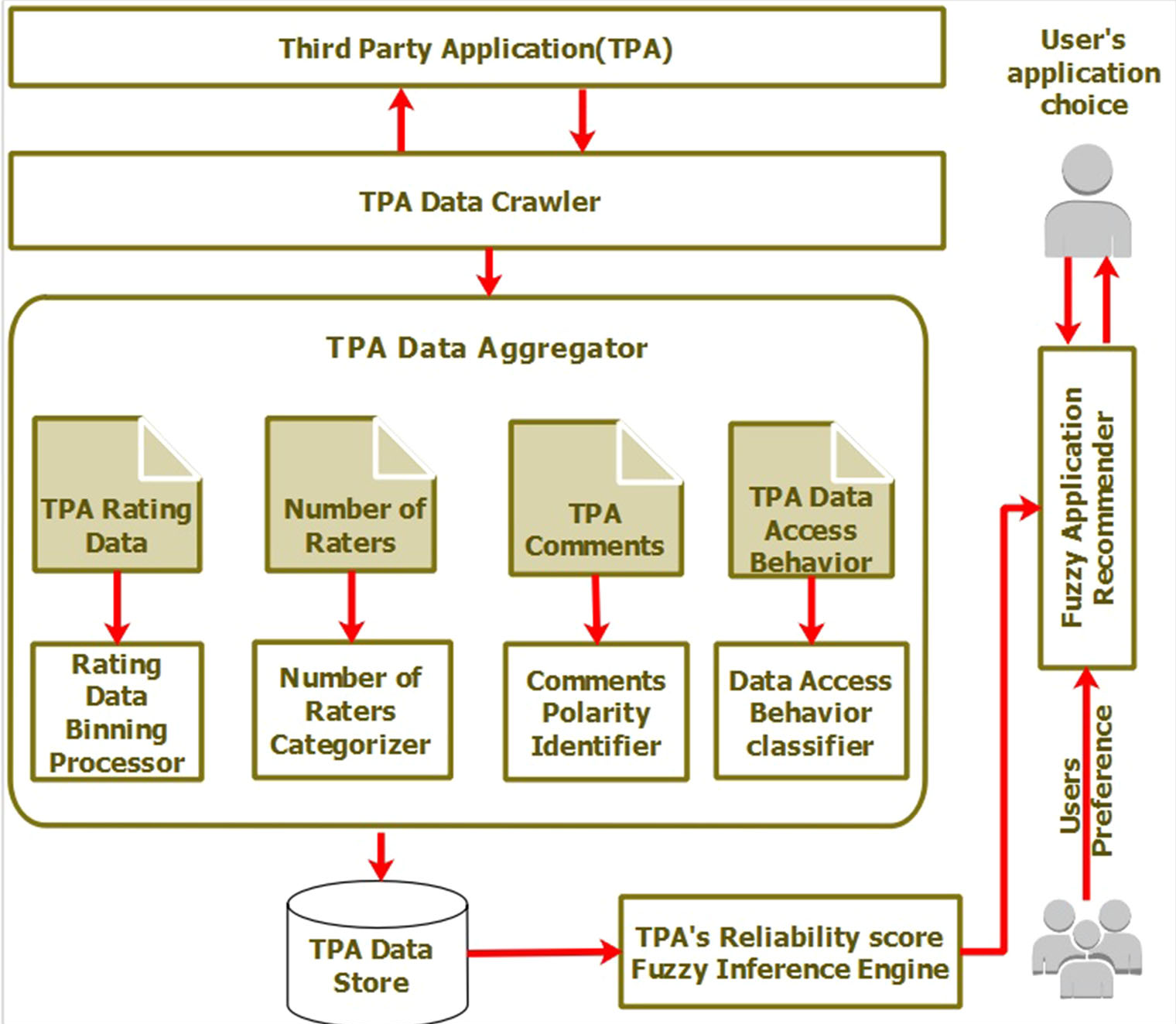 Fig 1: The proposed block diagram showing the flow from OSN data crawling to final recommendation.
Experimental Insights: Why Context Matters
The system was tested on real-world apps from Facebook and the Play Store. The results (plotted in 3D surface graphs) reveal critical trade-offs:
- The Popularity Buffer: An app with "High Rating" but "Low NOR" is penalized because the feedback isn't statistically significant.
- The Sentiment Guard: Even if an app has a high rating, if user comments are overwhelmingly negative (suggesting bugs or hidden data leaks), the Reliability Score drops sharply.
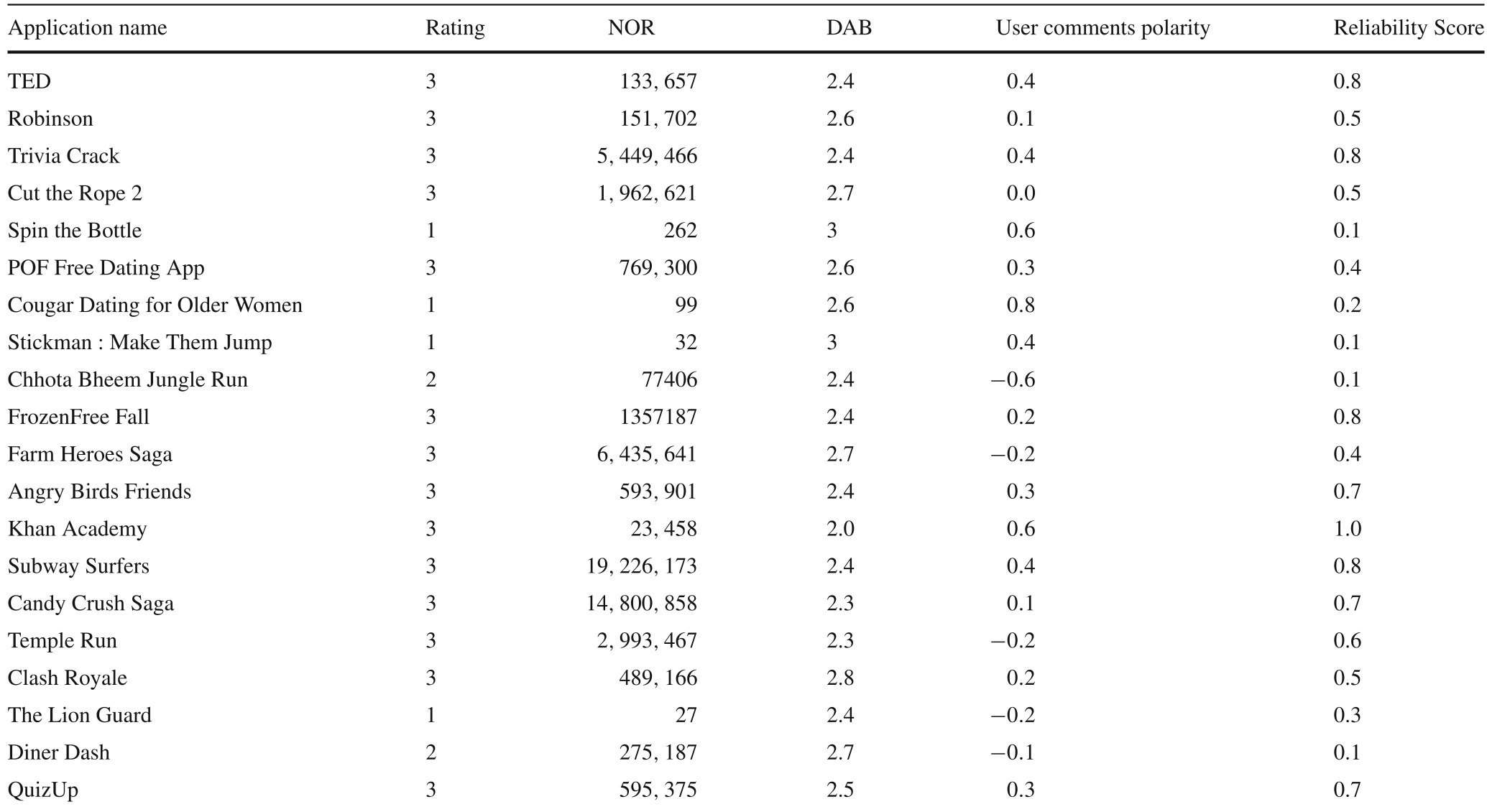 Table 1: Comparison of Reliability Scores across various popular TPAs.
One of the most impressive visualizations in the paper is the Surface View, which shows how Reliability Scores respond to variables like Data Access and Rating.
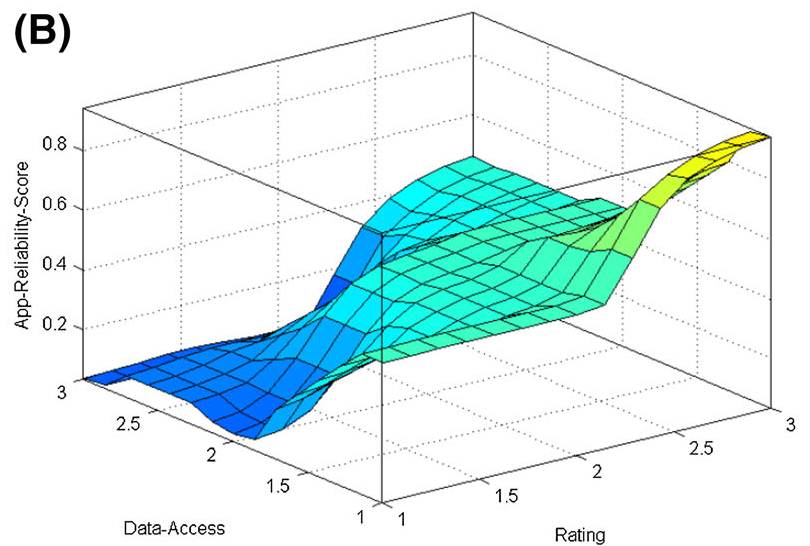 Fig 2: Surface graph illustrating how high Data Access (DAB) coupled with low ratings leads to a rapid collapse in Reliability.
Personalized Recommendations
The final stage of the methodology is the Mamdani-type Recommender. It takes the Reliability Score and crosses it with the User's Privacy Preference (Low, Mid, High).
- Low Privacy User: Might see "Subway Surfers" as Highly Recommended.
- High Privacy User: Might see the same app as Recommended with Risk if they are sensitive to the data permissions requested.
Critical Analysis & Conclusion
Takeaways
The paper successfully bridges the gap between raw metadata and actionable privacy intelligence. The use of Fuzzy Logic is particularly appropriate here because user reviews and "privacy comfort" are inherently subjective.
Limitations
- Static vs. Dynamic Behavior: The system analyzes requested permissions at installation. However, some apps change their data-harvesting behavior server-side post-installation.
- Sentiment Complexity: Simple polarity (-1 to +1) may miss nuanced sarcasm or specific technical complaints in user reviews.
Future Outlook
As TPAs become more integrated into our lives through IoT and AI assistants, autonomous reliability checkers will become mandatory. This work provides the mathematical foundation for "Privacy Firewalls" that don't just block data, but advise users on the value of the trade-off.