
DDP: Exposing the Artificial Influence of Social Capitalists on Twitter
A reliable and evolutive web application to detect social capitalists
The paper introduces DDP, a web-based application designed to detect "social capitalists" on Twitter—users who manipulate metrics through mutual following and specific hashtags. It employs a logistic regression classifier that achieves 86% accuracy by analyzing structural, behavioral, and linguistic features.
TL;DR
Social media influence is often a facade built on "follow-back" schemes. This paper presents DDP, a robust web application that uses logistic regression to detect "social capitalists"—users who use artificial tactics to inflate their status. With 86% accuracy, DDP provides a real-time tool to adjust influence scores (like Klout) by filtering out manufactured engagement.
Background: The Illusion of Influence
In the economy of social media, followers are currency. However, a significant portion of "influential" users are actually social capitalists. These users don't gain followers through quality content; instead, they exploit reciprocity via hashtags like #TeamFollowBack and #IFYFM (I Follow You, Follow Me).
The core problem is that metric-driven tools like Klout and Kred often fail to distinguish between an organic thought leader and a social capitalist. This paper bridges that gap by providing a mechanism to detect and discount these inorganic behaviors.
Methodology: The Anatomy of a Social Capitalist
The DDP system doesn't just look at follower counts. It analyzes four distinct categories of data:
- Activity & Topology: Frequency of tweets, lists, and the ratio of followers to friends.
- Content Analysis: The density of hashtags, URLs, and mentions per tweet.
- Temporal Patterns: When the user tweets (identifying automated bots vs. manual users).
- Sentiment and Similarity: Using Naïve Bayes to analyze the polarity of tweets and measuring the repetitive nature of the content.
System Architecture
The application is built to be "evolutive." It uses a MongoDB backend to store features of newly crawled users, allowing administrators to manually label "edge cases" and retrain the logistic regression model on the fly.
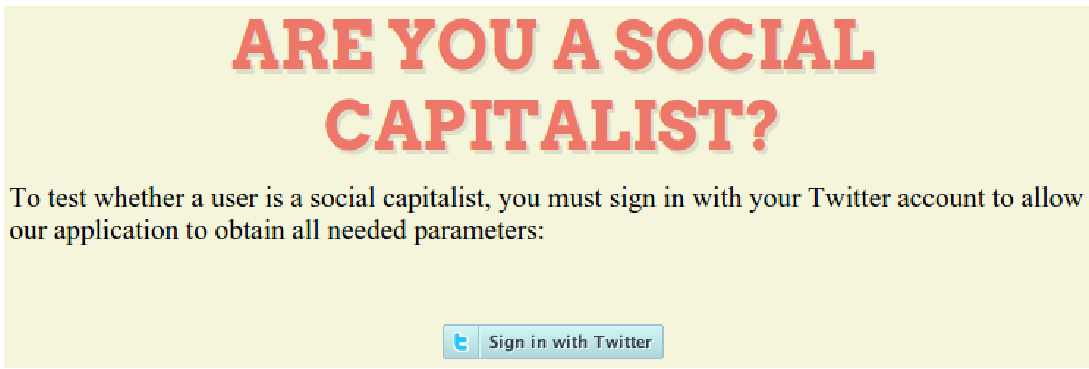 Figure 1: The DDP homepage allowing users to sign in and test accounts in real-time.
Key Insights: Why it Works
The researchers found that social capitalists exhibit specific behavioral fingerprints. For instance, their "hourly tweet" distribution often reveals whether they are manual users or automated tools.
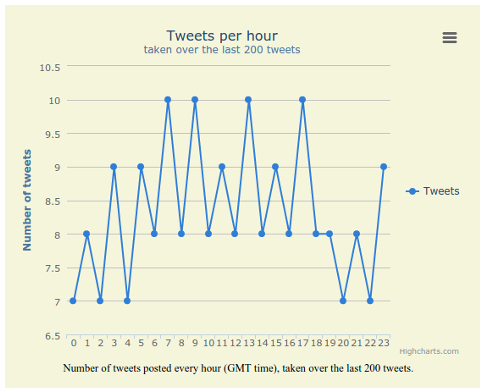 Figure 2: Comparing the hourly posting patterns of an automated account (right) vs. a manual social capitalist (left).
One of the most innovative aspects is the DDP Score formula. If a user is predicted to be a social capitalist (), their influence score (e.g., Klout) is aggressively penalized: This ensures that the "real" influence reflects the quality of interaction rather than the quantity of mutual follows.
Experimental Results
The classifier was tested on a massive dataset of 55,000 regular users and 25,000 social capitalists.
- Classification Accuracy: Maintained an 86% accuracy rate.
- Sentiment Engine: The internal Naïve Bayes classifier achieved a 77% accuracy on 1.5 million tweets.
- Interactivity: The tool generates word clouds of hashtags and mentions to provide a visual "vibe check" of the account being analyzed.
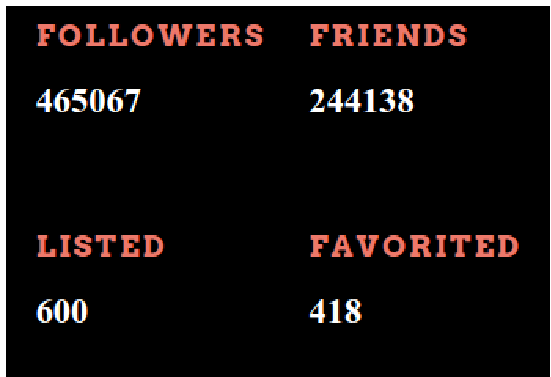 Figure 3: Detailed analysis including sentiment polarity and tweet similarity metrics.
Critical Perspective & Conclusion
DDP represents a significant step toward "Social Network Hygiene." While the paper focuses on Twitter, the methodology—combining structural topology with linguistic sentiment and temporal analysis—is highly applicable to modern platforms like LinkedIn or Instagram, where "engagement pods" act similarly to social capitalists.
Limitations: The reliance on specific hashtags for initial ground-truth labeling might miss "sophisticated" social capitalists who avoid popular tags to stay under the radar.
Future Outlook: By moving toward graph-based features (how these capitalists interconnect), future versions of DDP could likely identify entire "capitalist clusters" rather than just individual accounts.