
Reliable Information Extraction: The Bridge Between Theory and Reality in Single-Trace Attacks
Reliable information extraction for single trace attacks
The paper investigates the reliability of information extraction (e.g., Hamming weights) from single power traces for SPA and ASCA attacks on AES. Using two datasets (8051 and ARM7), it evaluates various classifiers, identifying Gaussian templates, SVMs, and Random Forests as the most effective tools for reaching SOTA error-tolerant attack requirements.
TL;DR
Single-trace side-channel attacks like SPA and ASCA are often considered theoretical threats because they require high-precision "leakage extraction." This paper evaluates whether modern machine learning can bridge this gap. The verdict? While Random Forests and SVMs can reliably extract enough data for "Pragmatic SPA" (), the more mathematically elegant ASCA () remains largely infeasible on complex hardware like ARM7 due to noise limitations.
Background: The Gap in Single-Trace Attacks
In the world of Side-Channel Analysis (SCA), most researchers focus on Differential Power Analysis (DPA), which averages across thousands of traces. However, Single-Trace Attacks (SPA and ASCA) are the ultimate goal: they allow an attacker to recover a key from just one observation.
The bottleneck isn't the solver—it's the Information Extraction. To run these attacks, you must first guess the Hamming Weight (HW) of intermediate values.
- ASCA (Algebraic Side-Channel Analysis): Requires the true HW to be in the top 3 guesses.
- Pragmatic SPA: Can tolerate the true HW being in the top 5 guesses.
Methodology: Testing the "Intelligence" of Classifiers
The authors compared two distinct hardware profiles:
- Low-Noise (8051 Microcontroller): High SNR, very clear HW clusters.
- High-Noise (ARM7 Microprocessor): Complex leakage, overlapping clusters.
They utilized PCA (Principal Component Analysis) and POI (Points of Interest) for dimensionality reduction, testing how Gaussian Templates, SVMs (RBF kernel), k-Nearest Neighbors (kNN), Decision Trees (DT), and Random Forests (RF) performed under varying training trace counts and noise levels.
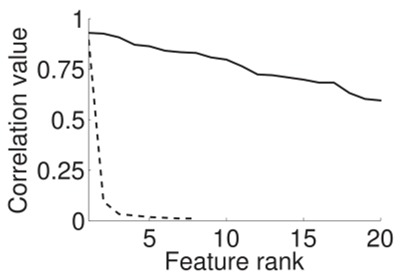 Fig 1: Scatter plots showing 2D clusters from 8051 (clean) vs ARM (noisy). Notice the heavy overlap in the ARM data (bottom), making classification significantly harder.
Key Insights: Why "Simple" Fails
One of the paper's most salient contributions is the visualization of Decision Surfaces.
- Decision Trees (DT) create rigid, rectangular boundaries that fail to capture the probabilistic nature of power leakage.
- k-Nearest Neighbors (kNN) is too sensitive to local noise.
- Random Forests (RF) and SVMs, however, create more organic, granular boundaries that mirror the Gaussian-like distribution of side-channel noise.
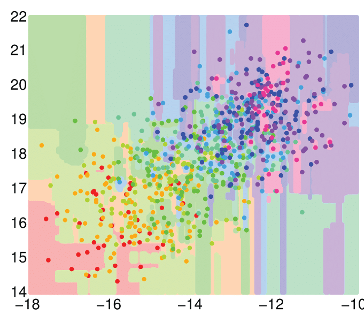 Fig 2: Comparison of classifier behavior. RF (i) shows a more nuanced separation than the rigid DT (g).
Experimental Results: The Limits of ASCA
The results provide a sobering reality check for cryptographic researchers:
- 8051 Success: On simple hardware, almost any classifier (SVM, RF, Gaussian) hits the target with just 25 training traces.
- ARM Struggle: On ARM7 hardware, even the best classifiers struggled to keep the true HW in the top 3 consistently. However, they could keep it in the top 5.
| Classifier | Best for... | ASCA () | Pragmatic SPA () |
|---|---|---|---|
| Gaussian Templates | Standard Leakage | Yes (8051) | Yes (ARM) |
| SVM (RBF) | Robustness | Yes (8051) | Yes (ARM) |
| Random Forest | Noisy Data | Yes (8051) | Yes (ARM) |
| kNN / DT | - | No | No |
Impact of Noise
When the authors artificially decreased the SNR of the ARM dataset by 4x, the performance of even the best classifiers dipped. Random Forest proved slightly more resilient in these extreme noise scenarios than Gaussian templates.
Critical Analysis & Conclusion
This work highlights a critical Genealogy of Failure: ASCA is mathematically "elegant" but practically "fragile." Because ASCA requires higher precision (), it fails on the devices we care about most—complex microprocessors.
The Takeaway: If you are designing a side-channel attack for a real-world scenario, prioritize Error-Tolerant Pragmatic SPA. It is significantly more likely to succeed because it works within the realistic extraction capabilities of modern Machine Learning. Designers of countermeasures should focus on reducing SNR to the point where even classification falls below the probability threshold required for a feasible key search.
Limitations
The study focused on 8-bit implementations without active countermeasures (like masking). Future work would benefit from investigating how these classifiers handle masked AES, where the leakage is intentionally non-linear and much more obscured.