
Markerless Gait Tracking: Bridging Biomechanics and Telemedicine via Content-Aware Streaming
15320_A remote markerless human gait tracking for e-healthcare based on content-aware wireless multimedia
The paper proposes a remote, markerless human gait tracking system for e-healthcare that utilizes content-aware wireless multimedia communications. By integrating advanced video content analysis with a cross-layer optimization framework (jointly tuning H.264/AVC parameters and Adaptive Modulation and Coding), the system achieves high-fidelity gait data transmission over resource-constrained wireless networks.
TL;DR
This paper introduces a cost-effective e-healthcare platform that performs markerless human gait tracking using low-cost CMOS cameras and wireless networks. By combining intelligent background subtraction with a cross-layer optimization strategy, the system prioritizes the clinical data (the moving patient) over the static background, achieving a 3-5 dB PSNR gain and a 50% reduction in bandwidth usage.
Background: The Accessibility Gap in Gait Analysis
Gait analysis is a vital diagnostic tool for Parkinson’s disease, stroke rehabilitation, and orthopedic success. However, the "Gold Standard" has historically been locked behind the doors of expensive biomechanical labs equipped with infrared markers and high-speed multi-camera arrays. For a small clinic in a remote area, this technology is financially and logistically out of reach.
The author's insight is simple but powerful: we can use ubiquitous wireless multimedia sensor networks (WMSNs) and "content awareness" to turn a standard video feed into a clinical-grade diagnostic tool.
The Core Challenge: Wireless Constraints
When streaming medical data over wireless channels (like 3G/4G or local WMSNs), two enemies emerge:
- Limited Bandwidth: In a typical gait video, the background occupies over 50% of the frame but contains 0% of the diagnostic value.
- Delay Scarcity: Real-time diagnosis requires low latency. In traditional systems, if a packet is delayed, it's dropped, leading to "glitches" that can ruin a gait assessment.
Methodology: Context-Aware Intelligence
The proposed system breaks the problem into two distinct phases: Extraction and Transmission.
1. Markerless Extraction Flow
Instead of physical markers, the system uses a multi-stage computer vision pipeline to isolate the human "silhouette":
- Background Subtraction: Uses a Gaussian Mixture Model (GMM) to adapt to changing light conditions.
- Contextual Classification: Employs Bayesian estimation and Markov Random Fields (MRF) to ensure spatial consistency.
- Refinement: Morphological operations (dilation/erosion) fill holes in the detected human region.
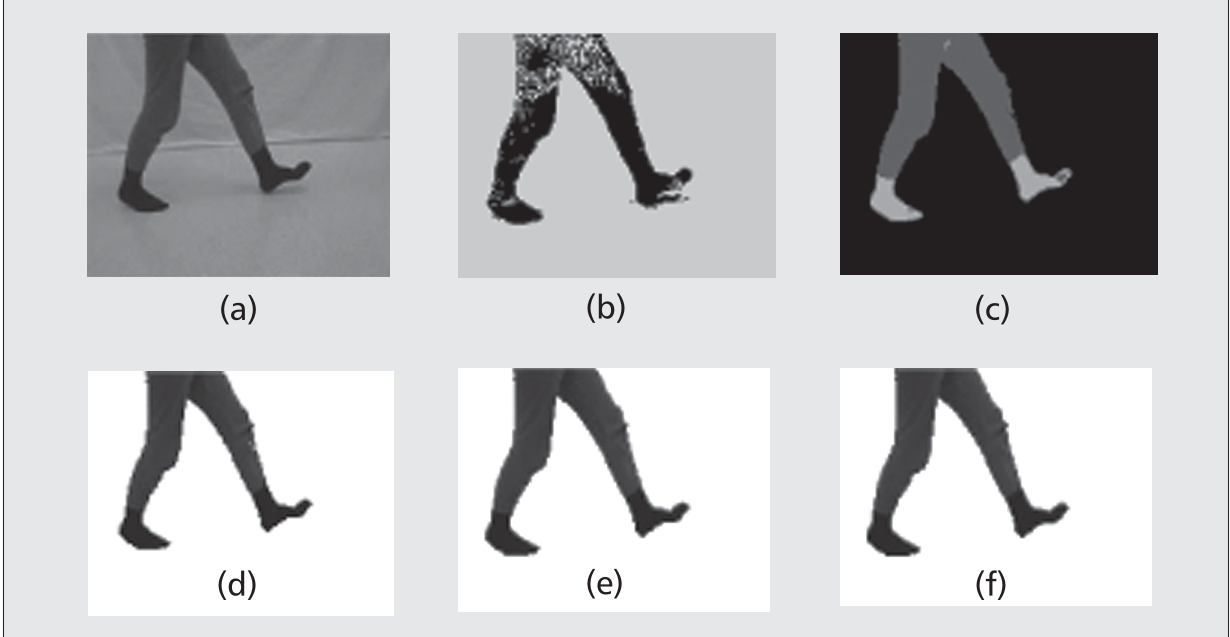 Figure 1: The stages of gait extraction: from raw input to refined human motion region.
2. Cross-Layer Optimization
The "Masterstroke" of this paper is the Joint Optimization Controller. It doesn't just encode video; it looks at the Physical Layer (channel quality) and the Application Layer (codec requirements) simultaneously.
The system solves a minimum distortion problem:
- Application Layer: Adjusts the Quantization Parameter (QP) for the ROI.
- Physical Layer: Selects the Adaptive Modulation and Coding (AMC) scheme (e.g., shifting from 64-QAM to BPSK if the signal drops).
- Goal: Minimize
Ed(Expected Distortion) such thatt_trans(Transmission Delay) <T_f(Deadline).
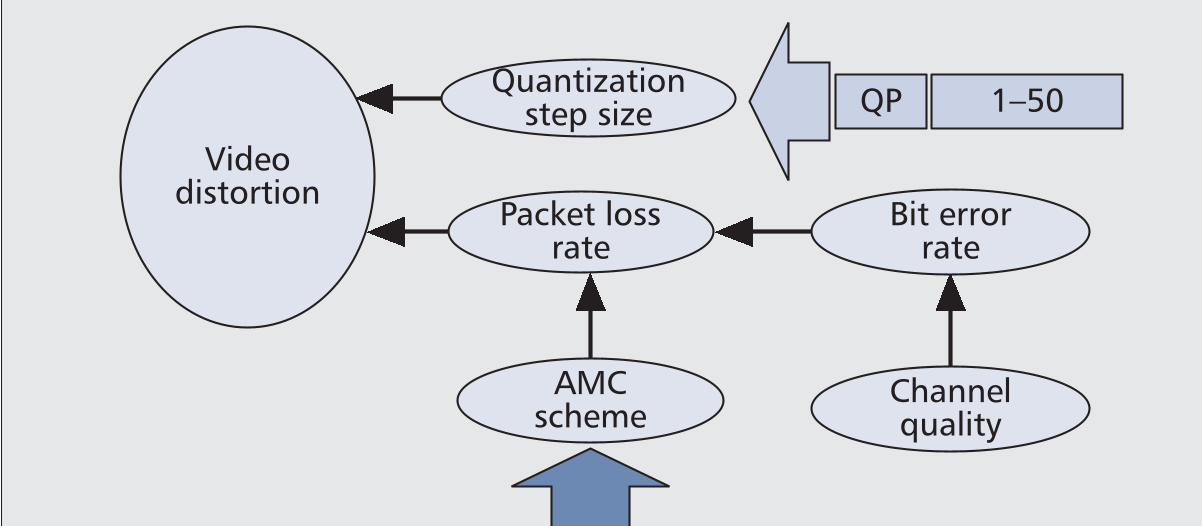 Figure 2: The Cross-Layer optimization framework connecting video analysis to physical transmission.
Experimental Validation
Using H.264/AVC and NS-2 simulations, the researchers compared their content-aware system against a standard non-optimized stream.
| AMC scheme | Modulation | Coding Rate | Rm (b/symbol) |
|---|---|---|---|
| m=1 | BPSK | 1/2 | 0.5 |
| ... | ... | ... | ... |
| m=6 | 64-QAM | 3/4 | 4.5 |
The results were conclusive:
- Efficiency: 50% reduction in traffic by ignoring irrelevant background data.
- Quality: A significant 3–5 dB PSNR improvement for the gait region.
- Resilience: The gain was most pronounced at a 20ms delay bound, proving the system thrives under the strict requirements of real-time e-health.
Critical Insight & Future Outlook
While this a 2010-era paper (using H.264), the fundamental logic remains highly relevant for the 5G/6G era. The shift from "marker-based" to "marker-less" was a precursor to today's AI-driven pose estimation (like MediaPipe).
Limitations: The system assumes a relatively static background (general clinic environment). In highly dynamic environments (e.g., outdoor tracking), the GMM model might struggle. Additionally, the paper focuses on the transmission of video; future work would benefit from integrating the kinematic analysis (calculating stride length/cadence) directly into the edge device to further save bandwidth.
Conclusion
By treating video not as a stream of generic pixels, but as a container for specific medical "content," this work paved the way for democratized e-healthcare. It proves that with smart cross-layer design, we don't need expensive labs to provide world-class biomechanical care to remote populations.