
Replaying Archived Twitter: Exploring the Technical Decay of Digital History
Replaying Archived Twitter: When your bird is broken, will it bring you down?
This paper investigates the technical failures of web archives in preserving Twitter content following its June 2020 UI transition. By analyzing over 1.3 million mementos of Donald Trump’s account, the authors reveal critical data loss and "temporal violations" where archived pages exhibit states that never existed on the live web.
TL;DR
When Twitter forced its mobile-inspired "New UI" in June 2020, it didn't just change the look—it broke the world's digital time machines. This paper reveals that most web archives (like the Wayback Machine) struggle to capture the dynamic API calls required by the new layout. The result? Archived pages that miss crucial fact-check labels and "temporally violative" feeds where tweets from the future or past are incorrectly stitched together.
Background: The Shift from Static to Dynamic
For years, archiving a web page was straightforward: save the HTML, and you saved the content. Twitter’s "Old UI" embedded the first 20 tweets directly in the root HTML. However, the "New UI" is essentially a hollow skeleton that populates its content via asynchronous JSON API requests.
Web archives, faced with rate limits and the complexity of capturing these secondary requests, often "cheat" by masquerading as bots (like Googlebot) to trick Twitter into serving the simpler, legacy HTML. This research proves that this shortcut has a high price: the loss of historical context and truth.
Methodology: Auditing @realDonaldTrump
The researchers chose the account of the 45th U.S. President as a case study. Because the account was suspended in early 2021 and was frequently labeled for misinformation, it provides a perfect "ground truth" to measure archivability.
They analyzed:
- UI Versioning: Identifying whether a memento (archived page) was Old UI or New UI via content-length.
- Temporal Spread: Measuring the time difference between when the page "skeleton" was saved and when the "content" (tweets) was saved.
- Label Presence: Tracking "Fact-check" and "Violated Twitter Rules" (VTR) labels across archives.
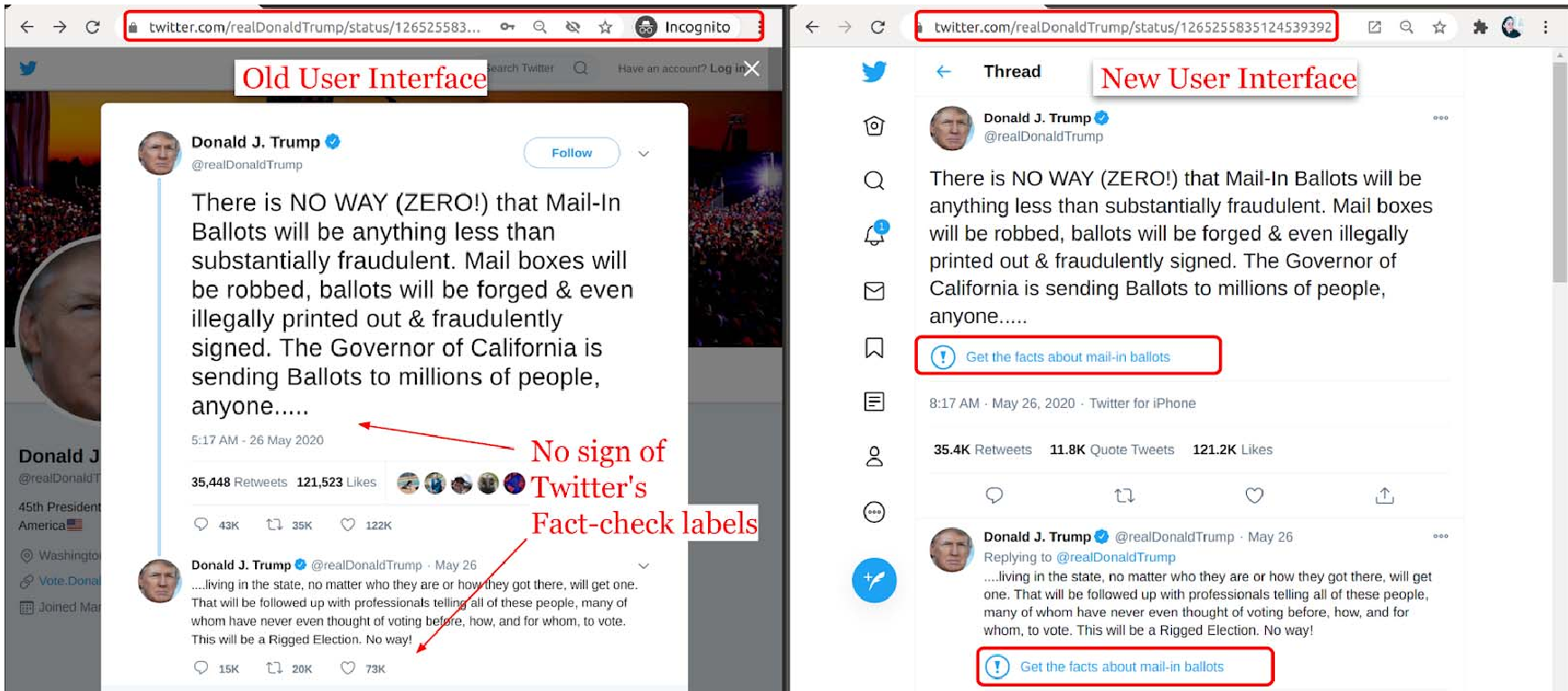 Fig 1: The gap between the Old UI (missing labels) and the New UI (displaying labels).
The Core Issue: Temporal Violations
A "Temporal Violation" occurs when a replayed page combines fragments from different points in time. In the New UI, the page might be archived at 12:00 PM, but the archive might fill the tweet feed with a JSON response captured at 4:00 PM the next day.
The study found that 48.8% of New UI mementos were temporally violative. In extreme cases, a user viewing an archive might see an account page that literally never existed on the live web, missing hours or even days of tweets.
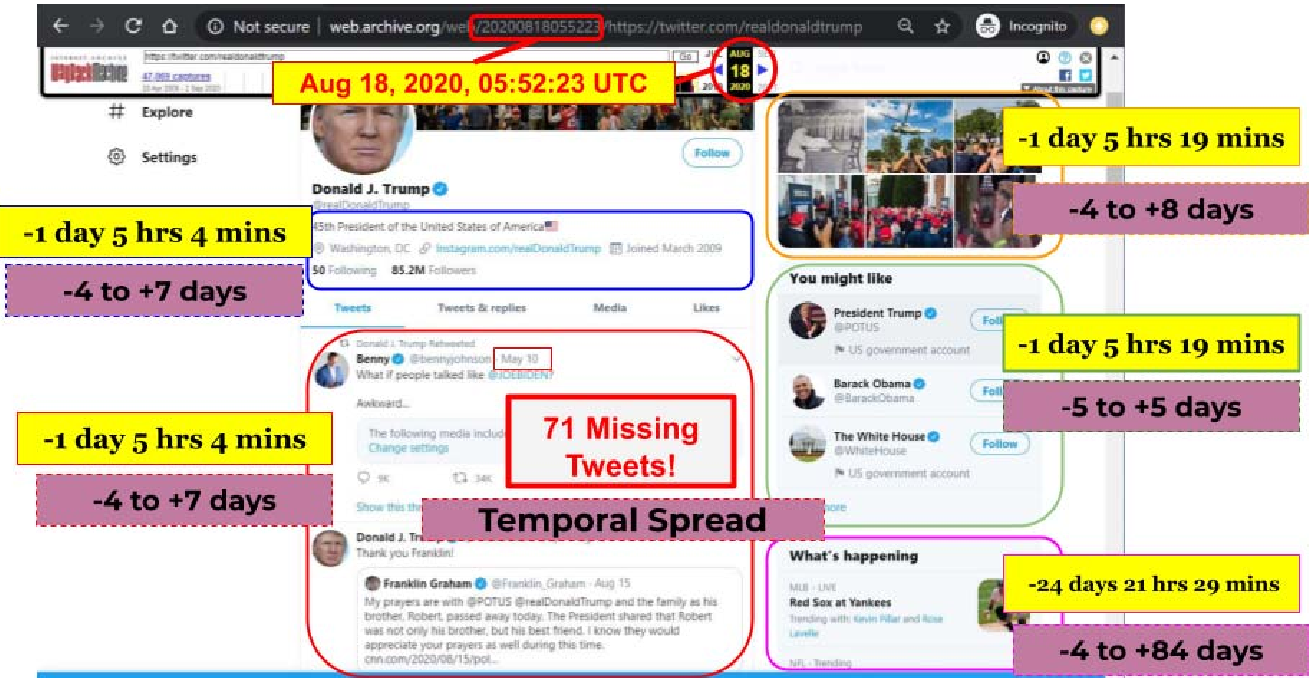 Fig 2: A New UI memento with 71 missing tweets due to a disconnect between the root HTML and the tweet JSON.
Erasing labels, Rewriting History
One of the most alarming findings concerns Twitter's misinformation labels. Twitter introduced "Fact-check" labels in May 2020, but these were features of the New UI. Because archives predominantly use the Old UI (93.3% of the data), the vast majority of historical records now show these tweets without their warning labels.
This creates a "weaponization of web archives," where bad actors can point to an archived version of a tweet to "prove" it was never flagged by Twitter, effectively using the archive to validate misinformation.
Conclusion and Future Outlook
The "bird" is indeed broken. As web platforms become more dynamic and "app-like," our current archiving infrastructure is failing to keep pace.
Key Takeaways:
- Archives aren't mirrors: They are reconstructions that often fail to capture the "logic" of the live web.
- Transparency is needed: Archives should potentially warn users when a page is "temporally violative" or identifies as an incomplete UI version.
- Data Integrity: For researchers, the study serves as a stern warning: do not rely solely on a single archive memento for historical "truth," especially regarding social media content.
The authors plan to extend this work to other suspended accounts, emphasizing that for many historical figures, these flawed archives are the only records we have left.