
Cultural Synchrony: Why Some Developers Hide Bad News and Others Don't
17594_Reporting bad news about software projects impact of organizational climate and information asymmetry in an individualistic and a collectivistic cultu
This study investigates the "Mum Effect"—the reluctance to report bad news—in software projects across different national cultures. Using matching experiments in the U.S. (individualistic) and Singapore (collectivistic), it identifies how organizational climate and information asymmetry interact with cultural values to influence reporting behavior.
TL;DR
Why do software projects "run away" into failure despite everyone on the ground seeing the smoke? This seminal study reveals that the "Mum Effect"—the silence regarding bad news—is not just a matter of personality, but a complex interaction between Organizational Climate, Information Asymmetry, and National Culture. While Americans (individualists) are paralyzed by the fear of professional retaliation, Singaporeans (collectivists) are more likely to stay silent if they think they can buy time to save the team's reputation.
The "Mum Effect" and the Information Gap
In software engineering, technical risks are often manageable, but cultural risks are silent killers. When a project leader discovers a critical system flaw, two factors usually dictate whether they speak up:
- Organizational Climate: Does the firm reward honesty or "shoot the messenger"?
- Information Asymmetry: Can the flaw be hidden long enough for the developer to fix it or get promoted away?
However, this paper argues that these factors don't work the same way everywhere. By comparing the United States (highly individualistic) and Singapore (highly collectivistic), the authors provide a roadmap for managing globalized tech talent.
Methodology: The "SSC" Simulation
The authors utilized a matching experiment design where 354 professionals were placed in a role-playing scenario at "System Solution Corporation." They were tasked with a choice: report a serious system limitation in Project Y or stay silent.
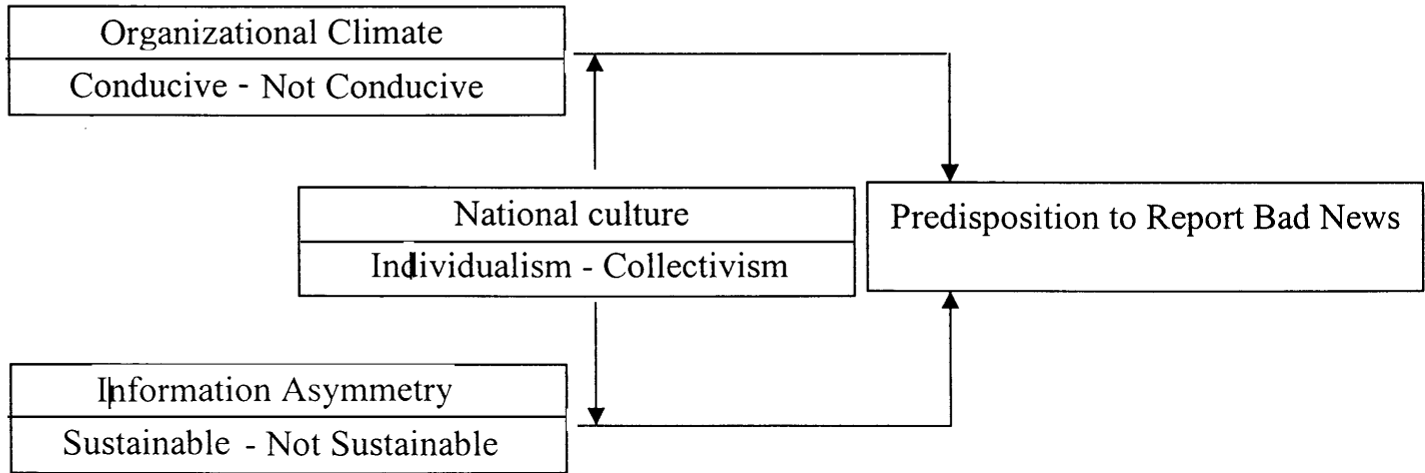 Figure 1: The Research Model illustrating how National Culture moderates the impact of organizational factors on bad news reporting.
Key Findings: Sensitivity to the System
The results revealed a fascinating cultural "hook" for each group:
1. The Individualist's Fear: Retaliation
In the U.S. sample, Organizational Climate was the dominant factor. Individualists focus on personal career paths and self-interest. If the climate suggests that "bad news gets you killed," they will remain silent to protect their trajectory. The impact of climate was significantly stronger in the U.S. than in Singapore.
2. The Collectivist's Strategy: Information Asymmetry
In Singapore, Information Asymmetry carried more weight. In collectivistic cultures, the primary loyalty is to the group (the project team). If developers believe they can hide the news (sustainable asymmetry), they often stay silent—not for personal gain, but to "buy time" for the team to turn the project around and avoid collective shame.
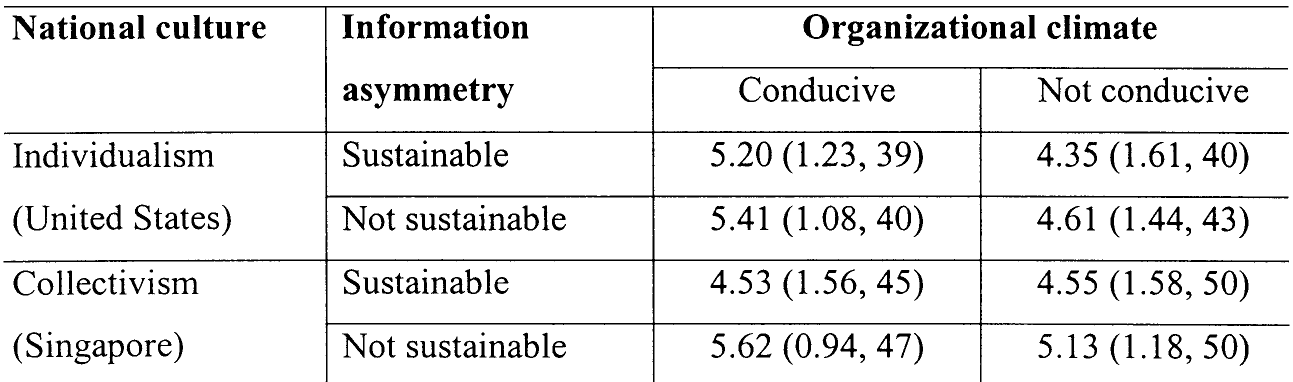 Table V: Descriptive statistics showing the variance in reporting predisposition across different cultural and organizational treatments.
Engineering a Transparent Culture
The takeaway for CTOs and Project Managers is that a "one-size-fits-all" approach to transparency will fail.
- In Individualistic Teams: Focus on Psychological Safety and formal protections. Implementing anonymous "hotlines" or non-retaliation policies (like the Whistleblower Protection Act) is highly effective because it addresses the individual's fear of personal loss.
- In Collectivistic Teams: Focus on Monitoring and Visibility. Because the temptation to hide news is rooted in trying to save the team from embarrassment, reducing Information Asymmetry through tighter monitoring (e.g., more frequent audits or automated status checks) makes it "safer" to report news early, as everyone knows the truth will come out regardless.
Critical Insight: The Future of Global Teams
As we move toward a world of "distributed-first" and cross-cultural software development, understanding these deep-seated Inductive Biases in human behavior is critical. This work suggests that we should perhaps "mix" cultural orientations within teams to neutralize these effects—leveraging the individualist's sensitivity to climate and the collectivist's potential for group loyalty to create a balanced reporting environment.
Conclusion
This paper serves as a vital reminder that software engineering is, at its heart, a human endeavor. The failure to report bad news isn't a "bug" in the developer; it's a "feature" of the cultural and organizational system they navigate. To fix the project, you must first understand the culture.