
Fighting Malicious Reports: A Reputation-Based Shield for Social Networks
Reporting Offensive Content in Social Networks: Toward a Reputation-Based Assessment Approach
This paper introduces a reputation-based assessment approach for moderating offensive content in Social Networking Sites (SNSs). It utilizes a Dynamic Trust Threshold (DTT) and a sigmoid-based reputation decay mechanism to automatically validate "abuse reports" from users before content removal, distinguishing between honest accusers and malicious spammers.
TL;DR
Moderating social media is a nightmare: humans can't keep up with the volume, and simple "report" buttons are weaponized by malicious actors to silence innocent users. This paper proposes a system where your "reporting power" is tied to your reputation. If you report content, you temporarily "stake" your reputation; if you're right, you get it back with a reward; if you're abusing the system, your influence decays to zero.
The Problem: The "Report" Button as a Weapon
Most Social Networking Sites (SNSs) like Facebook or LinkedIn handle offensive content through a postmoderation strategy. However, this creates two major vulnerabilities:
- Administrative Overload: Thousands of reports require massive human teams.
- Malicious Reporting: Ill-intentioned users can report harmless material to force its withdrawal.
Existing automated solutions often ignore the identity of the accuser and the context of the content, treating every "flag" as equal.
Methodology: Stake, Decay, and Reward
The authors shift the focus from the content to the accuser. Their system operates on three pillars:
1. Sigmoid Reputation Decay
As soon as you report something, your reputation starts to drop. The authors use a Sigmoid Function for this decay. Unlike a linear drop, the sigmoid curve allows for a "grace period" that accelerates quickly if the system doesn't find evidence of the content being offensive.
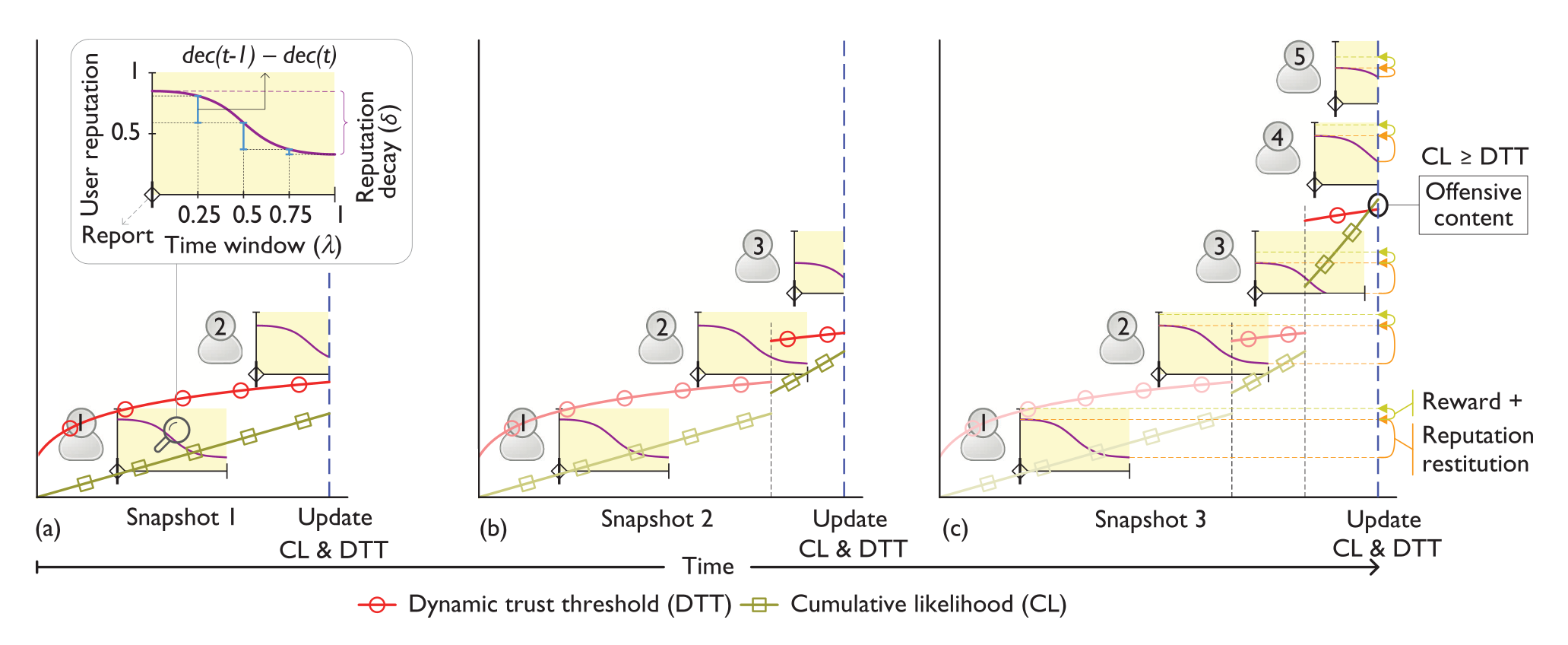 Figure 1: Illustration of how multiple reports eventually push Cumulative Likelihood (CL) above the Dynamic Trust Threshold (DTT).
2. The Dynamic Trust Threshold (DTT)
Instead of a fixed number of reports (e.g., "remove after 10 flags"), the system calculates a DTT based on:
- Proximity: Reports from direct friends weight more or less depending on the social graph structure.
- Longevity: The longer a piece of content survives without valid reports, the higher the threshold becomes.
- Interaction: Content with high engagement (comments/shares) requires more evidence (reports) to be taken down.
3. Restitution and the "Jackpot" Reward
If the Cumulative Likelihood (CL)—calculated from the weighted reputations of all accusers—crosses the DTT, the content is removed. At this point:
- Honest Accusers get their lost reputation back (Restitution).
- They receive an additional Reward proportional to how quickly and accurately they identified the harm.
- Malicious Accusers who reported the same content for the wrong reasons (or reported other harmless content) continue to see their reputation rot.
Experimental Validation
Using a simulation of 10,000 users, the authors tested four scenarios ranging from optimal (honest users reporting harmful content) to "worst-case" (malicious users flooding harmless content).
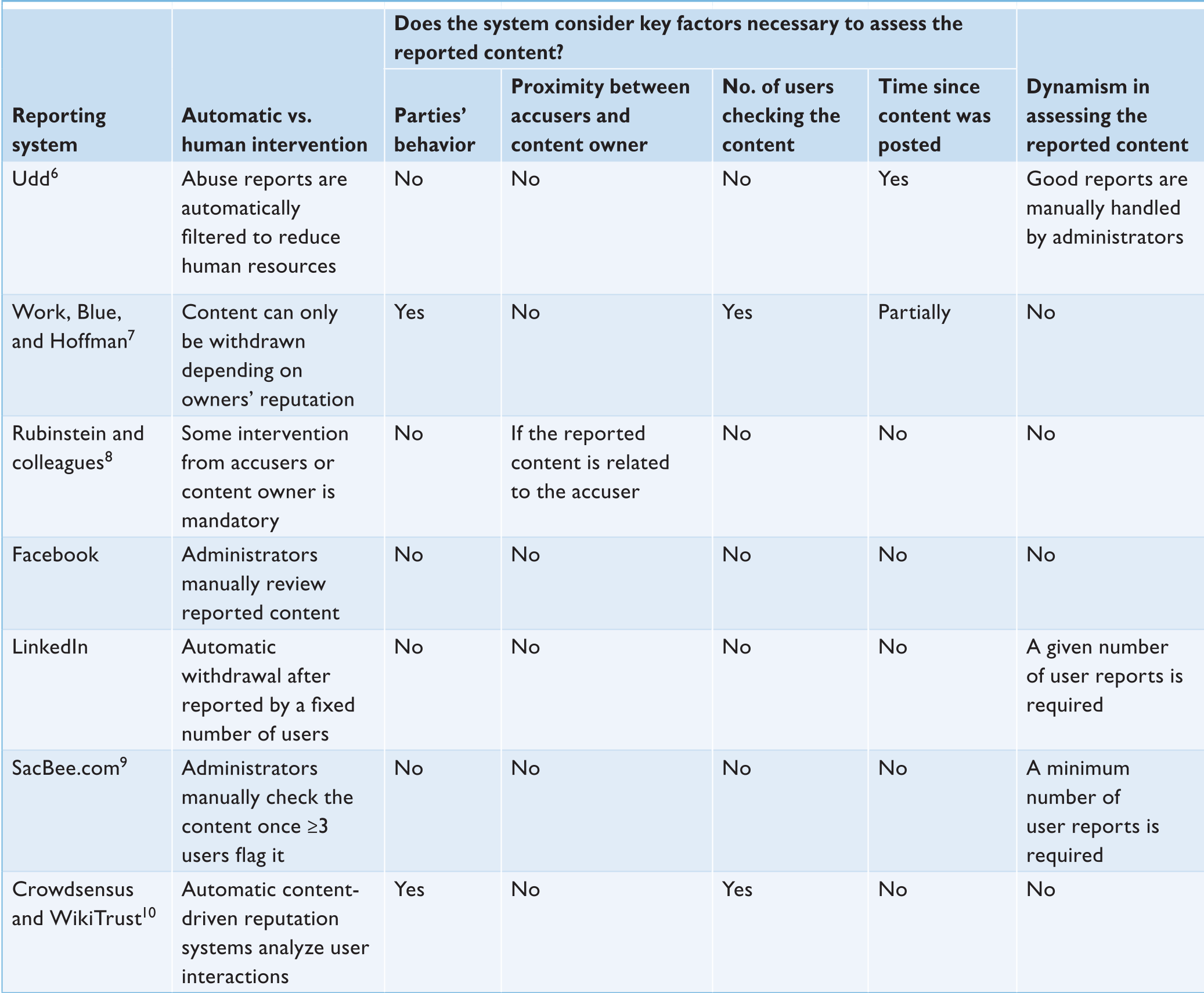 Table 1: Comparative analysis of the proposed system vs. existing platforms like Facebook and LinkedIn.
The results showed that in balanced environments, the system converges quickly. Honest users reach a reputation score of ~1.0, while malicious spammers are effectively silenced as their reputation hits 0, making their future reports invisible to the system.
Critical Insight: Why This Works
The "physical intuition" here is introducing friction and cost to reporting. In current SNSs, reporting is "free," which encourages noise. By making reputation a finite resource that must be "spent" and "earned," the authors create a self-correcting game-theoretical ecosystem.
Limitations & Future Work
While robust in simulation, the system's reliance on "content consumption" metrics could be gamed by bots that artificially inflate interaction to pump the DTT. Future studies will need to look at how these parameters ( and ) adapt to real-world "flash mobs" in highly polarized political environments.
Takeaway
Moderation isn't just a content classification problem; it's a trust infrastructure problem. By quantifying the honesty of accusers through a dynamic decay-reward loop, SNSs can protect both their administrators from burnout and their users from censorship.