
The Art of the "Digital Lie": Why Social Awareness Systems Need Deception by Design
Representing location in location-based social awareness systems
This paper investigates location disclosure behaviors in social awareness systems, proposing a mobile interface that explicitly supports "fudging" and deception. Through a survey of heavy social network users, the authors identify key social drivers for location lying and introduce a system that uses "disclosure circles" and landmark-based labels to balance privacy and connectedness.
TL;DR
In the world of location-based social networks, "truth" isn't always a feature—sometimes it's a bug. This paper argues that for location-sharing systems to succeed, they must move away from surgical GPS precision and instead embrace the messy, human social practice of deception. By allowing users to "fudge" their location via landmark-based labels and adjustable disclosure radii, the authors provide a blueprint for a more socially-intelligent digital landscape.
Problem & Motivation: The Tyranny of the Pinpoint
Most early location-based services (LBS) operated on a simple, engineering-centric logic: more accuracy equals a better service. However, human social life doesn't function on coordinates. We use location as a social cue—to signal availability, to offer excuses for being late, or to maintain "exclusivity" in certain gatherings.
The authors identify a critical gap: when systems provide unfettered accuracy, they strip away the social grease of small white lies. If your friend can see you are still at home when you texted "I'm just around the corner," the technology has failed to support your social identity. The problem isn't just privacy (keeping things secret); it's about impression management (controlling how you are perceived).
Methodology: High Connectivity, High Deception
The research targeted a demographic that lives at the intersection of high connectivity and high social stakes: heavy Facebook users.
The Survey Results
The findings were striking. Deception is not a rare occurrence but a standard social tool.
- Acquaintances: Only 19% of respondents never lie to them.
- Friends & Family: Approximately 40-45% of users report never lying, meaning more than half do lie to their closest circles occasionally.
The System: Designing for "Fudging"
Instead of a standard Google Maps style interface, the researchers built a prototype on the J2ME platform that prioritizes ambiguity.
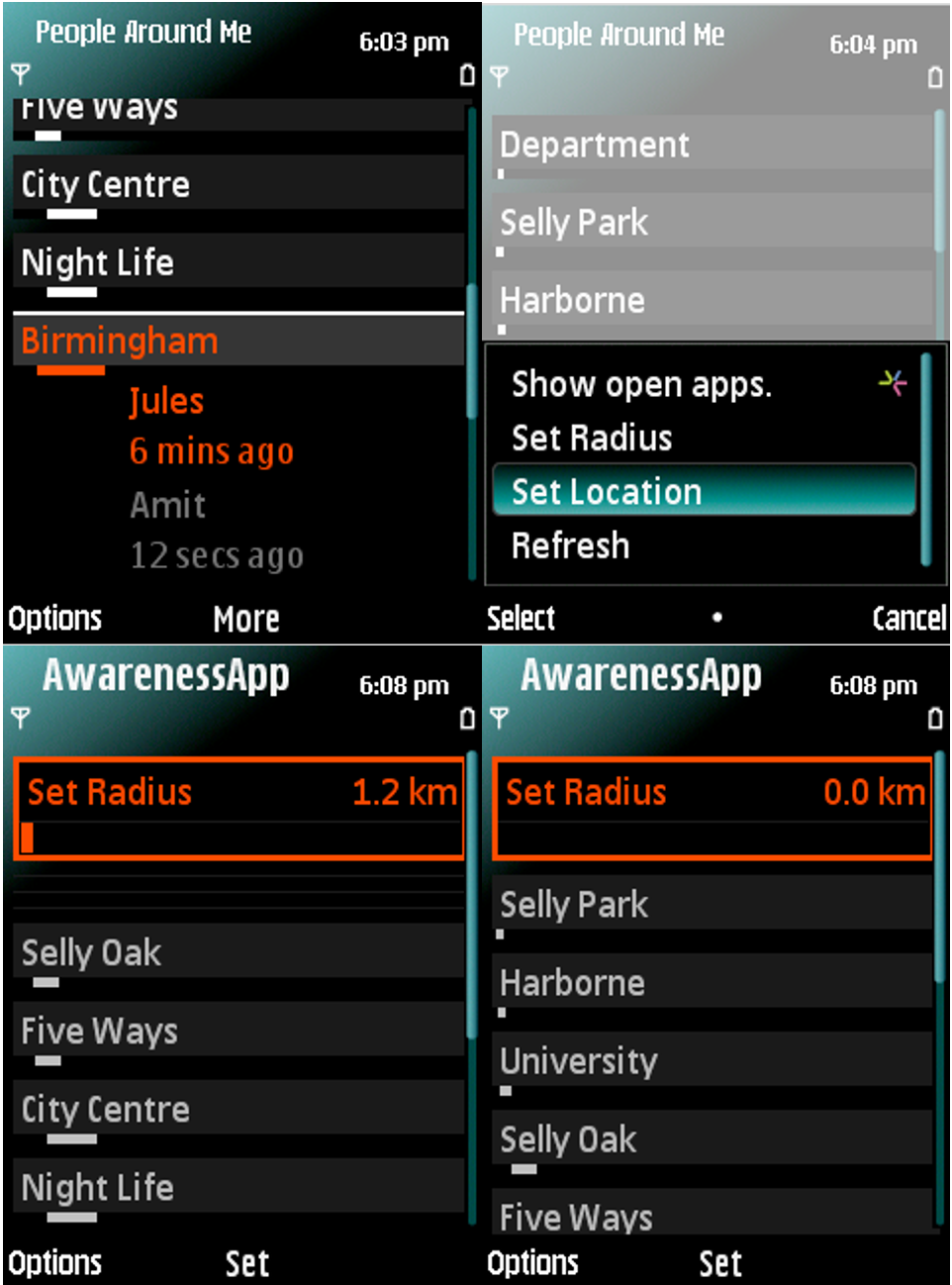 Figure 1: The mobile interface illustrating landmark-based lists and adjustable precision.
The system uses three main mechanisms:
- Place Labels: Users define areas like "City Centre" or "The Pub."
- Disclosure Circles: A slider that allows the user to expand the radius of their "perceived" location—the larger the circle, the more ambiguous the data.
- Manual Overrides: Users can explicitly move their location cue relative to landmarks to represent where they want to be seen, rather than where they actually are.
Experiments & Results: The Privacy-Detail Tradeoff
The study confirmed that "Requester Identity" is the #1 factor in deciding whether to share or lie. However, the way the location is represented also changes the user's comfort level.
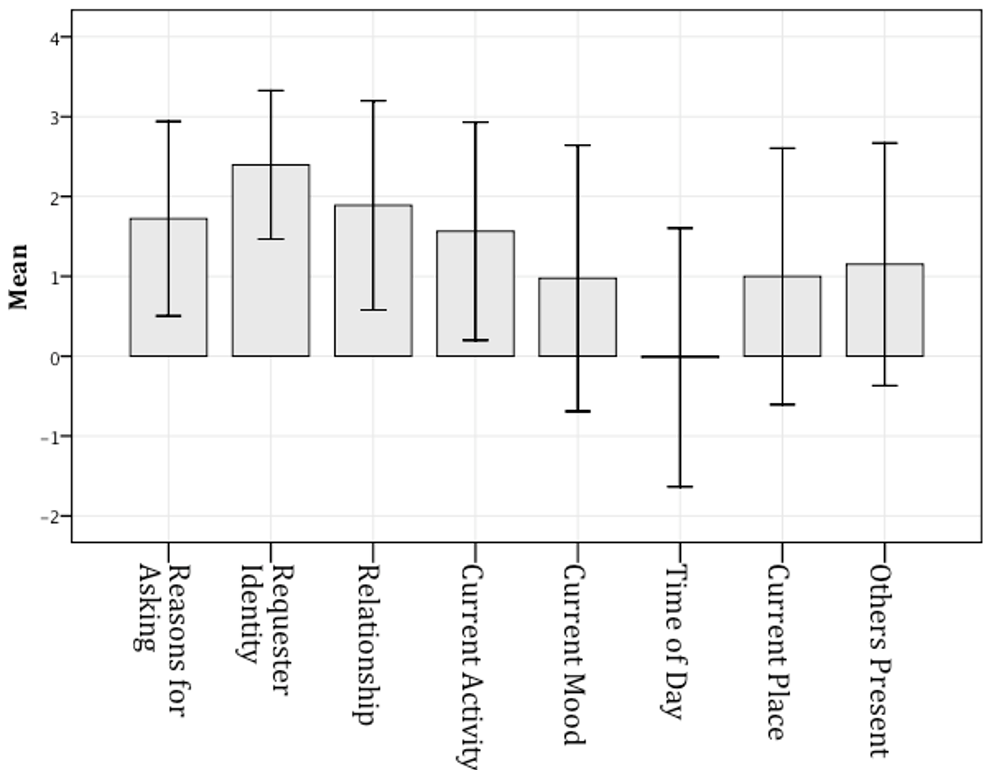 Figure 2: Analysis of the most important factors influencing the decision to disclose location.
Key Insight: There is a positive correlation between social network importance and openness to sharing, but a negative correlation with perceived deception. This suggests that the more we use these tools, the more we realize we need to lie to preserve our social sanity. Landmark-based visualizations (e.g., "I'm in Birmingham") were rated significantly more "comfortable" (M=4.80) than pinpoint GPS data (M=5.39/concern scale).
Critical Analysis & Conclusion
This paper is a seminal reminder that Context-Awareness must include Social-Awareness.
Takeaways
- Ambiguity is a Feature: Systems should not force precision. "Relative geographical terms" (e.g., "near the station") are often more useful and less "creepy" than a blue dot on a map.
- Explicit Deception Support: By allowing "fudging" in the UI, we give users "plausible deniability," which is essential for the long-term adoption of pervasive technologies.
Limitations & Future Work
The study was conducted in 2008, a time of different privacy norms. Today, with "always-on" tracking in apps like Find My or Snapchat, the cost of a lie has increased because automated sensors are harder to fool. The authors' future work on combining location with accelerometer data (to detect movement patterns) may ironically make it harder to fake being "busy," suggesting a perpetual arms race between surveillance and social evasion.
In conclusion, the paper successfully argues that a "perfect" system is one that allows its users to be "imperfect" social beings.