
The PROFIT Mechanism: Engineering Trust and Engagement in Financial Crowdsourcing
A Reputation-Based Incentive Mechanism for a Crowdsourcing Platform for Financial Awareness
This paper introduces a reputation-based incentive mechanism for the PROFIT platform, a crowdsourcing initiative designed to enhance financial awareness. The system integrates a dual-metric reputation score (participation vs. quality) with gamification elements like levels, badges, and social rewards to foster long-term user engagement.
TL;DR
To solve the chronic problem of user churn and misinformation in financial education, the PROFIT project introduces a sophisticated Reputation-Based Incentive Mechanism. By combining a weekly-recalculated quality metric with gamified "levels," the platform ensures that only high-quality, consistent contributors gain social status and moderation power.
Background: The Financial Literacy Gap
In an era of information overload, financial illiteracy remains a systemic risk. Traditional "Collective Awareness Platforms" (CAPS) often fail because they rely solely on altruism. The PROFIT platform changes the game by treating user participation as a measurable, rewardable asset.
The Problem: Why "Karma" Isn't Enough
Most commercial platforms (Reddit, eBay) use simple additive reputation:
- The Flaw: Once a user gains high points, they can "squat" on their reputation, providing low-quality content without consequence.
- The Manipulation: Malicious users can easily "farm" points through low-effort interactions.
- The Motivation Gap: Different demographics (professionals vs. students) require different "whys" to participate.
Methodology: The Dual-Metric Engine
The core innovation of this paper is the separation of Participation (Rp) and Quality (Rq).
1. The Participation Metric ()
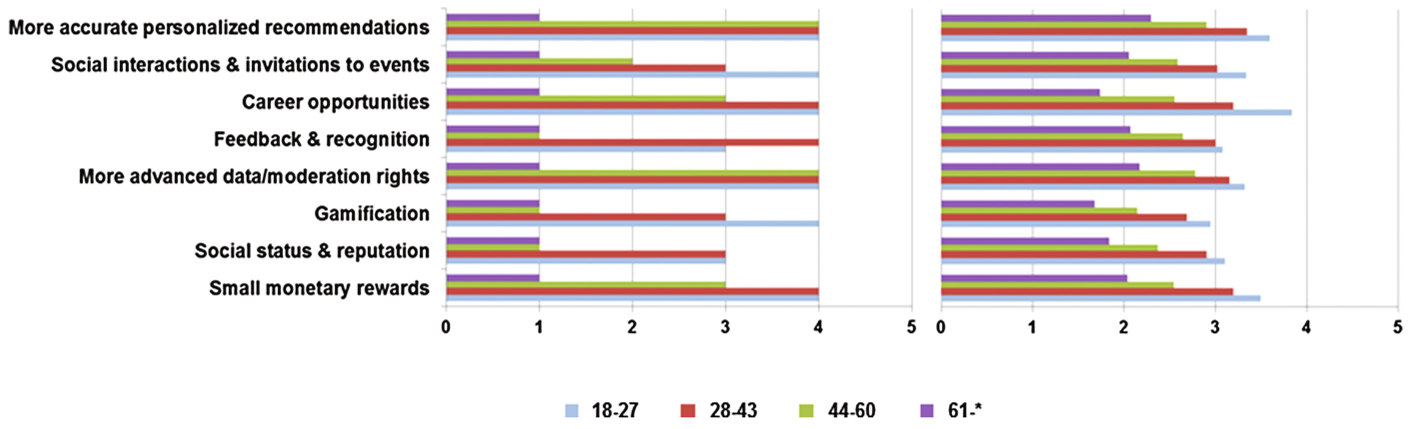
This is a "high-score" style system where users earn points for 17 distinct actions, ranging from inviting friends (+2) to posting financial articles (+15).
2. The Quality Metric () - The Weighted Guardian
The quality score isn't just a simple average. It uses a weighted formula where the "reputation of the rater" determines the impact of the rating:
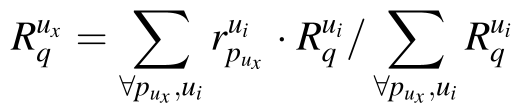
Physics Intuition: If an "Expert" (Level 4) likes your article, your quality score jumps significantly higher than if a "Newcomer" (Level 1) likes it. This creates a "circle of meritocracy."
3. Level Degradation & The Time Window
Unlike most platforms where you keep your rank forever, PROFIT implements a weekly recalculation. If your falls below 3.0 or you stay inactive for a week, you lose 500 points. This forces users to actively maintain their status.
Experiments: What Users Actually Want
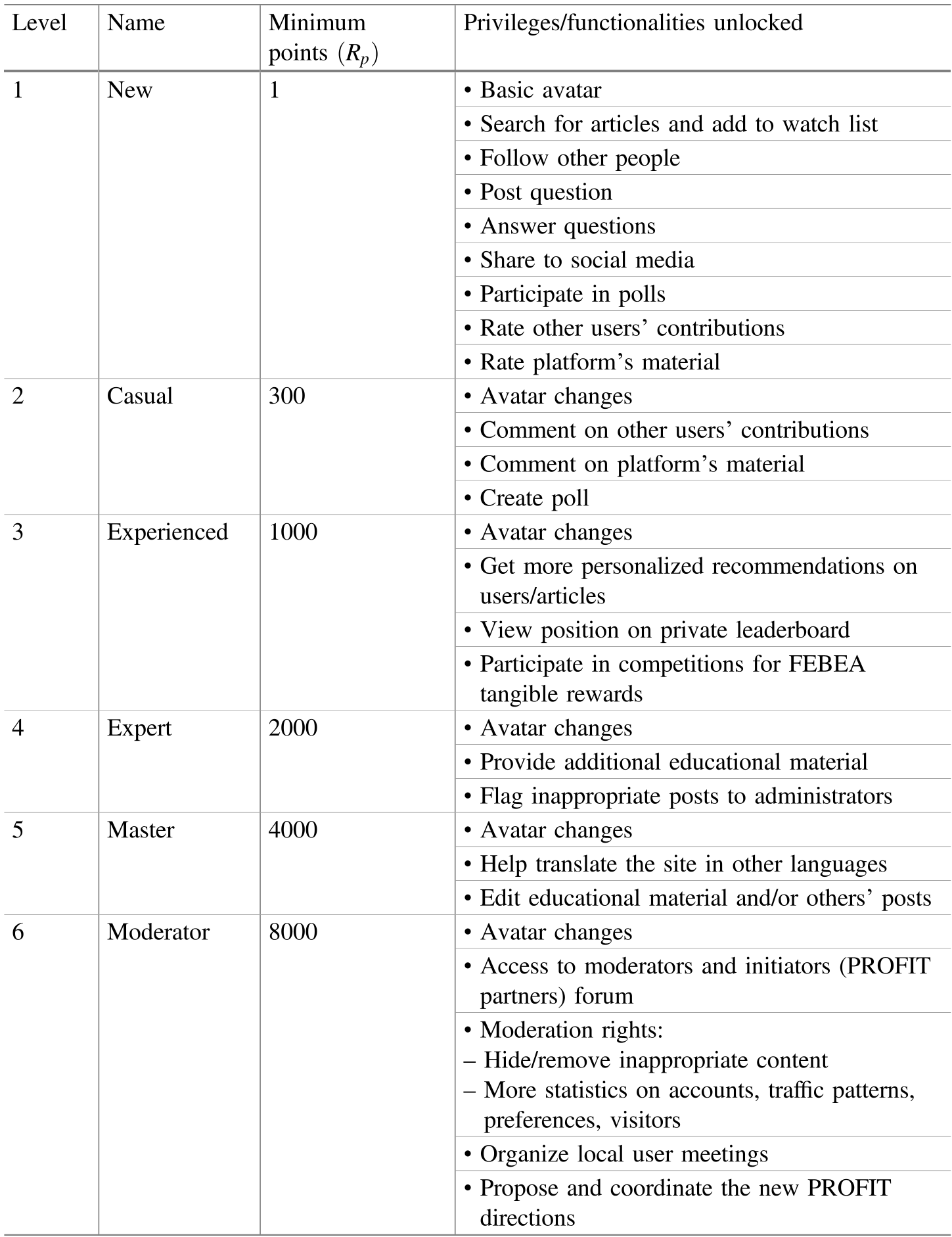
The researchers surveyed nearly 500 potential users to map incentives to demographics:
- Financial Experts: Motivated by "Self-Marketing" and private leaderboards.
- Unemployed/Students: Motivated by "Career Opportunities" and tangible prizes.
- Parents: Motivated by gamification elements for their children’s education.
Deep Insights: The Social Architecture
The platform’s UI (User Interface) is explicitly designed to visualize this "impact." The User Dashboard features a gauge chart for levels and a multi-line "impact chart" showing how many positive ratings a user’s posts received over time.
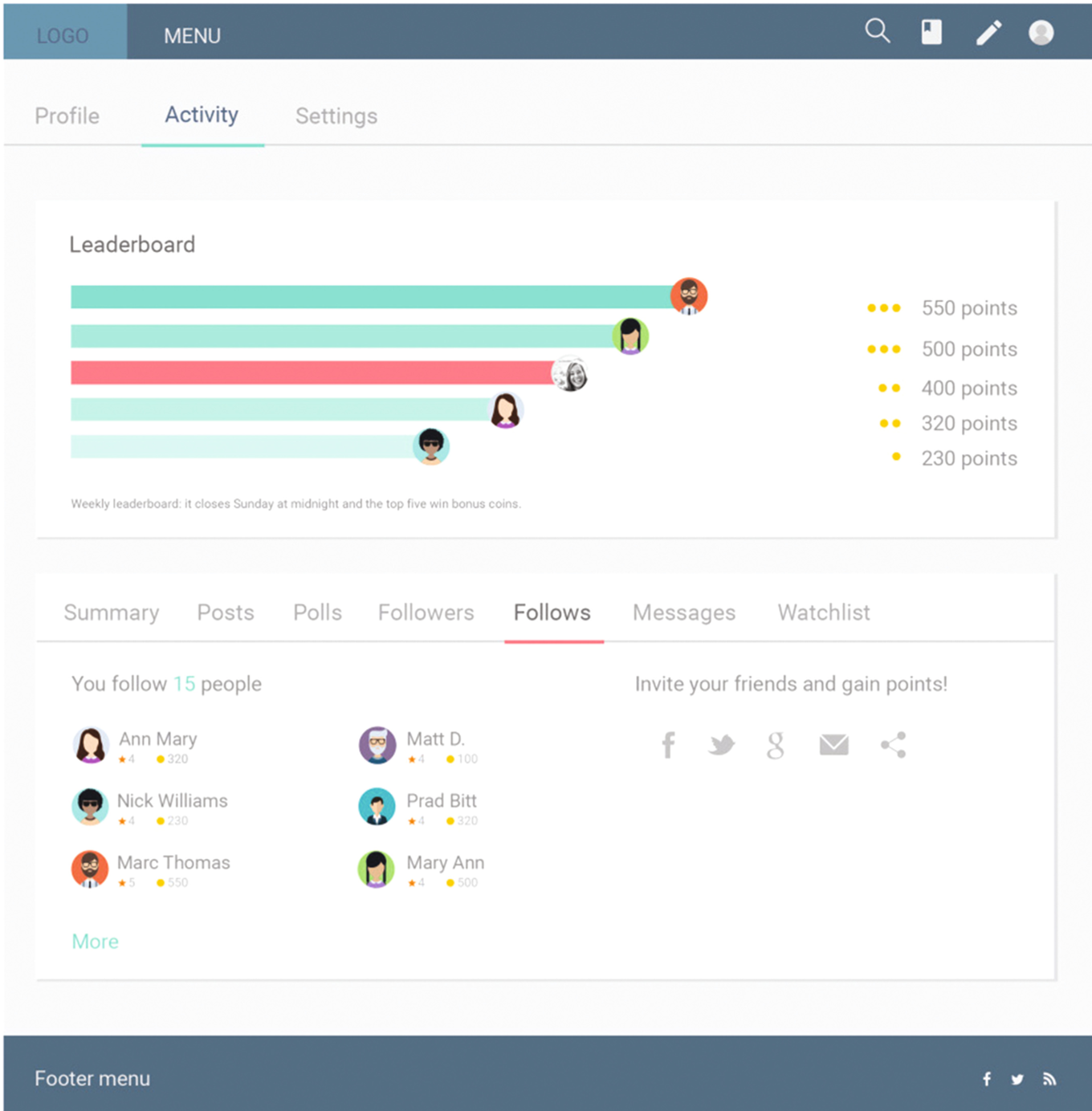
By avoiding public leaderboards (which can discourage beginners) and focusing on Private Leaderboards (visible to Level 3+), PROFIT balances healthy competition with a welcoming environment for newcomers.
Critical Analysis & Conclusion
This paper successfully bridges the gap between complex Bayesian reputation models and oversimplified "star ratings."
Takeaway: The "Level Degradation" is the most vital contribution. In an age of bot-driven content, forcing a "proof-of-activity" through a time-windowed reputation is a robust defense against platform decay.
Limitations: The system relies heavily on the honesty of the "initial" moderators. If the seed group is biased, the weighted-rating formula could inadvertently create an "echo chamber" where high-reputation users only boost each other’s scores. Future work should look at decentralized "checks and balances" for these top-tier moderators.