
Crowd4City: Enhancing Data Reliability in Geosocial Networks through Bayesian Reputation
Towards a reputation model applied to geosocial networks: a case study on crowd4city
This paper introduces a reputation model for geosocial networks, demonstrated through the "Crowd4City" system, which enables citizens to report urban issues. It utilizes a Bayesian reputation system and spam filtering to distinguish between reliable community contributors and malicious users/spammers.
TL;DR
Crowdsourcing the "eyes and ears" of citizens is a powerful tool for smart city management, but it is often plagued by spam and misinformation. This paper presents Crowd4City, a geosocial network that employs a sophisticated reputation model—leveraging Bayesian probability and interactivity analysis—to filter out malicious actors and ensure that city authorities listen to the most reliable "experts": the citizens themselves.
Problem: The "Human Sensor" Noise
While Volunteered Geographical Information (VGI) offers a dynamic view of urban issues (potholes, crime, traffic), it faces a massive reliability gap. Prior works like WikiCrimes or WeGov have attempted to bridge the gap between citizens and authorities, but they often struggle with:
- Malicious Users: Individuals who post false reports to deceive the system.
- Spam: Automated or low-quality content that clutters the decision-making space.
- Static Reputation: Point-based systems that don't account for the context or the longevity of a user's behavior.
Methodology: The Bayesian Shield
The authors propose a reputation model that doesn't just count likes; it processes the probability of truth.
1. The Architecture
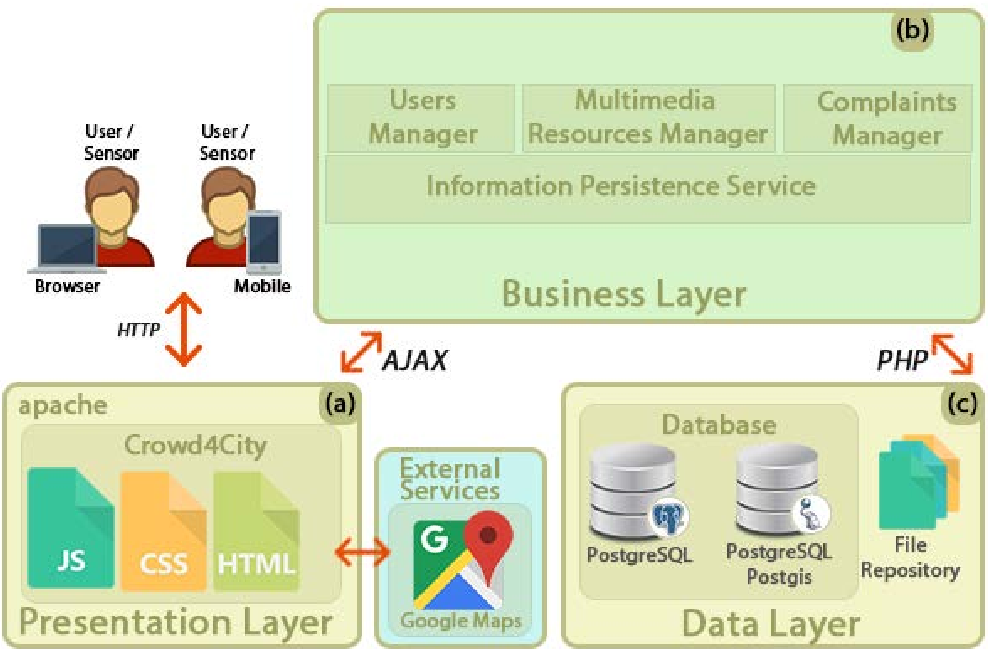
The system uses a modular three-tier architecture (Presentation, Business, and Data layers) to handle the complex spatial queries required for geosocial data.
2. The Core Mathematical Intuition
Instead of a simple average of votes, the model uses a Beta Probability Density Function (PDF). It treats user feedback ("I Agree" vs. "I Disagree") as binary outcomes in a series of trials.
- Prior Reputation: Every user starts with a base rate.
- Posterior Updating: Total reputation is continuously updated as new feedback arrives, using the formula: Where is positive feedback, is negative, is weight, and is the base rate.
3. Contextual and Interactivity Factors
The model introduces three critical refinement layers:
- Contextual Reputation: A user may be highly reliable regarding "Transportation" issues but unproven in "Public Health."
- Spam Longevity: To allow for "reformed" users, older negative reports carry less weight over time.
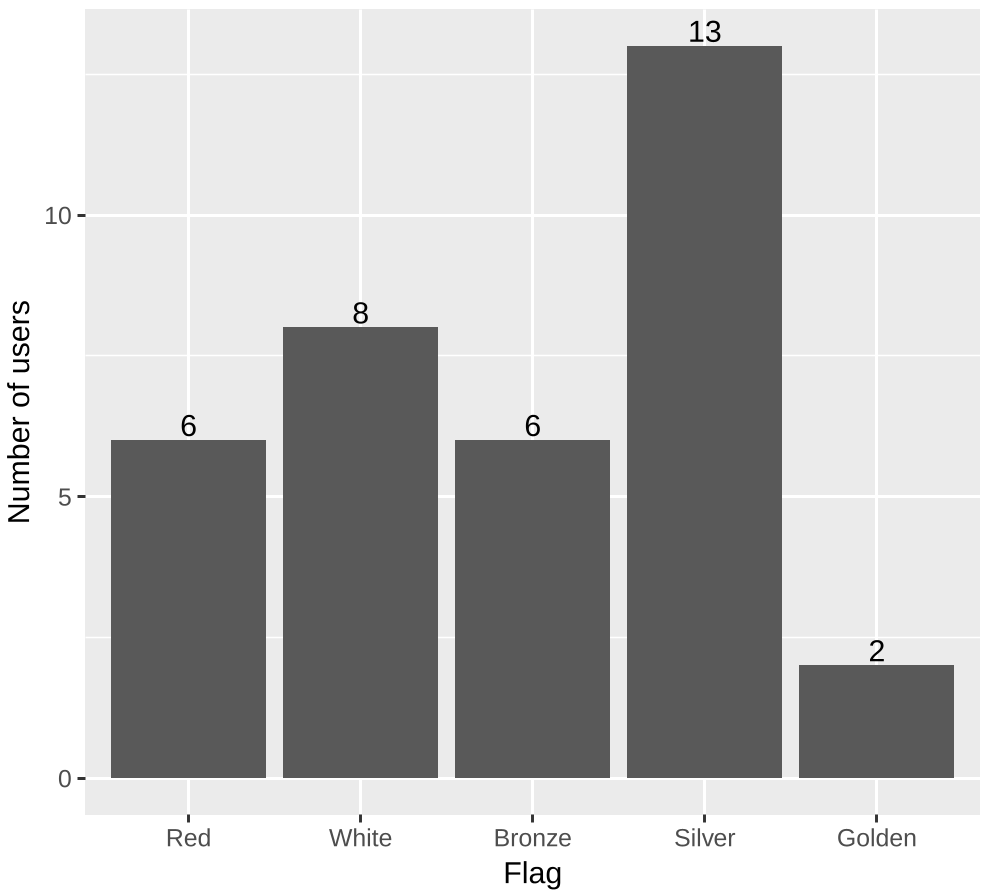
- The Interactivity Coefficient: Users who actively moderate the community (evaluating others, reporting valid spam) gain "Golden" status.
Experiments: Catching the Spammers
The model was validated with a cohort of 35 users over 6 weeks. To simulate a hostile environment, 5% of users were tasked with being malicious ("spammers").
Key Findings:
- High Accuracy: The model correctly identified 100% of the intentional spammers.
- Minimal False Positives: Only one user was misclassified as untrustworthy, early in the trial, due to a lack of interactivity and "collusion" by malicious actors.
- Behavioral Divergence: Malicious users actually contributed more posts (39%) than "Golden" users (22%), but their content was rapidly downvoted and flagged, showing that high activity high reputation.
Deep Insight & Conclusion
The true value of this work lies in its Inductive Bias toward community moderation. By weighting feedback based on the voter’s own reputation score, the system becomes resilient to "Sybil attacks" (where a user creates multiple accounts to upvote themselves).
Limitations: The current spam detection relies on a static dictionary. In a modern threat landscape, an adversarial AI could easily bypass this. Future iterations must incorporate Transformer-based NLP to detect more nuanced misinformation.
Takeaway: In the era of the Smart City, data is a commodity, but trust is the currency. Crowd4City provides a blueprint for how probabilistic models can turn a noisy crowd into a reliable sensor network.