
Establishing Trust in the Wild: A Hybrid Reputation System for Pervasive Social Networking
Implementation of a Reputation System for Pervasive Social Networking
This paper presents a hybrid reputation system designed for pervasive social networking on Mobile Ad Hoc Networks (MANETs). Implemented on Nokia N900 smartphones, the system integrates a distributed "Local Reputation" and a centralized "General Reputation" via a Trusted Server (TS) to ensure reliable interaction among strangers in proximity-based social groups.
TL;DR
Communicating with strangers in a Mobile Ad Hoc Network (MANET) is a game of risk and reward. This paper introduces a robust reputation system that allows mobile users to build trust through a dual-layer evaluation: Local Reputation (peer-to-peer) and General Reputation (server-verified). By combining these with dynamic pseudonyms and intuitive UI visualizations, the researchers provide a blueprint for secure, proximity-based social interaction without the need for constant Internet access.
Background: The MANET Trust Gap
Mobile Ad Hoc Networks (MANETs) are no longer just for military use; they are becoming practical for "pervasive social networking"—think Groupon for people physically near you, or instant carpooling coordination. However, these interactions usually happen between strangers. Prior works like AdSocial or Junction focused purely on the "connectivity" aspect, leaving a massive gap: How do I know if I can trust the stranger I'm chatting with?
The Hybrid Strategy: Why Centralization Helps Decentralization
A purely distributed system is vulnerable to "Sybil attacks" (where one user creates many identities) and "Inconsistency" (where different nodes see different behaviors). Conversely, a purely centralized system requires constant connectivity, which defeats the purpose of an ad-hoc network.
The authors propose a Hybrid Reputation Management Framework:
- Local Level: Nodes track their own experiences with peers, leading to a "Local Reputation."
- Global Level: A Trusted Server (TS) acts as an anchor, issuing signed Reputation Tokens that encapsulate a user's global standing and their current temporary identity (pseudonym).
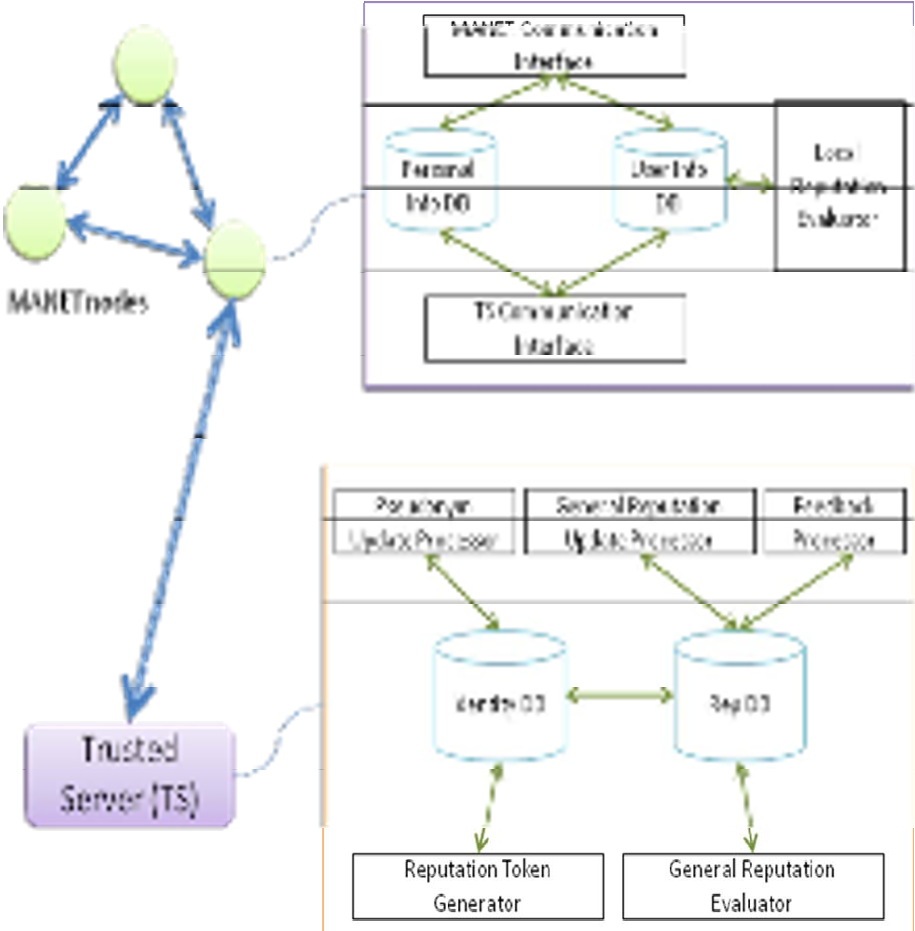 Figure 1: The dual-layered architecture combining local node modules with the Trusted Server.
Methodology: The Life of a Reputation
The system operates in an iterative loop:
- On-Chat Voting: During a conversation, users can vote "Up" or "Down" on specific messages. This immediately affects the Local Reputation indicator.
- Feedback Sync: Periodic reports are sent to the Trusted Server, which updates the General Reputation.
- Privacy through Pseudonyms: To prevent long-term tracking, users can update their pseudonyms. The TS ensures that the trust score follows the user to the new pseudonym, but applies "fuzzy visualization" to prevent attackers from linking old and new identities.
Implementation & Visualization
The system was built for the Nokia N900, utilizing an energy-efficient social networking platform. A critical feature of this research is Usable Trust Management—how the data is presented to the human user.
The system offers multiple visualization schemes:
- Battery Power: Reputation is shown as a battery level (Green/Full = High Trust).
- Growth Metaphors: Flower stages or cartoon characters that evolve as reputation grows.
- Diamonds/Crowns: Used for displaying the authoritative General Reputation.
 Figure 2: The Chatting UI showing local reputation indicators (battery icons) and on-chat voting options.
Experimental Validation
Using a "taxi-sharing" use case, the authors demonstrated that providing detailed reputation information (including interaction history) allows users to make safer decisions. By clicking "Details," a user can see exactly why a peer has a certain score, mitigating the "black box" problem of automated trust scores.
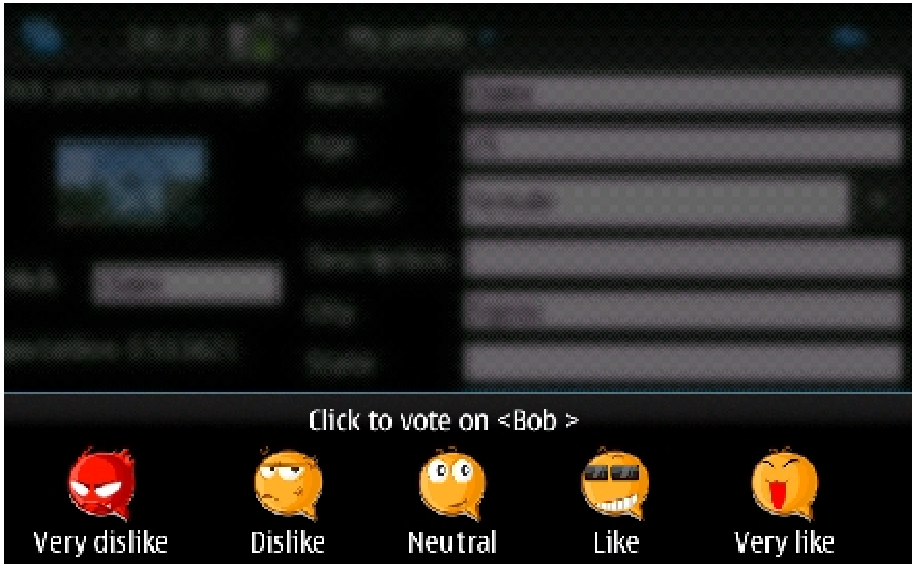 Figure 3: Transparency in trust—users can inspect the interaction records that comprise a reputation score.
Critical Insight & Conclusion
This paper is a pioneer in moving reputation systems from the web (like eBay) into the dynamic, physical proximity of MANETs.
Key Takeaways:
- Inductive Bias: The system assumes that physical proximity implies a higher likelihood of repeated social encounters, making historical local data valuable.
- The Privacy Paradox: Trust requires identity, but social privacy requires anonymity. Using a Trusted Server to bridge pseudonyms is a pragmatic (though centralized) solution to this paradox.
- Future Impact: While the Nokia N900 is a legacy device, the principles of this hybrid framework are directly applicable to modern decentralized social protocols (e.g., Farcaster or Nostr) and V2X (Vehicle-to-Everything) communications.
Limitations: The reliance on a Trusted Server (TS) creates a single point of failure and requires at least occasional internet/cellular access, which may not always be available in extreme MANET scenarios.