
Beyond the Mask: A Multi-Physiological Fusion Platform for Authentic Emotion Recognition
Research and Implementation of Emotion Recognition Platform Based on Multiple Physiological Signals
This paper presents a multi-modal emotion recognition platform that integrates Electrocardiogram (ECG), Skin Conductance (SC), and Respiration (RSP) signals. By extracting 12 chaotic characteristic parameters and utilizing a C4.5 decision tree classifier, the system achieves robust identification of Joy, Anger, and Sadness.
TL;DR
Human emotions are often masked by external expressions, but the body's internal signals rarely lie. This paper develops a visual platform that fuses ECG, Skin Conductance (SC), and Respiration (RSP) data to identify emotions like Joy, Anger, and Sadness. By utilizing Chaotic Characteristic Parameters and a C4.5 Decision Tree, the system provides a more objective and authentic emotional assessment than traditional facial or voice recognition.
Problem & Motivation: The Subjectivity Trap
Most AI-driven emotion recognition systems focus on "Performance Emotions"—the smiles we show to cameras or the tone we adopt in speech. These are subject to social masking and personal control. In contrast, physiological signals are governed by the cerebral cortex and the autonomic nervous system, making them objective and authentic indicators of human state.
The challenge, however, is that biological data is inherently noisy and non-linear. A single signal, such as heart rate alone, is often insufficient to distinguish between high-arousal states like anger and joy.
Methodology: The Power of Chaos
The authors suggest that biological signals are not just random noise but "chaotic" systems. They extract four key types of chaotic metrics across three signal types, resulting in a 12-dimensional feature vector for each subject:
- Complexity (Lempel-Ziv): Distinguishes between periodic and random signals.
- Box Dimension: Measures the fractal nature of the physiological waveform.
- Information Entropy: Quantifies the uncertainty and system disorder.
- Approximate Entropy: Measures the likelihood of new patterns emerging in the time series.
Platform Architecture
The platform is built using a hybrid of C# for the UI/Database and MATLAB for the heavy mathematical heavy-lifting of feature extraction.
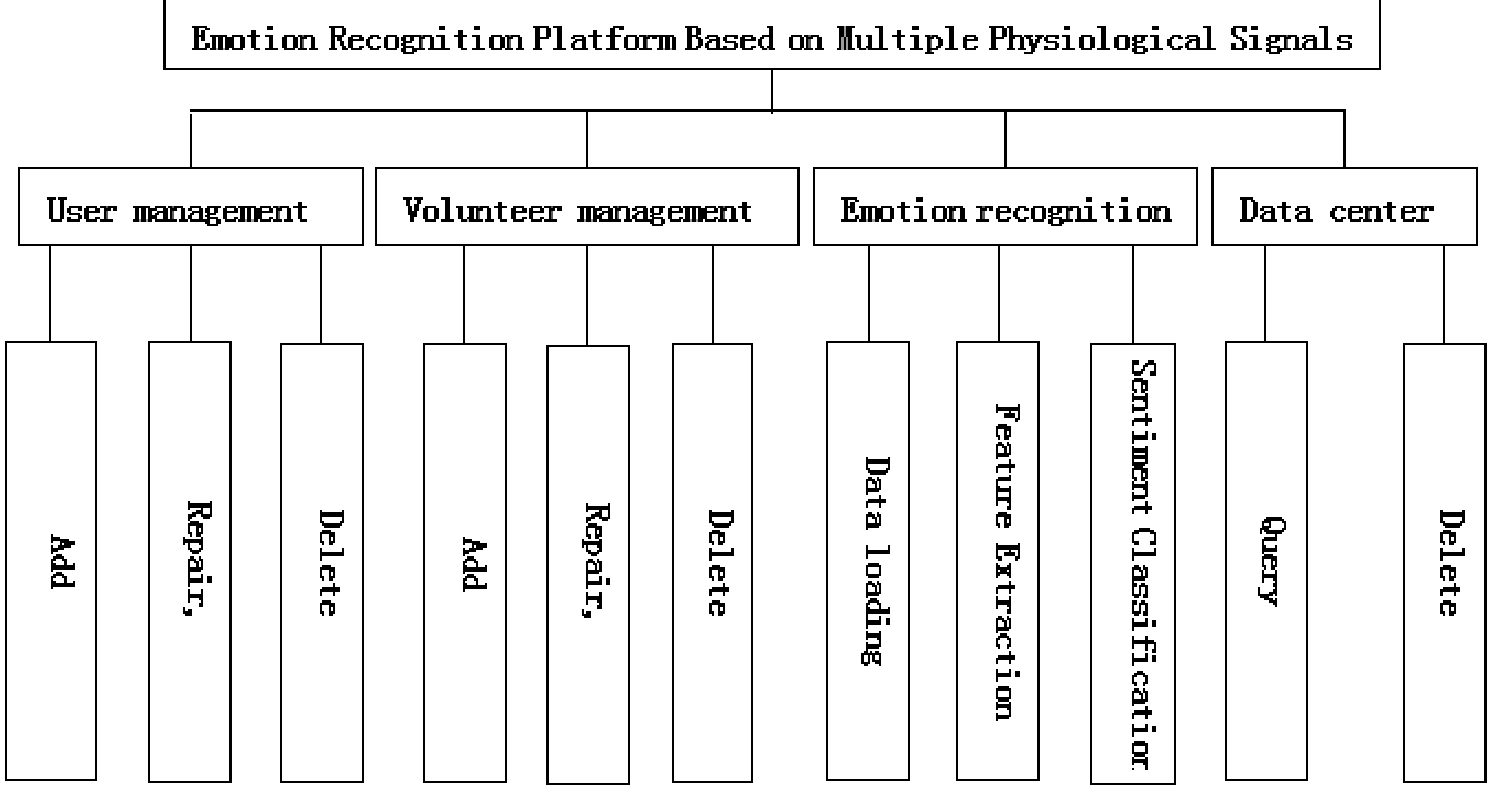
The C4.5 Decision Tree was chosen for classification because of the relatively low-dimensional feature set and the need for high operational speed in a real-time platform.
Experiments & Results: Real-time Emotional Intelligence
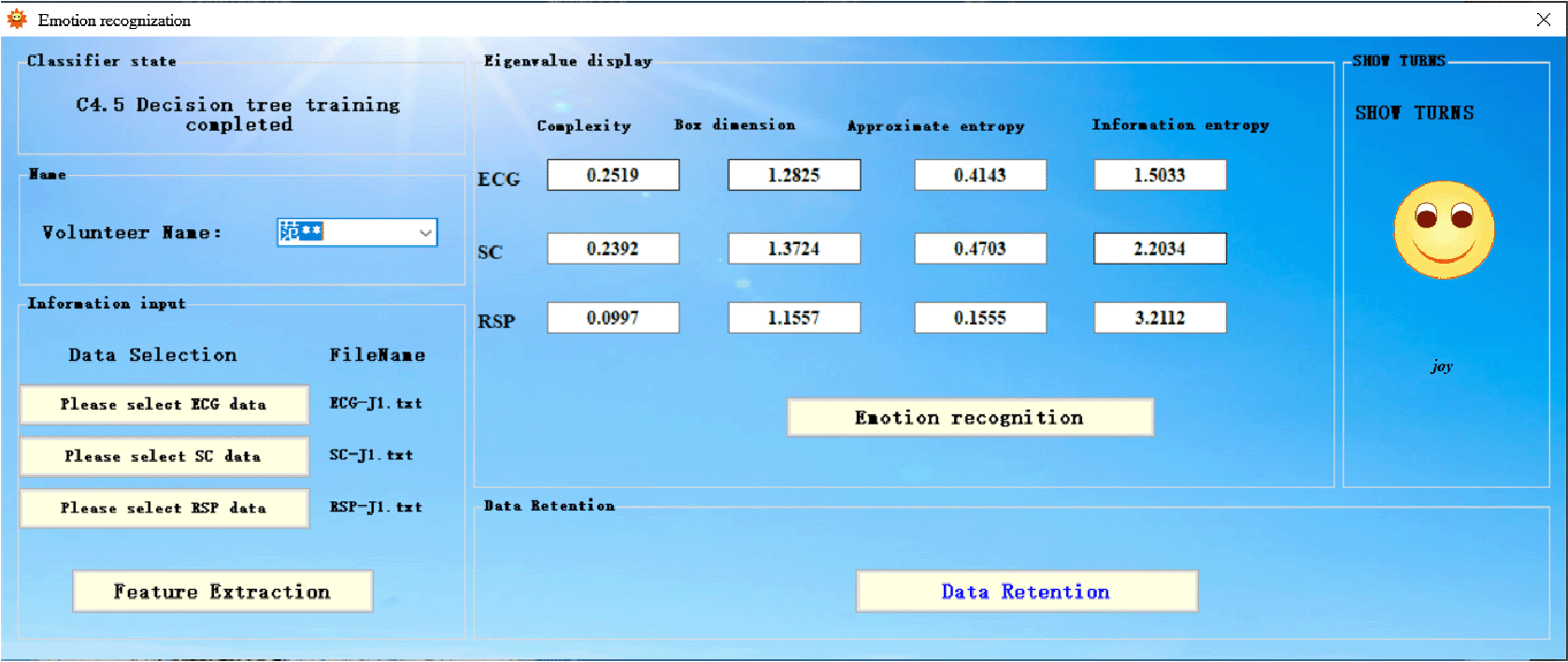
The system workflow follows a "Load-Extract-Classify" pipeline. By reading data from .txt files, the MATLAB engine calculates the 12 chaotic parameters, which are then fed into the trained C4.5 model.
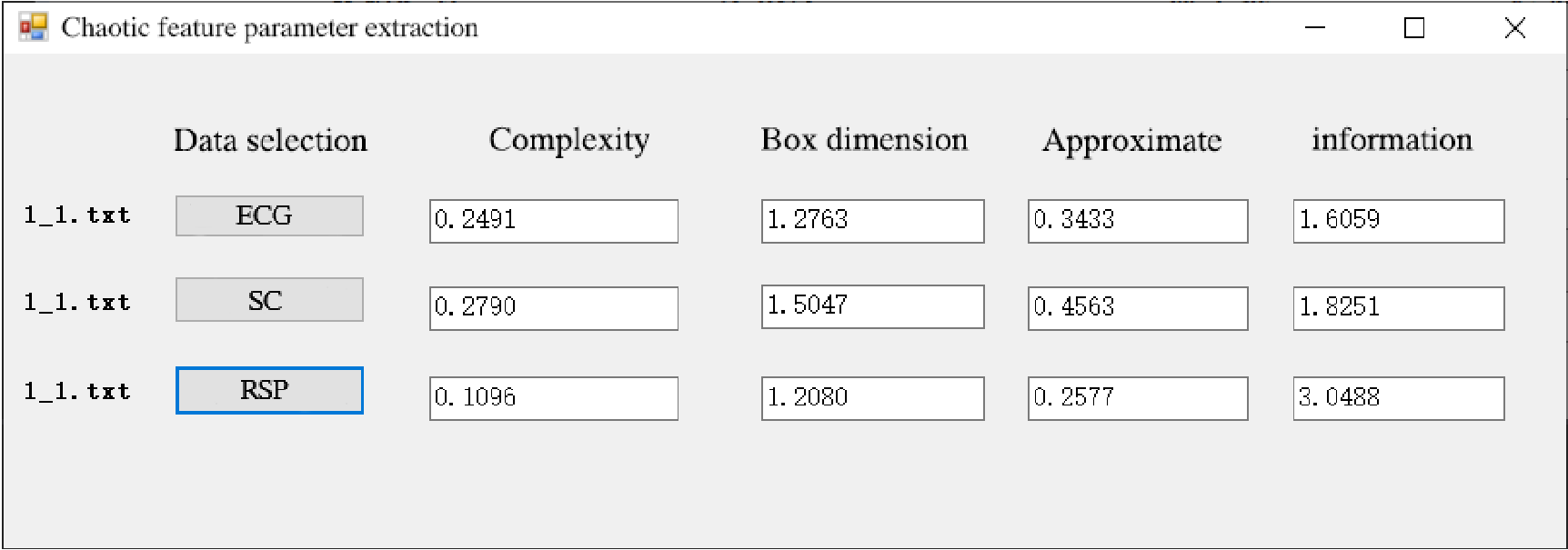
Key findings from the implementation include:
- Fusion Advantage: Multi-signal fusion significantly reduces the mapping ambiguity compared to single-signal analysis.
- Visual Management: The platform integrates a SQL Server database, allowing clinicians to track emotional changes over long periods, which is vital for treating patients with autism or language disorders.
Deep Insight & Conclusion
While this work provides a solid architectural foundation for emotional monitoring, its reliance on offline TXT data processing suggests a roadmap for future Live Stream Processing.
Takeaway: The transition from extrinsic (facial) to intrinsic (physiological) emotion recognition is a paradigm shift for AI. By moving away from deep learning "black boxes" toward interpretable chaotic features, we can build more reliable systems for critical applications like healthcare and criminal investigation.
Limitations: The research identifies three basic emotions, but the complexity of human affect (e.g., anxiety, boredom) might require more sophisticated non-linear kernels beyond a standard decision tree.