
5G-I-VEmoSYS: Transforming the Smart City into an Emotionally Aware Ecosystem
13036_Research Challenges and Security Threats to AI-Driven 5G Virtual Emotion Applications Using Autonomous Vehicles, Drones, and Smart Devices.
The paper introduces 5G-I-VEmoSYS, an AI-driven integrated virtual emotion system that leverages 5G networks, autonomous vehicles, and drones to recognize and respond to human emotions. It defines a tripartite framework comprising AI-VEmoBAR (detection), AI-VEmoFLOW (information flow), and AI-VEmoMAP (spatiotemporal mapping) to enhance public safety and private well-being.
TL;DR
Researchers have proposed 5G-I-VEmoSYS, an AI-driven framework that enables 5G networks to "feel" human emotions through wireless signals. By integrating autonomous vehicles and drones as mobile sensors, the system identifies emotional states like rage or fear to prevent crimes and traffic accidents. However, this emotional awareness opens a new Pandora’s box of security threats, requiring sophisticated AI-based countermeasures.
The "Emotional" Gap in Smart Infrastructure
Current smart city initiatives focus heavily on physical parameters—traffic flow, energy consumption, and structural health. Yet, the human element—emotion—is often the catalyst for critical events (e.g., road rage leading to accidents or extreme fear indicating a crime).
Existing emotion recognition systems are typically camera-based, raising massive privacy red flags, or are stationary, creating "blind spots" in dynamic urban environments. The authors argue that 5G’s high bandwidth and low latency provide the perfect backbone to move emotion detection from isolated labs to city-wide autonomous systems.
Methodology: The 5G-I-VEmoSYS Architecture
The system is built on three conceptual pillars that transform raw signal reflections into actionable intelligence:
- AI-VEmoBAR (The Barrier): Uses wireless signal reflections (RF) to detect emotions without cameras. RSUs and autonomous cars act as the detection net.
- AI-VEmoFLOW (The Stream): Manages how this emotional data moves through the 5G edge, ensuring anonymity while maintaining real-time updates.
- AI-VEmoMAP (The Visualization): Aggregates data to create a city-wide "emotional heat map" for service providers and emergency responders.
Mobile Recovery via Drones
A standout feature of this methodology is the use of UAVs (Drones). When a fixed sensor (RSU) fails or a "hole" appears in the detection barrier, smart drones are dispatched to that specific location to provide coverage and recharge at UAV Ground Stations (UGS).
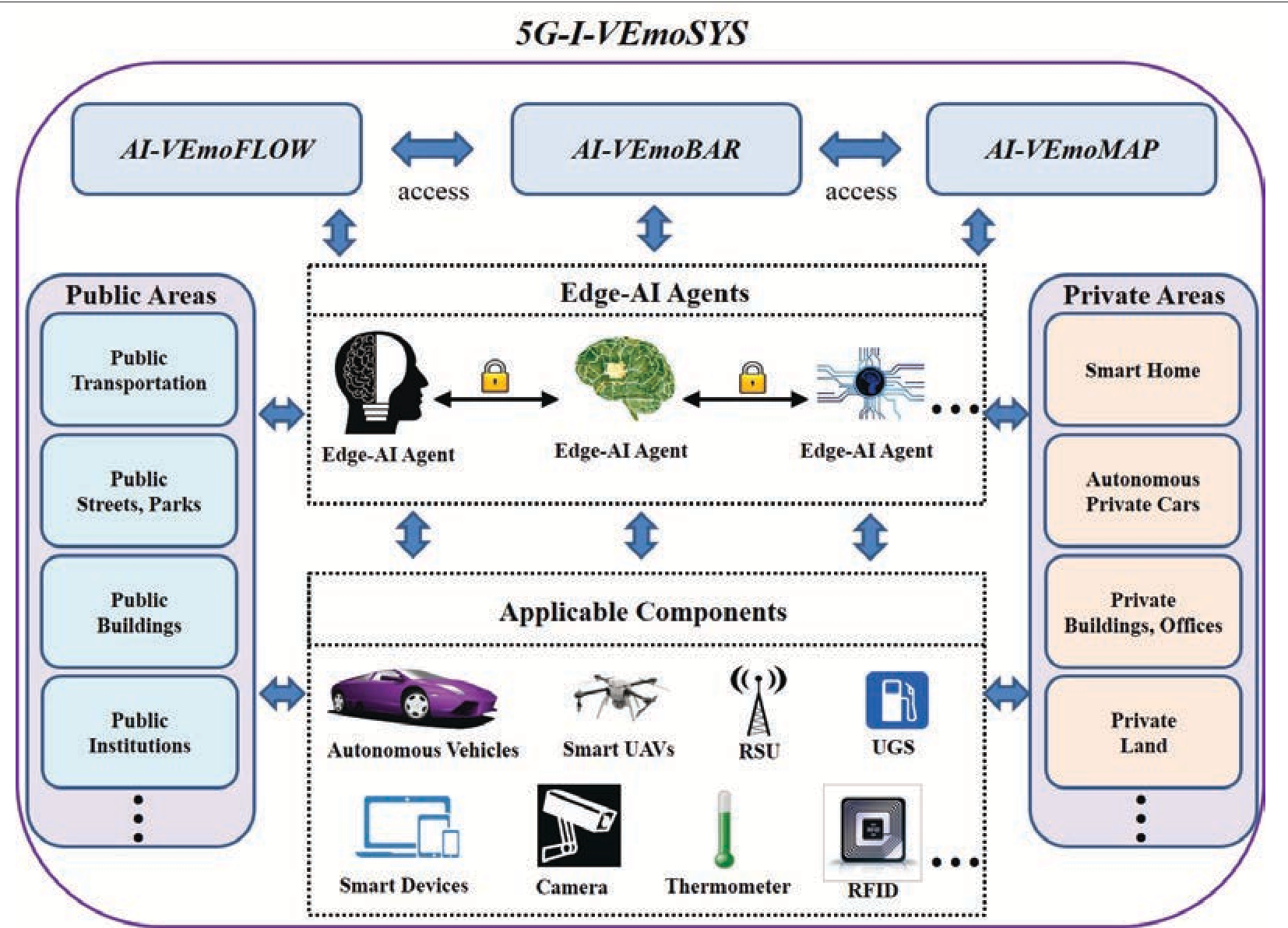 Figure 1: The holistic view of 5G-I-VEmoSYS integrating vehicles, drones, and humans.
Critical Scenarios: Public Safety vs. Private Privacy
The paper distinguishes between public and private spaces, applying a Differential Perspective:
- Public (Streets/Parks): The system monitors for "extreme fury" or "rage" to preemptively alert police to potential criminal activity.
- Private (Autonomous Cars): If a car is hijacked, the internal AI detects the owner's "extreme fear" and automatically triggers an emergency notification to the police while warning nearby pedestrians of a potential collision.
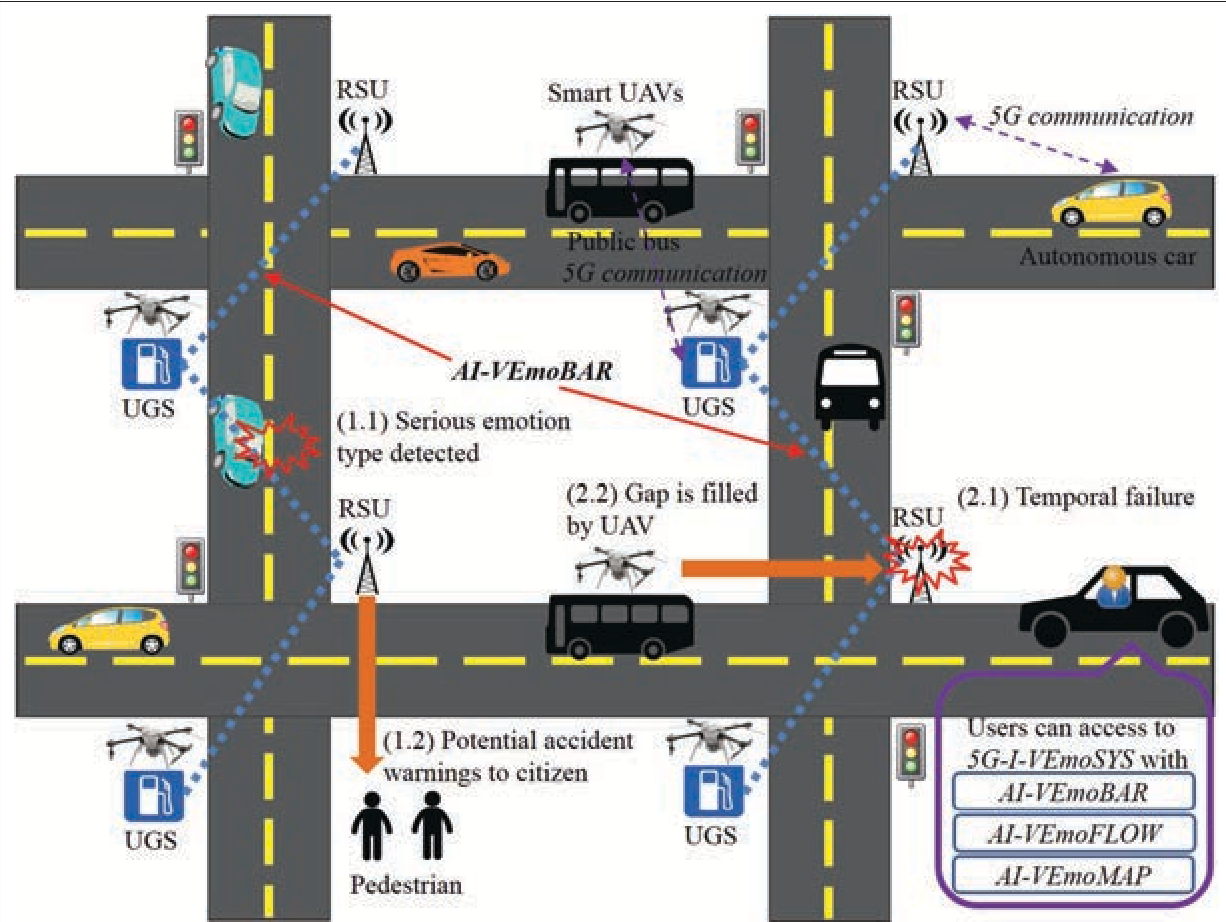 Figure 2: Smart drones filling detection gaps and recharging at UGS units.
Security Threats: The AI Arms Race
As we grant AI the power to read our emotions, the security stakes skyrocket. The paper outlines three critical threats:
- Signal Forgery: Attackers can spoof wireless signals to "fake" an emergency, causing mass confusion or system DDoS via unnecessary alerts.
- Anonymity Abuse: Malicious actors could inject poisoned emotional data into the AI-VEmoMAP, degrading its accuracy and creating "safe zones" for crime.
- System Hijacking: Unauthorized access to the AI-agent could turn a safety system into a surveillance tool.
The authors suggest a shift toward Active Counter-Attacks. Instead of just blocking unauthorized access, 5G-I-VEmoSYS is designed to track and "counter-attack" the penetrator using AI-based attack selection.
Conclusion & Future Outlook
5G-I-VEmoSYS represents a significant leap toward more "human-centric" smart cities. By moving from visual surveillance to RF-based emotion detection, it balances safety and privacy more effectively than traditional methods. However, the reliance on AI-driven signals necessitates a new standard for Information Integrity and Zero-Trust architectures in 5G/B5G systems.
Final Takeaway: In the future, your car won't just drive you; it will monitor your stress levels to ensure the city around you stays safe—provided we can keep the AI defenders one step ahead of the AI attackers.