
FansClub: Engineering Emotional Connection in the Age of Digital Fandom
Research on Cultural Recreation and Interactive Design of Social Applications
This paper introduces FansClub, a specialized vertical social application designed to centralize fan-celebrity interactions. By integrating information aggregation, ticket competitions, and community forums, the study establishes a standardized third-party platform that bridges the emotional and functional gaps left by fragmented social media.
TL;DR
The modern fan experience is often a chaotic journey across fragmented platforms like Weibo, Instagram, and specialized forums. FansClub is a research-driven social application designed to harmonize this chaos. By combining deep user psychology—ranging from safety needs to the desire for participation—with a robust technical framework, the authors have built a vertical platform that achieves a 75%+ satisfaction rate by turning idol-worship into a structured, interactive community.
The "Pain Gap" in Contemporary Fan Culture
Despite the billion-dollar scale of the "fan economy," current digital tools are surprisingly inadequate. The authors identify three core deficiencies in the status quo:
- Platform Fragmentation: Fans suffer from "information fatigue," needing VPNs or multiple logins to track a single celebrity's movements.
- Lack of Safe Interaction: While fans crave "closeness," general social media is often toxic or lacks authenticated channels for direct celebrity-to-fan communication.
- Passive vs. Active Participation: Most platforms are consumption-centric. Fans, however, want to contribute and be recognized for their loyalty.
Methodology: personas and Architecture
The research began by categorizing fans into three psychological archetypes:
- The Potential Fan: Low engagement, superficial interest.
- The Faithful Fan: High sense of identity and belonging.
- The Fanatic Fan: High emotional investment, potentially anti-social if not channeled correctly.
To cater to these groups, the FansClub Information Framework was designed as a multi-layered ecosystem:
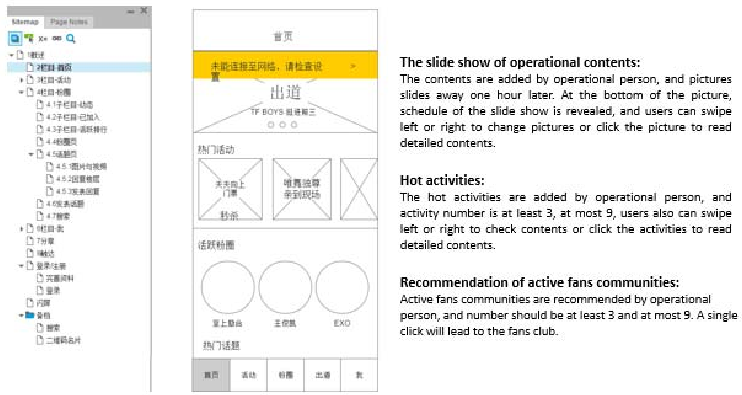
Technical Moat
To ensure the app didn't succumb to the "laggy" reputation of many community apps, the team employed several high-level optimizations:
- Thread Pooling: Used to handle background interactions without triggering UI freezes or ANR (Application Not Responding) errors.
- Lint & Wakelock: Specifically used to minimize RAM occupancy and battery drain, crucial for a user base that spends an average of 1.5 hours daily on social apps.
- Gzip Compression: Custom-improved Gzip at the framework layer ensured that data exchange was both fast and efficient.
Key Findings and Competitive Edge
A core innovation of FansClub is the "Ticket Competition" module. By allowing users to earn points through daily "check-ins" and community engagement, the app converts digital loyalty into physical rewards (concert or variety show tickets). This creates a self-sustaining loop of Stickiness.
Usability Performance
The competitive analysis (SWOT) against giants like Baidu Post Bar and QQ Groups showed that while those platforms have massive traffic, they suffer from "low-quality interaction" and "unstable community structure." FansClub, by contrast, focused on "Member Purity."
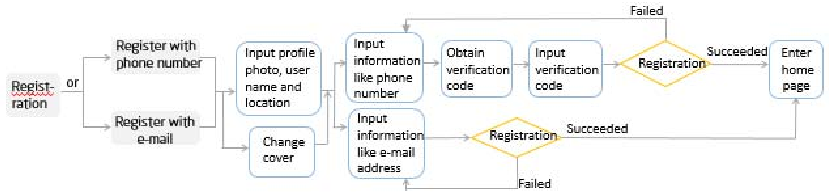
The results in Table II highlight that the "Exclusive Source" and "Nice Interface" were the highest-rated features, proving that fans value aesthetic quality as much as the content itself.
Critical Insight: The Future of Vertical Social
The success of FansClub suggests that the future of social media isn't "broader" but "deeper." The authors admit that while their product is successful, its next frontier is AI-driven interest locating.
The transition from a C/S (Client/Server) model to a hybrid B/S framework using XML analysis will be the key to maintaining a lightweight app while offering the heavy-duty data processing required to keep fans "fresh" and engaged. In an era where "belief in idealism is weaker," as the authors note, these digital sanctuaries for cultural recreation are becoming the new town squares of the post-90s generation.