
ASNs: The Quiet Disruptors of the Academic Publishing Ecosystem
Research output availability on academic social networks: implications for stakeholders in academic publishing
This paper examines the rise of Academic Social Networks (ASNs) like ResearchGate and Academia.edu as dominant platforms for research dissemination. Through a multi-method case study of Hanken School of Economics, it reveals that ASNs have overtaken institutional repositories and personal websites in providing full-text access to scholarly articles.
TL;DR
Academic Social Networks (ASNs) like ResearchGate have moved from the periphery to the center of research dissemination. This study shows they are now the primary source for full-text articles, outperforming institutional repositories by offering superior discoverability and "vanity metrics," even as they operate in a legal "grey area" regarding publisher copyright.
The "Repository Gap": Why Traditional OA is Faltering
For years, universities have poured millions into institutional repositories. However, these systems often feel like administrative burdens to researchers rather than tools for growth. The core problem is friction: high effort for low perceived reward.
The authors argue that while repositories offer long-term stability, they lack the "social gravity" and automated ease that commercial platforms provide. This creates a vacuum that ASNs have stepped into, leveraging venture capital-backed UX design to capture the academic market.
Methodology: A Trifold Perspective
The study doesn't just look at numbers; it looks at behavior. By combining bibliometric tracking (where is the PDF?) with interviews (why did you put it there?) and surveys (what do you think of it?), the researchers paint a holistic picture of the "Hanken" ecosystem.
1. The Numbers (Bibliometric Analysis)
The researchers tracked 587 unique publications. The results were clear: ASNs provided more unique access than any other category.
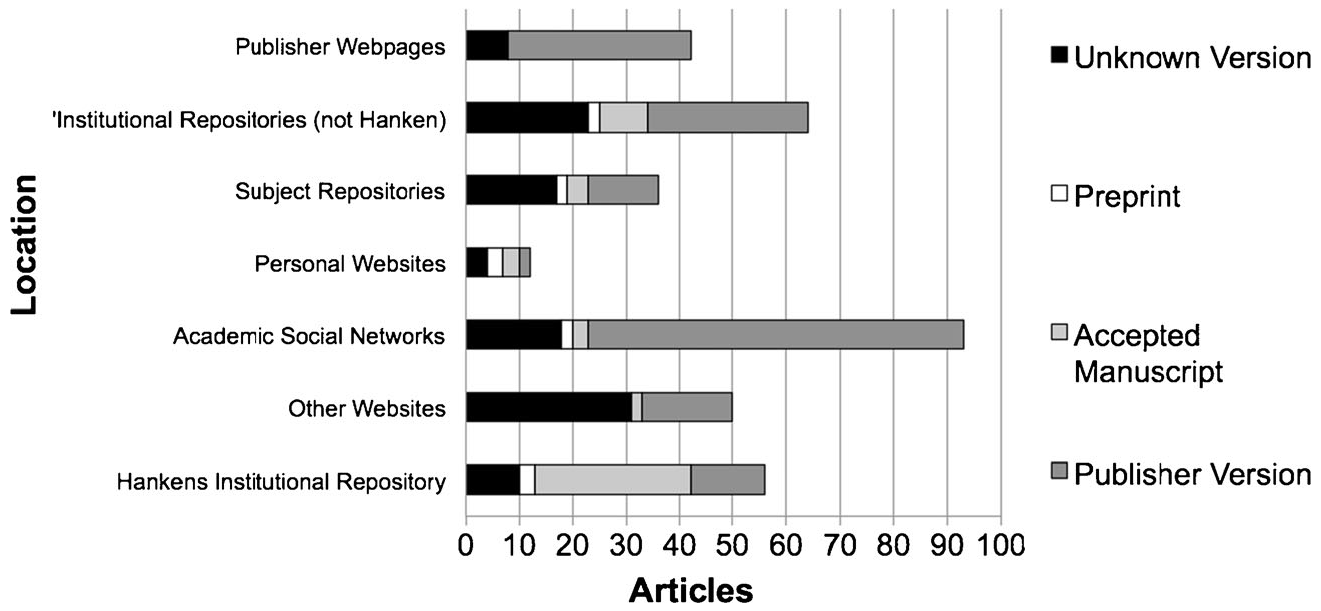 Figure 1: ASNs (Academic Social Networks) emerge as the leading provider of full-text access across several years.
2. The Intuition (Interviews & Surveys)
The data suggests that researchers are "rationally lazy." They don't use ASNs because they love social media; they use them because ResearchGate sends them an email saying, "Is this your paper?" and they click "Yes."
Key Insight: The "Publisher Version" Paradox
A startling finding is that 75.2% of full-texts on ASNs are the final publisher PDFs. Under most subscription agreements, this is technically prohibited. Yet, authors do it anyway because:
- They want the most professional-looking version available.
- Publishers have (historically) been lax in enforcement.
- The perceived benefit of citations outweighs the vague risk of a "cease and desist."
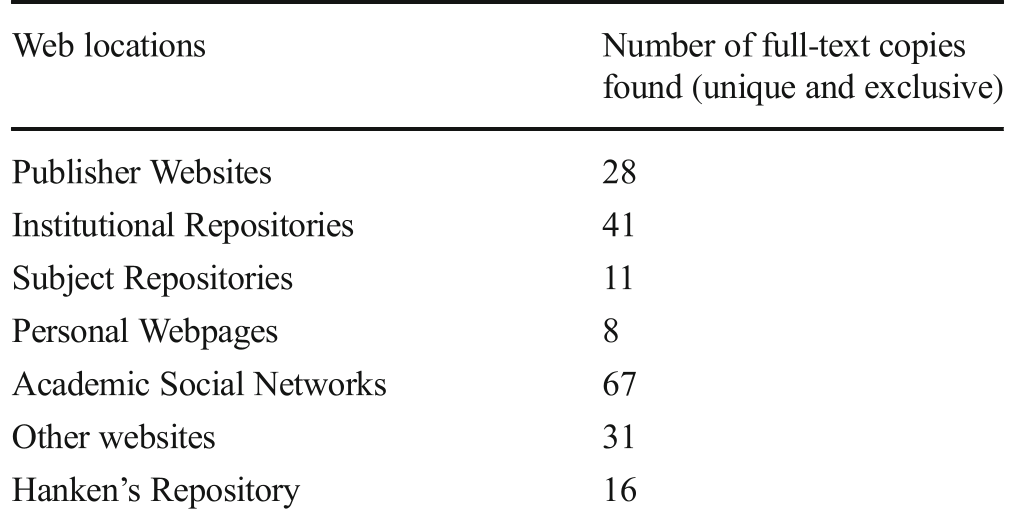 Table 1: ASNs provide the highest number of exclusive full-text copies that cannot be found elsewhere on the open web.
Stakeholder Impact: A Fragile Equilibrium
The paper concludes that we are in a state of "unstable peace":
- Publishers benefit from the increased reach but fear the loss of subscription value.
- Libraries are struggling to remain relevant as their repositories are bypassed.
- Authors enjoy the metrics and visibility but are building their digital legacy on "rented ground" that could disappear or change its rules overnight.
Critical Analysis & Conclusion
While this study focuses on a single business school, its implications are universal. The shift toward ASNs represents the "Consumerization of Research." Efficiency and discoverability are trumping legal rigor and institutional archiving.
The Takeaway: If institutional repositories want to survive, they cannot simply be "storage." They must become "services" that mimic the friction-less, metric-rich environment of ASNs—but with the added value of legal safety and long-term permanence.
Limitations: The study is a snapshot of 2012-2015 data published in 2017. Since then, the acquisition of SSRN by Elsevier and the rise of Sci-Hub have further complicated this landscape, making the "grey area" of ASNs even more contentious.