
Bridging the Care Gap: A Mobile Respite Care System for Families with CDD
A respite care information system for families with developmental delay children through mobile networks
This paper presents a mobile-network-based matching and appraisal system designed to facilitate respite care for families with Children of Developmental Delay (CDD). By integrating automated matching algorithms with a social networking platform, the system connects families with qualified volunteers for childcare and daily assistance, significantly improving service accessibility and quality.
TL;DR
This paper introduces an innovative digital solution for families with Children of Developmental Delay (CDD), utilizing mobile networks to automate the matching of volunteers with families in need of respite care. By replacing manual coordination with a systematic mobile social network, the system improved user satisfaction from 3.9 to 4.84 in just one year, proving that technology can effectively scale human empathy and specialized support.
Problem & Motivation: The "Shy Discovery" Dilemma
Raising a child with developmental delays is an arduous journey that requires significant spiritual and physical stamina. While "respite care"—temporary relief for primary caregivers—is a critical necessity, two major bottlenecks exist:
- Accessibility: Families are often hesitant to ask for help, and willing volunteers frequently lack the means to identify who needs assistance.
- Information Asymmetry: Volunteers may lack the specific "know-how" or "habit records" of a specific child, leading to safety concerns or poor care quality.
The author's insight was to transform this isolated struggle into a Mobile Social Network, where modern ICT (Information Communication Technology) serves as the bridge between supply (volunteers) and demand (families).
Methodology: The Architecture of Trust
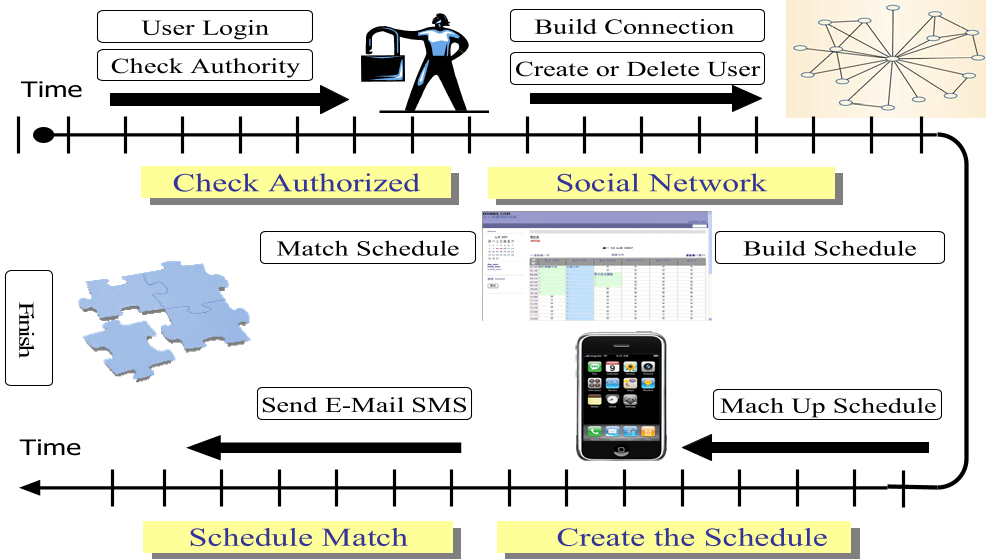
The system is more than just a "Tinder for volunteering." It integrates several critical modules designed to ensure safety and expertise:
- Intelligent Matching: Instead of random assignment, the system uses criteria including location, service feedback, personal skills, and schedules to pair the right volunteer with the right family.
- Habit Records: A unique feature where volunteers can retrieve the specific behavioral habits of a child before the service, ensuring continuity of care.
- Appraisal System: A feedback loop where both parties evaluate the experience, driving a data-driven improvement in service quality.
Experiments & Results: Quantitative Proof of Impact
The system underwent rigorous field trials in collaboration with the Angel Heart Family Social Welfare Foundation. The results from late 2008 to 2009 were compelling:
- Surging Satisfaction: The overall satisfaction rating leaped from 3.9 to 4.84 / 5.0, a testament to the system's refinement and the community's growing trust.
- Efficiency: Out of 196 requests, the system successfully managed 68 pairings, significantly reducing the administrative overhead compared to traditional man-made matching.
- Comprehensive Quality: Evaluation across five dimensions—Professional Quality, Attitude, Efficiency, Communication, and Overall Satisfaction—showed consistent upward trends.

Critical Analysis & Conclusion
The Takeaway
The success of this respite care system lies in its Human-Centric Design. It doesn't just treat caregiving as a logistical problem but as a social networking one. By providing a platform for "experience sharing" and "habit logs," it addresses the deep-seated anxiety parents feel when leaving their children with outsiders.
Limitations
While the results are impressive, the paper (published in 2009) reflects the limitations of its time:
- Scalability: The system served "hundreds" of users; modern iterations would need to handle thousands using cloud-native architectures.
- Mobile Interface: The use of PDAs and SMS was state-of-the-art then, but today's context would require cross-platform mobile apps with real-time GPS tracking.
Future Outlook
This work paved the way for modern "Gig Economy for Good" platforms. Future research could integrate Predictive Analytics to anticipate caregiver burnout before it happens, proactively suggesting respite care sessions based on historical usage patterns.
Published in ASSETS'09: The 11th International ACM SIGACCESS Conference on Computers and Accessibility.