
Response-Driven Crowdsourcing: Solving the "Burnout" Problem in Mobile Sensing
Response driven efficient task load assignment in mobile crowdsourcing
The paper proposes a response-driven incentive mechanism for Mobile Crowdsourcing (MCS) that utilizes logistic regression to profile users' behaviors and preferences. By integrating these profiles with a utility-based task load allocation model, the system optimizes participation and balances workload against the energy constraints of Smart Mobile Users (SMUs).
TL;DR
Mobile crowdsourcing often fails because platforms treat users as uniform workers, ignoring the "hidden cost" of participation—battery drain and privacy loss. This paper introduces a response-driven incentive mechanism that learns individual user behaviors through logistic regression and optimizes task load allocation. The result? Higher participation rates and satisfied users who don't run out of battery mid-task.
Perspective: Moving Beyond Auction Theory
In the world of Mobile Crowdsourcing (MCS), most research has focused on Auction Mechanisms—where users bid for tasks. While mathematically elegant, these models often ignore the physical reality of the user's device. If a platform pushes too much work to a high-performing user without considering their energy profile, that user will eventually leave. This paper shifts the focus from "how much should we pay?" to "how much work can this specific user handle before they quit?"
The Core Insight: Profiling Inconvenience
The authors argue that a user's decision to participate is a binary response () influenced by a feature set : the offered incentive () and the required execution time ().
The mapping of these features to a decision is governed by a user's unique "inconvenience metric." By analyzing historical interaction data, the platform can train a Logistic Regression model for each user to predict their likelihood of acceptance.
1. The Mathematical Framework
The platform minimizes a regularized log-likelihood function to find the optimal feature weights ():
These weights represent the user's "behavioral DNA"—how much they value money versus how much they dislike spending time/battery on a task.
2. Structural Workflow
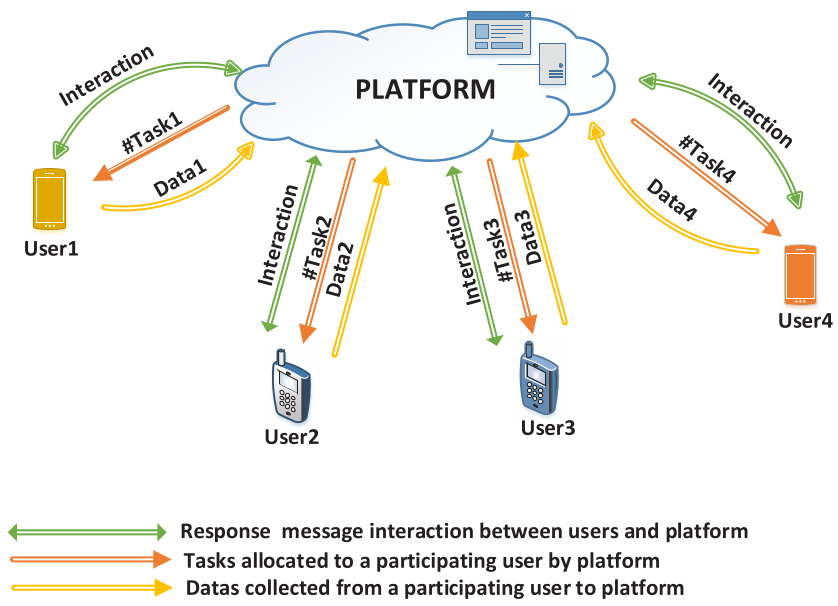 Fig 1: The interaction loop between user profiling, incentive calculation, and final task assignment.
Methodology: Task Load Optimization
Once the profiles are established, the platform doesn't just broadcast tasks. It solves an optimization problem to maximize the "platform's favorable condition" (participation) while staying within a budget.
The Utility Model for a user for task is defined as: Where:
- : Allocated task load.
- : Energy profile.
- : The learned inconvenience parameter.
This concave function implies there is a "Sweet Spot"—an optimal where the user gains the most utility. Assigning anything more is counter-productive.
Experimental Results: Preventing Overload
The paper's simulations highlight a critical flaw in traditional "equal sharing" mechanisms. Without profiling, a task requester might assign a heavy workload that seems efficient on paper but causes user utility to plummet into negative territory as energy depletes.
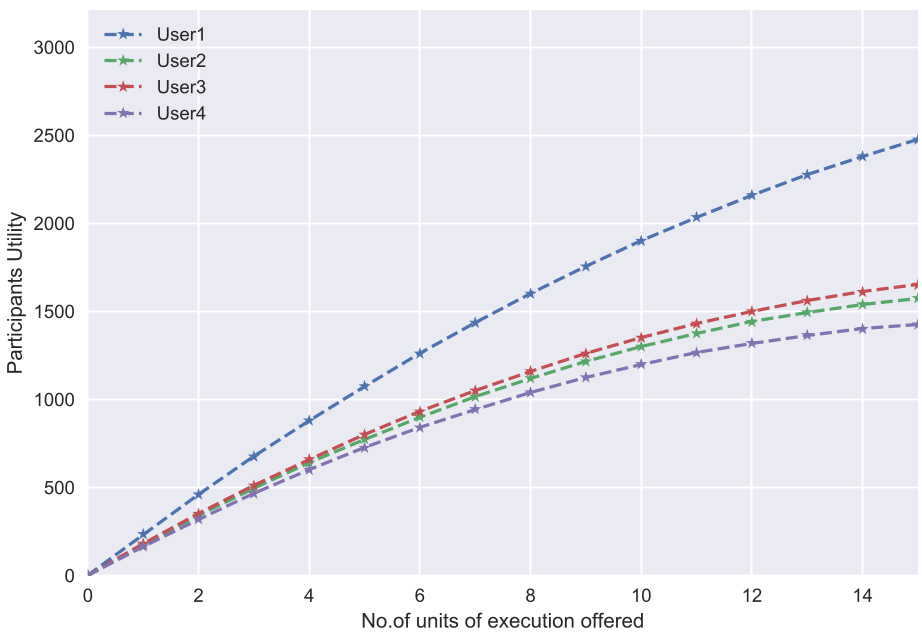 Fig 2: User utility vs. Task load. Note the peak utility point; exceeding this load leads to resource exhaustion.
As shown in Fig 5 (Task load allocation), the proposed model accurately caps the load to match the user's "Inconvenience Metric," ensuring they stay active within the ecosystem.
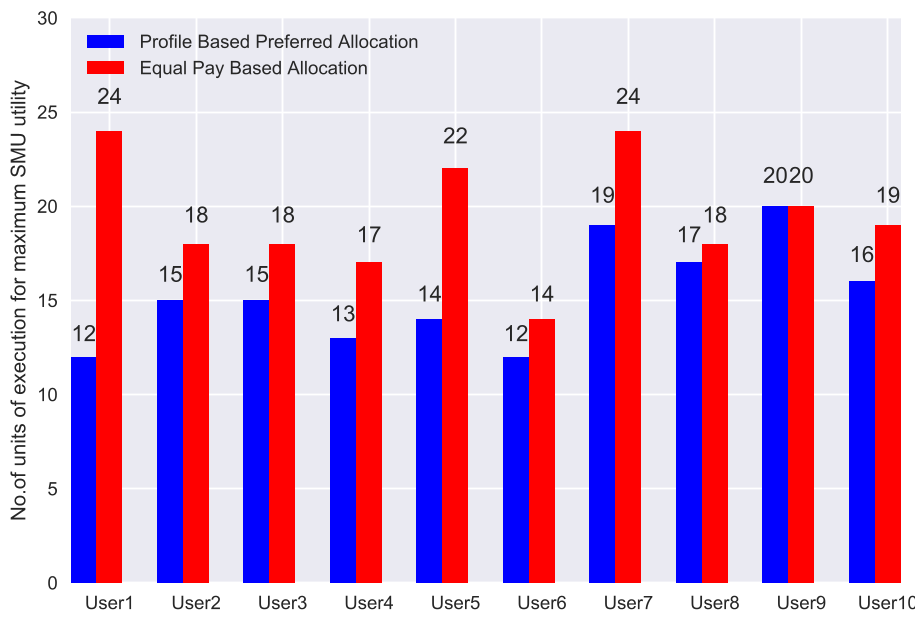 Fig 3: Comparison showing how the response-driven model prevents overwhelming users compared to standard allocation.
Critical Analysis & Future Outlook
Strengths: The transition from static bids to dynamic, learned profiles is a major step toward "Human-Centric AI." By respecting the physical constraints of mobile devices (battery), the model ensures higher data quality over the long term.
Limitations: The model assumes users are honest about their initial energy profiles. Furthermore, it treats the interaction as a one-to-many optimization rather than a multi-agent strategic game where users might try to "game" the profiling system to get higher incentives for less work.
Future Work: Integrating the task requester's own utility into the equation would create a more robust "Win-Win" market equilibrium. Additionally, applying this to heterogeneous tasks (e.g., mixing CPU-heavy tasks with sensor-passive tasks) would be the next logical evolution.
Final Takeaway
If you want people to help you collect data, you have to respect their batteries. This paper provides the mathematical bridge between user psychology and device physics.