
To Shut Them Up or to Clarify: Mastering Rumor Control in Social Networks
To Shut Them Up or to Clarify: Restraining the Spread of Rumors in Online Social Networks
This paper proposes a comprehensive mathematical framework to evaluate and compare strategies for restraining rumor spread in Online Social Networks (OSNs). It categorizes interventions into proactive measures (blocking influential nodes) and remedial measures (spreading truths), demonstrating that the optimal defense often requires a hybrid approach.
TL;DR
In the digital age, a single rumor can wipe out billions in market value within minutes. This paper provides a rigorous mathematical answer to a classic dilemma: Is it better to block influential "rumor-mongers" or spread the truth? By testing strategies on real Facebook and Google+ data, the researchers reveal that while blocking high-degree nodes stops the early fire, spreading the truth is the only way to keep the embers from reigniting. The ultimate solution? A strategically balanced "Hybrid Defense."
The "Horizontal" Comparison Gap
For years, the academic community has argued over whether we should focus on Proactive Measures (identifying and silencing bridges or hubs) or Remedial Measures (injecting "truth" nodes to recover the infected). However, most studies were "vertical"—meaning they only compared different ways of blocking nodes against each other.
The authors identify a critical vacuum: we lacked a universal platform to compare these two fundamentally different philosophies. Why does this matter? Because in the real world, blocking users risks violating human rights, while spreading truths costs significant propaganda budget. We need to know the "exchange rate" between these strategies.
Methodology: The State-Transition Engine
The core of this research is a discrete-time propagation model that moves beyond simple SIR (Susceptible-Infected-Removed) dynamics. It classifies users into complex states including Defended (proactively blocked), Contagious (active rumor spreaders), and Immunized (those who have accepted the truth).
The Contagious Ability Metric
The authors define Contagious Ability () as the potential number of nodes a user can directly or indirectly infect. This allows for a deeper "Justification" of why certain nodes matter more than others over time.
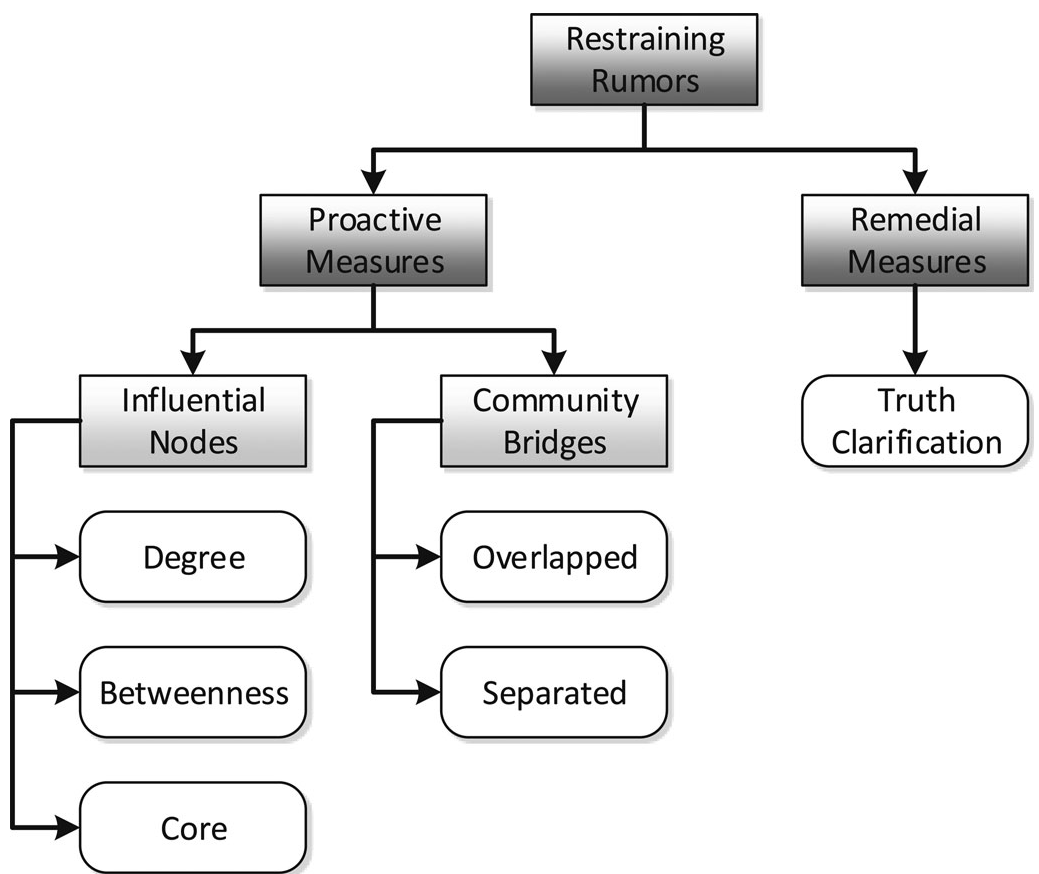 Fig 1: The state transition graph illustrating the path from Susceptible to the absorbing Immunized (truth-believing) state.
Key Insights: Timing and Topology
1. The Proactive "Shut Up" Strategy
When testing proactive measures, the results were clear: Degree (number of connections) and Betweenness (role as a bridge) are the kings of defense.
- Early Phase: Degree-based blocking is superior because high-degree nodes get infected very early.
- Stabilization: Betweenness performs better once the rumor has already begun to jump between communities.
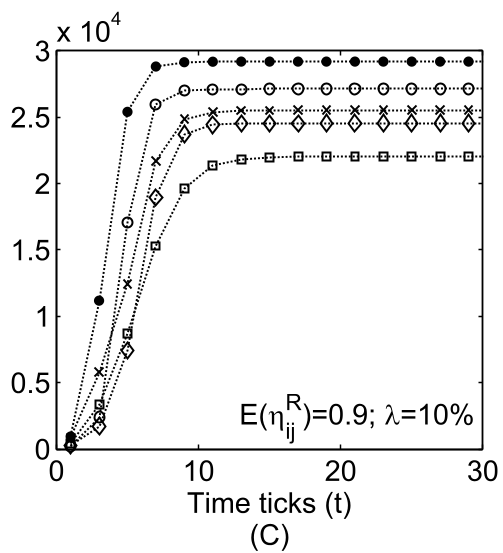 Fig 2: Comparison of different proactive measures. Degree and Betweenness consistently lower the final infected count () more effectively than core-based or random strategies.
2. The Remedial "Clarify" Strategy
The "Truth Clarification" method faces a harsh reality: "Rumors have wings, while truths stay indoors."
- If truth is injected late (e.g., ), its impact on the peak number of infected users is negligible.
- The effectiveness depends heavily on the "Truth Propagation Probability." If the public is skeptical of the truth source (low ), clarification fails utterly against critical rumors.
The Breakthrough: Putting Eggs in Different Baskets
The paper's most significant contribution is the discovery of Equivalence. By analyzing (maximum damage) and (long-term damage), the authors prove that a small amount of proactive blocking (e.g., 5%) combined with a moderate truth-spreading campaign (remedial) can outperform an aggressive 10% blocking strategy.
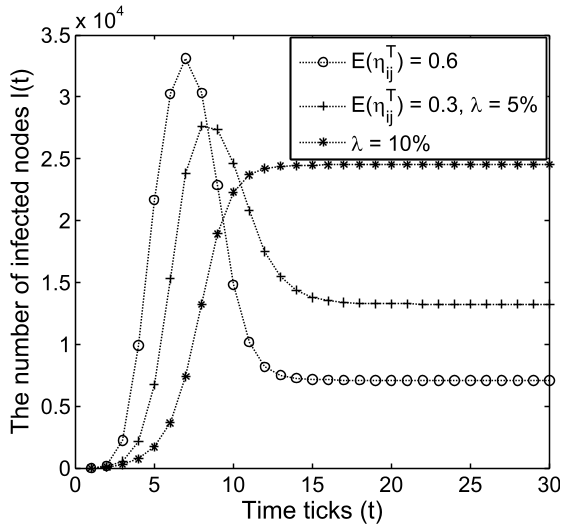 Fig 3: Case study showing that hybrid strategies (blue line) manage to reduce both the peak infection and the total final infection, whereas single-track strategies fail at one or the other.
Critical Analysis & Professional Takeaway
This work transitions rumor control from a heuristic-based "whack-a-mole" game to a budget-optimized engineering problem.
Limitations: The model assumes users distribute information only once and does not account for the "backfire effect" where clarifying a rumor might inadvertently spread it further to those who hadn't heard it.
Future Outlook: For platform architects and policy makers, the message is clear: Shutting down influential spreaders is a necessary "shock absorber" to buy time, but spreading high-prestige truths is the only way to achieve long-term network immunity.