
Virtual Excavation: Uncovering the Digital Remains of YouTube Culture
Retaining and Exploring Online Remains on YouTube
The paper introduces a "virtual excavation" methodology for social networking services, using YouTube and its Data API as a case study. The researchers developed a collection of interactive visualization techniques, including Tree Maps and Fibonacci patterns, to transform digital trace data (comments, interactions) into insights about online culture and user behavior.
TL;DR
This research pioneers a "digital archaeology" approach to social media. By treating YouTube as a virtual settlement, the authors use the YouTube Data API to perform "excavations" of user comments and interactions. Through advanced interactive visualizations, they transform raw JSON data into a map of online social dynamics, effectively proving that digital traces can reveal the underlying culture of a platform.
The Core Motivation: Beyond Simple Data Mining
In the physical world, archaeologists dig through layers of earth to reconstruct past civilizations. In the digital world, we leave behind "traces"—comments, likes, and shares—that form a "virtual tell."
The authors argue that typical data mining is often too clinical or focuses only on isolated metrics. They propose Virtual Excavation, a method to make sense of these digital remains in situ. The problem today isn't a lack of data; it's the lack of a structured way to define boundaries and tools to "look" at the data without losing the social context.
Methodology: The Four Pillars of Digital Archaeology
To move from "data collection" to "excavation," the study establishes a rigorous four-step framework:
- Virtual Settlement Definition: Confirming that the platform (YouTube) provides interactivity, multiple communicators, a common public space, and sustained membership.
- Boundary Setting: Defining where the excavation happens. In this case, the researchers chose thematic boundaries: 10 leading videos across 10 different music genres.
- Data Access Strategy: Utilizing the YouTube Data API to pull longitudinal JSON objects. The authors specifically focused on
CommentFeedobjects, which contain the "tells" of user engagement. - Sense-Making (Visualization): Reframing raw code into meaningful patterns using the Prefuse toolkit.
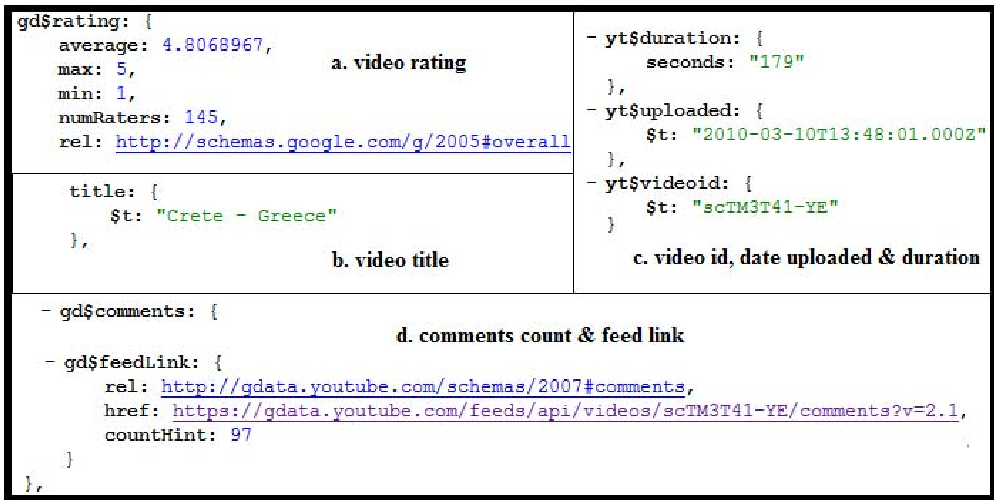 Figure 1: Fragments of JSON data serving as the "digital soil" for the excavation.
Transforming Bytes into Insights
The true power of this method lies in the Social Visualizations. Instead of static spreadsheets, the authors used:
- Tree Maps: To categorize vast amounts of comments by genre and video, allowing researchers to "zoom in" on specific user behaviors.
- Fibonacci Sequence Clusters: To anchor videos and users by the volume of their activity. Centralized nodes represent high-engagement hubs, while peripheral nodes show "noise."
- Social Zones: A custom textual analysis tool that filters keywords to identify user intent (e.g., spotting promotional "swagFriends" spam vs. genuine discussion).
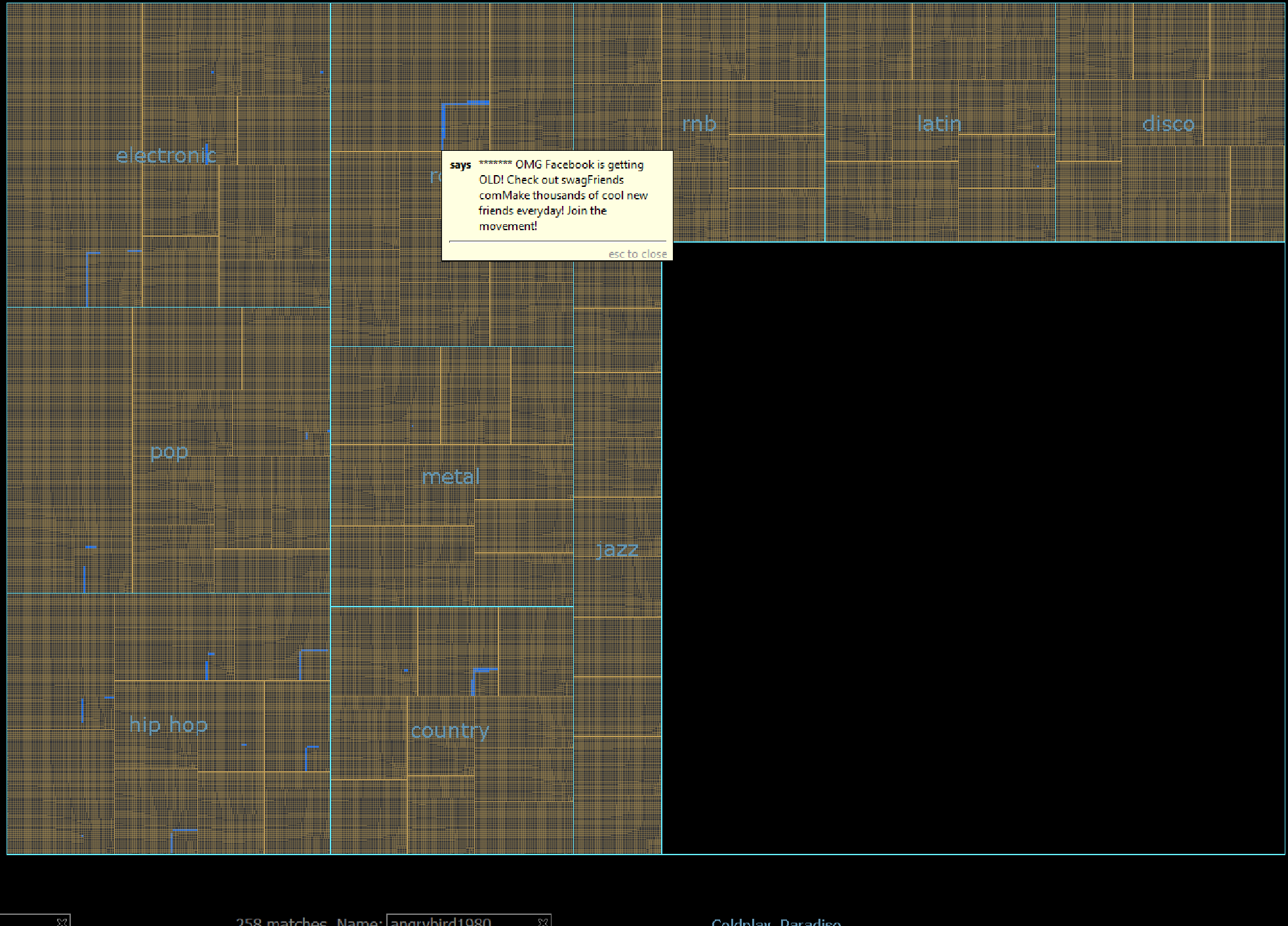 Figure 2: Tree Map visualization used to explore user comments across music genres.
Key Results & Discussion
The excavation revealed significant "cultural" differences between genres:
- Electronic and Pop groups showed the highest density of remains (comments).
- Linguistic Identity: The term "cover" appeared frequently in the Metal genre but was sparse in Hip Hop, showing how community-specific practices (like covering songs) leave measurable traces.
- Spam Detection: The "Social Zones" visualization successfully isolated users attempting to promote external sites, categorizing them as "polluters" within the virtual settlement.
Critical Insight & Limitations
While the "Virtual Excavation" framework is robust, it faces significant API constraints. The authors noted that YouTube limits access to the 1,000 most recent comments, creating a "recency bias" in the excavation. Furthermore, the latency between activity and API indexing proves that digital archaeologists are always looking at the "recent past" rather than the absolute present.
Future Outlook
The next step for this research is "boundary-spanning"—tracing a single user's activities across different settlements (e.g., from YouTube to Facebook) to understand how social connectivity evolves across different media types.
Takeaway: In an era where our history is written in JSON, we need better shovels. This paper provides the blueprint for those tools.