
MEB: Reclaiming Personal Expression in the Age of Social Search
Retaining personal expression for social search
The paper introduces MEB (ME-on-the-weB), a user-centric data store that enables individuals to retain ownership and control over their "STRAT" content (Star ratings, Tags, Recommendations, Attention, and Text reviews). It provides a mechanism for Social Search, allowing users to query the feedback and opinions of their trusted social network.
TL;DR
In a digital landscape where our ratings and reviews are swallowed by corporate servers, MEB (ME-on-the-weB) proposes a paradigm shift. By allowing users to keep a "link" to every piece of content they create, MEB enables a trust-based search layer where you don't just ask "What is the best book?", but "What did my friends specifically say about this book?"
Background Positioning
Published at WWW '09, this work sits at the intersection of Web 2.0 and Social Information Retrieval. It addresses a fundamental flaw in the early social web: the loss of agency over personal data. It serves as an early precursor to modern movements like "Web3" and "Solid," focusing on data portability and decentralized identity.
Problem: The Siloed Feedback Loop
When you rate a video on YouTube or review a product on Amazon, that data usually undergoes two transformations that destroy its social value:
- Ownership Transfer: The data belongs to the site. If the site disappears or changes its terms, your expression is lost.
- Aggregation: Your specific nuances are melted into a 4.2-star average. While "wisdom of the crowd" is useful, it lacks the context and trust found in personal relationships.
The authors identify that search engines (like Google) depend on hyperlinks. However, a user’s opinion on a product rarely creates a crawlable "link" that a search engine can use to rank that product for that user's specific friends.
Methodology: The MEB Concept
The core innovation is the MEB Tuple: {user, subject_url, user_created_STRAT}.
1. Retention via Browser Agents
Instead of relying on the destination site to provide an API (which they often don't), the authors use browser plugins to capture the user's expression at the "moment of creation" and store it in a personal MEB cloud.
2. Social Routing
Search is performed by specifying a target set of people () and a query (). The system routes the query to the MEB stores of those specific individuals.
- P2P Implementation: Uses email IDs to trigger client-side searches.
- Social Apps: Routes queries to Facebook-style apps that act as gatekeepers to a user's MEB cloud.
 Figure 1: Conceptual visualization of the MEB store and social relationships.
Experiments & Results: Rethinking Link Analysis
A fascinating pivot in the paper is the proposed modification of the Hubs and Authorities (HITS) algorithm.
Standard search treats every link as equal. The authors propose a Social Weight Matrix . If a page is recommended by a MEB in your social network, its authority is boosted significantly, regardless of its global link count.
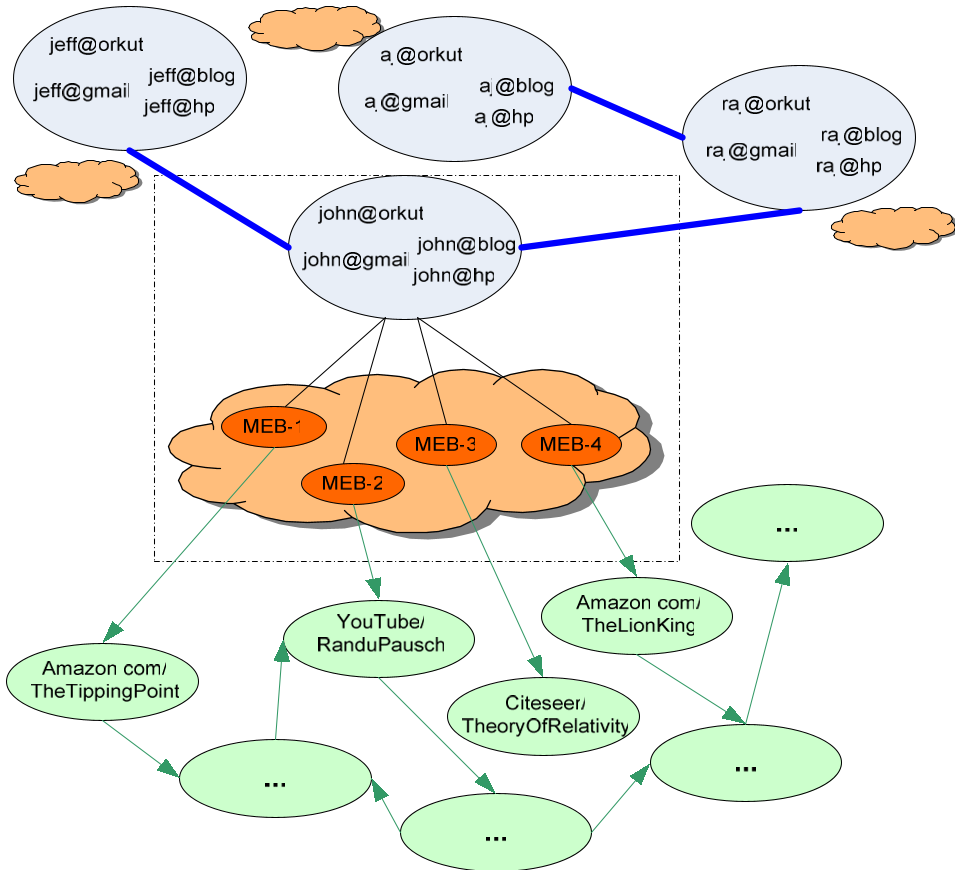 Figure 2: Prototype implementation showing how MEB creation and search integrate into daily web browsing.
Critical Analysis & Conclusion
Takeaway
MEB is a visionary approach to data sovereignty. It recognizes that the most valuable part of the web isn't just the content, but the metadata of human intent (STRAT). By decoupling this metadata from the destination website, we create a more trustworthy and personalized web experience.
Limitations
- Friction: Relying on browser plugins and specific communication channels (like email triggers) introduces latency and user friction.
- Privacy Complexity: While the user controls access, managing fine-grained privacy policies for every friend in a social network remains a UI/UX challenge.
- Incentive Alignment: Destination websites have a financial incentive not to let users export their data easily.
Future Outlook
As we move into an era of AI agents, the MEB concept is more relevant than ever. Imagine an LLM that doesn't just scan the public internet, but acts as a "Personal MEB Agent," fetching the specific tastes and historic reviews of your inner circle to provide truly curated recommendations.
References
- Kleinberg, J. "Authoritative Sources in a Hyperlinked Environment." (1999).
- Ramakrishnan, R., et al. "Towards a People Web." (2007).