
Beyond the Dashboard: Rethinking Learning Analytics Adoption Through Complexity Leadership
Rethinking learning analytics adoption through complexity leadership theory
This paper introduces a novel framework for Learning Analytics (LA) adoption based on Complexity Leadership Theory (CLT). It moves beyond static input/output models to analyze the dynamic system interactions within higher education institutions, categorized through a study of 26 Australian universities.
TL;DR
Why does Learning Analytics (LA) often fail to scale despite institutional backing? This paper argues that the bottleneck isn't technology, but leadership. By applying Complexity Leadership Theory (CLT), the researchers reveal that institutions fall into two camps: top-down "Instrumentalists" with great tech but no users, and bottom-up "Emergent Innovators" with great ideas but no scale. To bridge this gap, leadership must act as an "enabler" rather than a "director."
The "Implementation Chasm"
For years, the LA field has focused on "Input Models" (do we have the data?) or "Output Models" (are we mature yet?). While useful, these models treat universities like machines. In reality, universities are Complex Adaptive Systems (CAS)—ecosystems of independent units that interact in unpredictable ways.
The authors argue that the current failure in systemic adoption stems from a refusal to acknowledge these system dynamics. Senior leaders often treat LA as a technical project for IT units rather than a cultural shift that requires a renegotiation of power and workload.
Methodology: The Core Mechanism
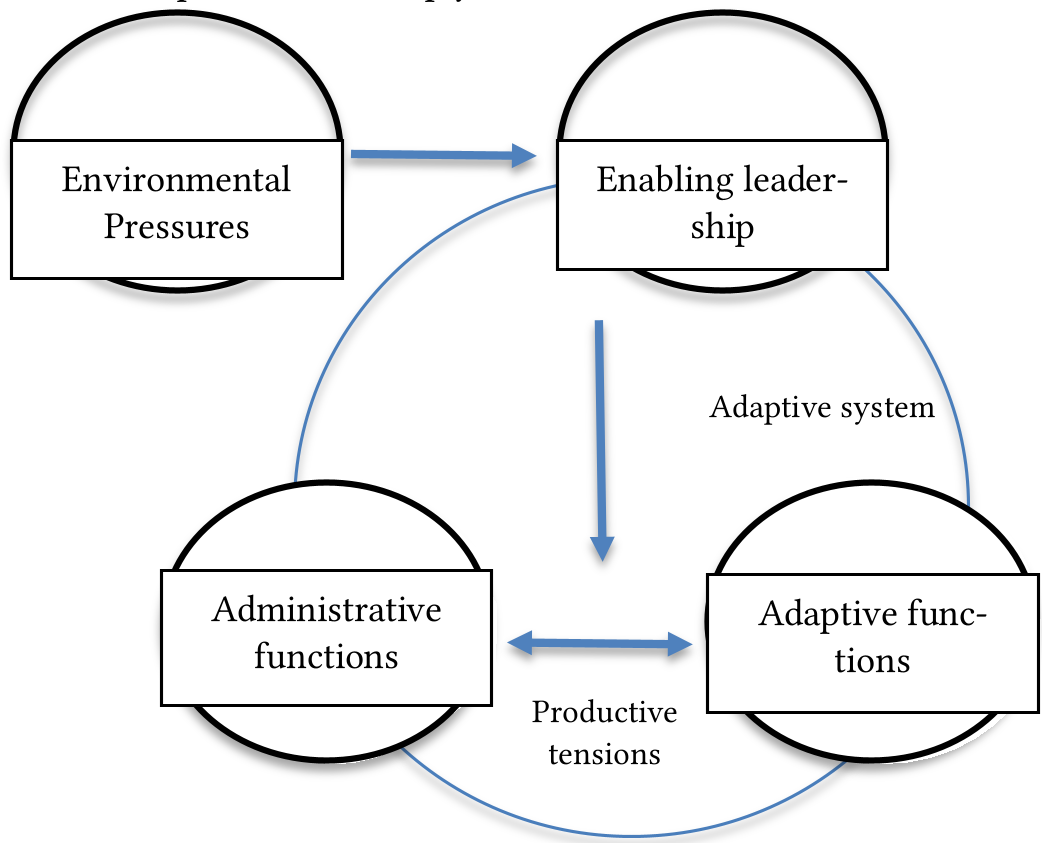
The researchers interviewed 32 senior administrators from Australian universities and used Latent Class Analysis (LCA) to categorize their approaches. They framed their findings using the three leadership functions of CLT:
- Administrative Function: Coordinating, standardizing, and maintaining stability (e.g., IT protocols, enrollment data).
- Adaptive Function: The "entrepreneurial" space where innovation happens (e.g., a teacher experimenting with predictive modeling).
- Enabling Function: The critical middle ground that manages the "friction" between the first two.
Two Paths to Adoption: Instrumental vs. Emergent
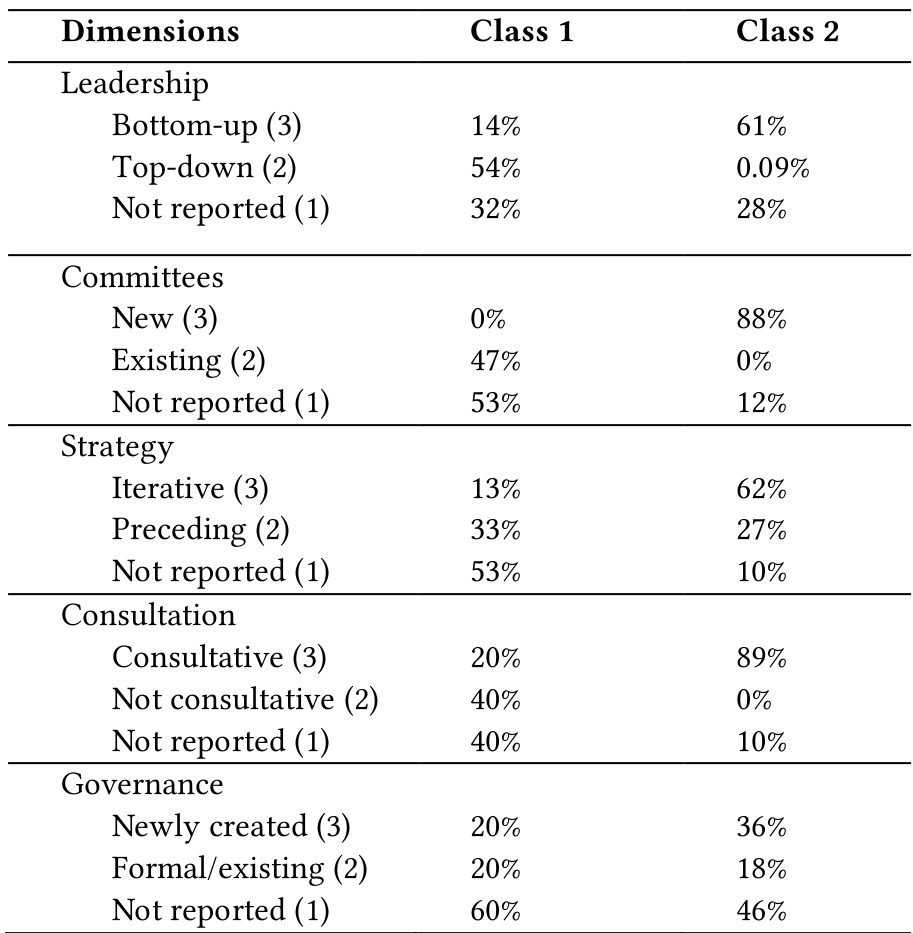
The LCA results identified two main archetypes of institutional behavior:
Class 1: The Instrumentalists (Top-Down)
- Logic: LA is a tool to solve a specific problem (like student retention).
- Structure: Hierarchical, utilizing existing committees and formal governance.
- The Result: Rapid infrastructure setup but sporadic uptake. Teachers often view these tools as top-down surveillance or added workload, leading to resistance.
Class 2: The Emergent Innovators (Bottom-Up)
- Logic: LA is a way to improve learning holistically through experimentation.
- Structure: Consultative, iterative, and decentralized.
- The Result: High engagement and "pockets of excellence," but challenges in scaling up. These innovations often struggle to survive once they hit the rigid "administrative" walls of the broader university.
Critical Insight: The Value of Friction
The paper’s most profound takeaway is that friction is necessary. In high-performing complex systems, "productive tension" between administrative stability and adaptive innovation creates the most creative solutions.
For Class 1 institutions, the goal is to seed "social capital"—building networks among staff to encourage organic use. For Class 2, the goal is to find "symbolic tags"—unifying goals that allow bottom-up innovations to leverage institutional power for scale.
Conclusion & Future Outlook
The study concludes that LA adoption is not a linear march toward maturity, but a dynamic balancing act.
- Contribution: It provides a specific vocabulary (CLT) for leaders to diagnose why their LA projects are stalling.
- Limitations: The study relies on self-reported interview data from senior leaders; the perspective of teaching staff (the "boots on the ground") would provide a more complete picture of the "friction."
- Future Work: We need to move toward analyzing Social Capital and Network Structures to see how information and influence actually flow during an LA rollout.
In the 21st-century university, the most effective leader isn't the one who commands the deployment, but the one who enables the ecosystem to adapt.