
Optimized Smart Farming: Reducing Cloud Costs by 46% via Edge-IoT Architecture
RETRACTED CHAPTER: An Edge-IoT Architecture and Regression Techniques Applied to an Agriculture Industry Scenario
The paper proposes a multilayered Edge-IoT architecture based on the Global Edge Computing Architecture (GECA) specifically for smart agriculture. It aims to optimize resources and monitor environmental variables in mixed dairy farms through state-of-the-art computing and linear regression-based data mining.
TL;DR
The agricultural industry is shifting toward "Precision Agriculture," but relying solely on the Cloud for data processing is becoming a bottleneck in rural areas. This paper presents an Edge-IoT architecture that processes data locally at the farm. By filtering and analyzing environmental data at the network edge, the system reduces cloud traffic by 46.72% while providing real-time local intelligence even when the internet goes down.
Background & Motivation: The Connectivity Gap
Agricultural scenarios are unique; they require vast sensor networks across large physical areas where 4G/5G or fiber connectivity is often spotty.
- Cloud Overload: Sending every single sensor reading (temperature, humidity, rain) to a remote server is expensive and creates massive latency.
- Data Redundancy: Sensors often retransmit the same data packets if a handshake isn't perfect, bloating the database with "noise."
- Resource Efficiency: With CAP (Common Agricultural Policy) regulations tightening, farmers need to prove "Eco-Efficiency"—producing more with less environmental impact (specifically water and CO2).
Methodology: The GECA Framework
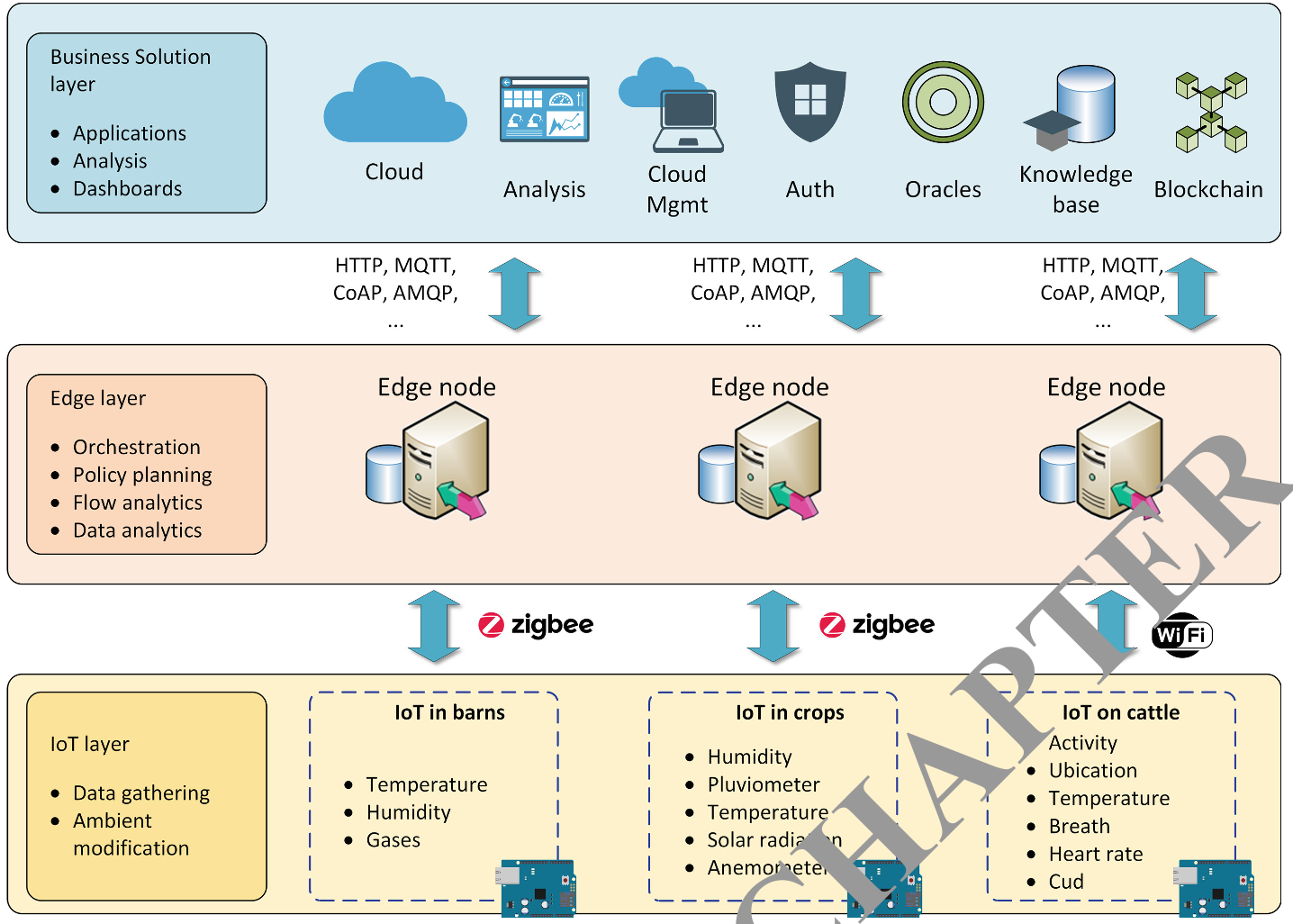
The core of this work is the implementation of the Global Edge Computing Architecture (GECA). Unlike a traditional two-tier (Device-to-Cloud) system, this model inserts a crucial middle layer.
1. Architecture Breakdown
The system is divided into three functional layers:
- IoT Layer (Perception): Deployed agro-meteo stations measuring variables like humidity and rainfall.
- Edge Layer (Optimization Hub): This is where the magic happens. Edge nodes filter duplicate frames, average values, and run the initial data mining models.
- Business Solution Layer: The front-end where the farmer views trends and makes decisions.
2. Regression at the Edge
To provide predictive insights without the Cloud, a Linear Regression model was deployed. The team processed the data by:
- Logarithmic Transformation: To eliminate heteroscedasticity (varying volatility).
- Decomposition: Splitting data into trend, noise, and seasonal components to identify the underlying patterns of the farm environment.
Experimental Results: Leaner and Smarter
The study was conducted on a mixed dairy farm in Spain. By moving the processing to edge nodes, the following outcomes were recorded:
- Traffic Reduction: A total of 46.72% less data was sent to the cloud. This directly translates to lower subscription fees for cloud storage and reduced bandwidth usage.
- Reliability: Since data is stored and pre-processed locally first, the system didn't lose data during periodic internet outages common in rural Zamora.
- Forecasting Accuracy: The regression models successfully mapped trends for Maximum/Minimum Temperature and Humidity, allowing for proactive irrigation and livestock cooling strategies.
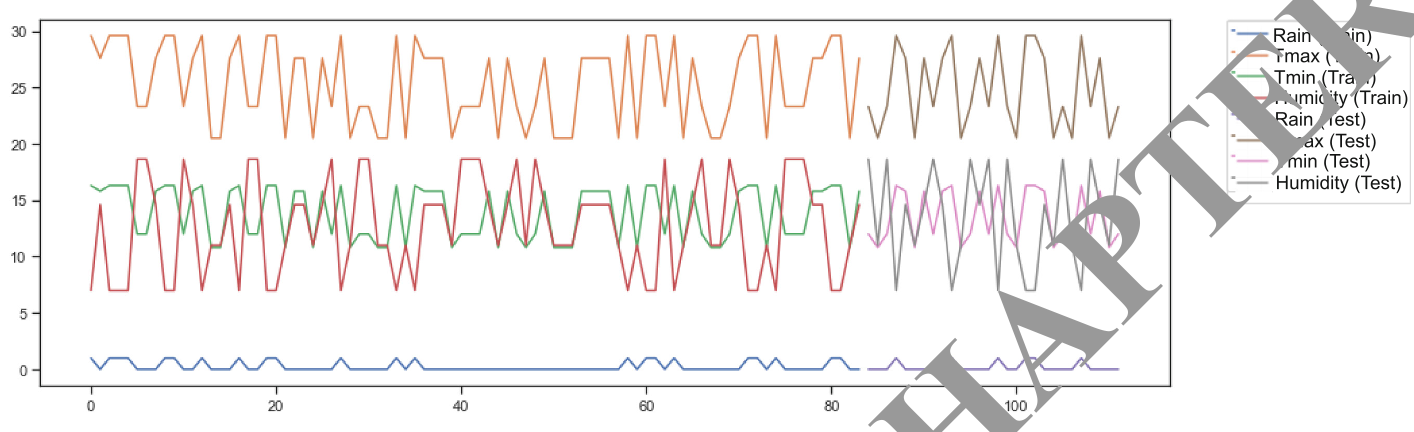 Figure 4 showing the overlap between prediction trends (Pred) and real data (Real) collected from sensors.
Critical Insight & Conclusion
The industrialization of agriculture is no longer just about bigger tractors; it is about smarter data management. The primary takeaway here is that Data Filtering at the source is the only way to scale IoT to millions of hectares.
However, there is a limitation: while linear regression is efficient for low-power edge nodes, it may struggle with highly non-linear environmental "shocks" (e.g., sudden extreme weather events) where more complex models like LSTMs might perform better—provided the edge hardware can handle the compute load.
In the future, the integration of Blockchain (as mentioned in the GECA framework) will likely be the next step to ensure that the "Eco-Efficiency" data being reported to regulators is immutable and tamper-proof.