
Retrieving Emotion from Motion: A Biologically Inspired Real-Time Robot Vision Framework
Retrieving Emotion from Motion Analysis: In a Real Time Parallel Framework for Robots
This paper introduces a parallel real-time framework for extracting emotional states from human motion, specifically focused on hand-waving gestures. By combining biological vision models with GPU acceleration, the authors achieve robust tracking of skin-colored moving objects to classify emotions like happiness, anger, and sadness for humanoid robot interaction.
TL;DR
Researchers have developed a real-time, parallel processing framework that allows humanoid robots to "feel" human emotions simply by watching how a person waves their hand. By analyzing the acceleration and frequency of movement rather than just the visual posture, the system can distinguish between happiness, anger, sadness, and politeness in real-time.
Contextual Positioning
In the field of social robotics, particularly for therapeutic applications like training autistic children, a robot must do more than just "see"—it must interpret. This work sits at the intersection of Functional Brain Modeling and Computer Vision, moving beyond static object detection to dynamic behavioral understanding.
The Problem: The Gap Between Motion and Emotion
Most robotic systems treat vision as a geometry problem: where is the hand? However, humans perceive emotion through the quality of movement. A "polite" wave and an "angry" wave might occupy the same space, but their temporal dynamics are worlds apart. Existing systems often lacked the parallel processing power or the right "biological" filters to capture these nuances in real-time.
Methodology: How the Robot "Sees" Emotion
The authors implement a pipeline that mimics the processing stages of the human visual cortex (V1 through V5).
1. Dual-Path Parallel Processing
The system processes two streams simultaneously:
- Skin Color Path (V4 inspired): Converts RGB to YCbCr space to isolate human skin tones, effectively removing background noise.
- Motion Path (V5/MT inspired): Uses the Lucas-Kanade operator for optical flow to detect change.
2. Pyramid Decomposition for Tracking
To maintain real-time performance, the framework uses a hierarchical "pyramid" approach. It searches for regions of interest at low resolutions and refines them at higher scales only when a "Skin + Motion" match is found.
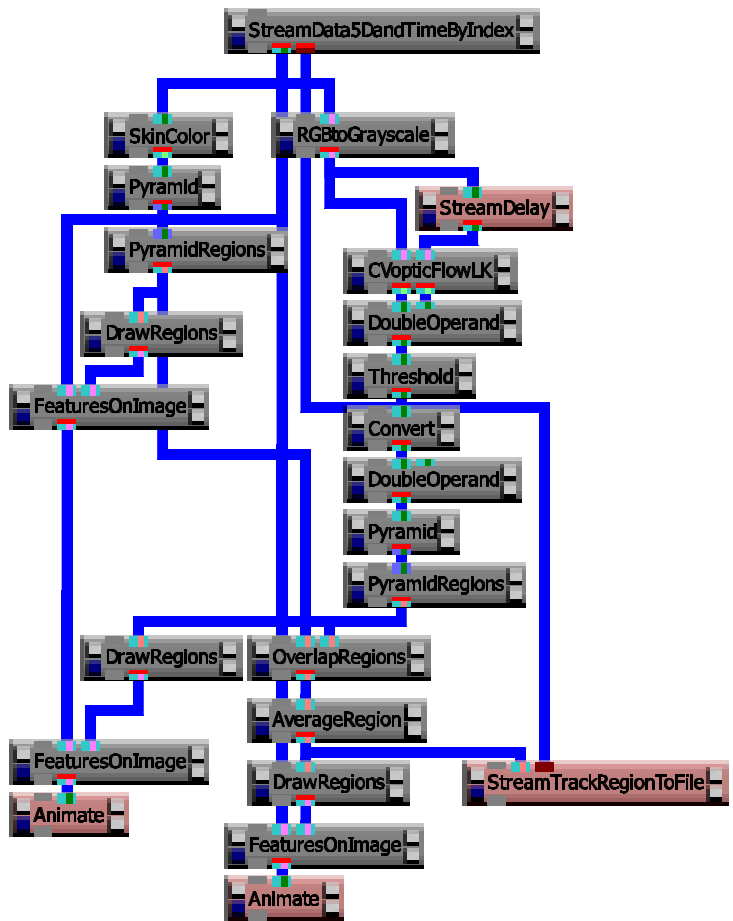 Figure 1: The parallel processing framework showing the convergence of skin and motion detection.
Experimental Insights: The "Feel" of a Wave
The researchers recorded sequences of four emotional states and plotted the acceleration of the hand's center point. The results revealed striking physical "signatures" for each emotion:
- Happiness: Regular, high-frequency patterns.
- Anger: Volatile bursts with massive acceleration peaks.
- Sadness: Low energy, low frequency, and "droopy" acceleration.
- Politeness: A "Queen-type" wave—regular, efficient, and low energy.
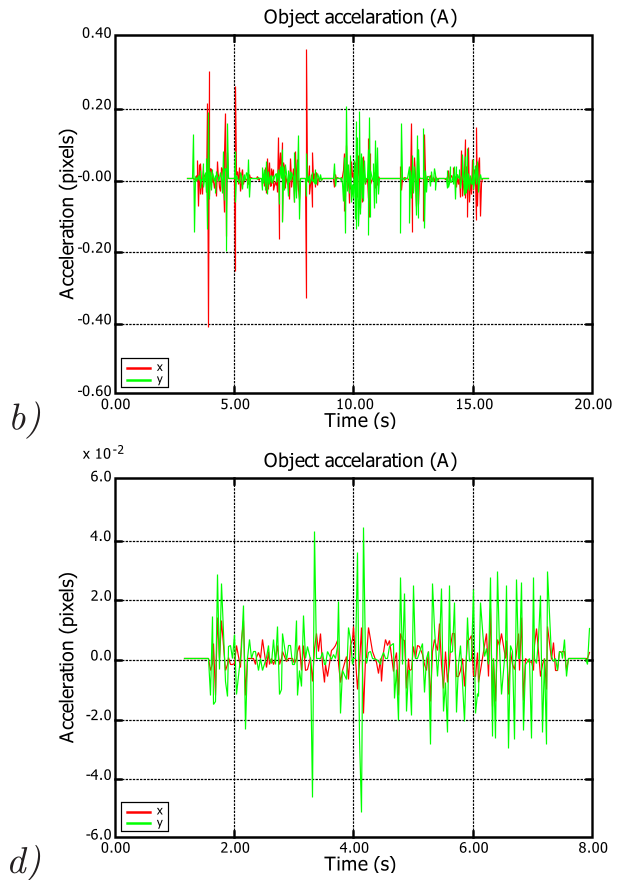 Figure 2: Distinct acceleration profiles for Happiness (top left), Anger (top right), Sadness (bottom left), and Politeness (bottom right).
Results & Discussion
By plotting these movements in a Frequency-Acceleration domain, the system found four distinct clusters. This suggests that robots don't necessarily need complex AI to understand basic emotions; they just need to measure the "physics" of the gesture.
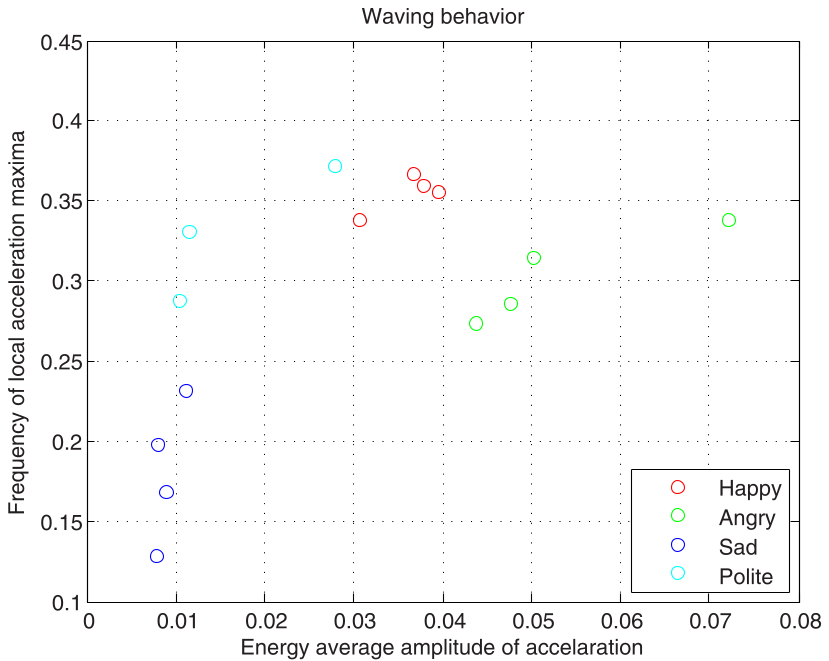 Figure 3: Average Acceleration vs. Frequency plot demonstrating clear segregation between the four emotional states.
Critical Analysis & Future Outlook
While the method is highly efficient, its reliance on skin-color detection can be a limitation in varying lighting conditions or if the user is wearing gloves. However, the core insight—that acceleration is a proxy for intent—is a powerful tool for humanoid robots.
The next frontier for this research involves imitation learning: not just identifying the wave, but having the robot wave back with the same emotional "texture," creating a true social feedback loop. This has profound implications for assistive robotics, where emotional resonance is key to user trust and engagement.