
Reusable Meta-Models: The Blueprint for Efficient Human-Machine Elastic Systems
Reusable Meta-Models for Crowdsourcing Driven Elastic Systems
The paper introduces a reusable information meta-model and an operational elastic service workflow for "Elastic Systems." These systems dynamically allocate tasks to both human and machine working units by calculating an "Elastic Index" (EI) to optimize task assignment and results quality.
TL;DR
As AI becomes more integrated into our workflows, the line between "machine tasks" and "human tasks" is blurring. This paper proposes a universal meta-model and an adaptive workflow designed to manage "Elastic Systems"—environments where tasks are dynamically routed to either humans or machines based on a calculated Elastic Index (EI). By treating both agents as interchangeable "computing units" with varying competencies, the system optimizes for both cost and accuracy.
Background Positioning
In the landscape of crowdsourcing, we are moving from simple "open calls" (like Amazon Mechanical Turk) to Human-in-the-Loop (HITL) systems. This work acts as a structural framework to bridge the gap between computational elasticity (using machines to aid humans) and data-driven elasticity (using humans to provide data for machines).
The Core Problem: The Modeling Gap
Distributed work systems often fail because they don't understand the relationship between task complexity and agent capability. Machines excel at scale but fail at intuition (like recognizing faces in poor lighting); humans have intuition but suffer from fatigue and subjectivity. Existing frameworks lack a unified mathematical model to decide who should do what in real-time.
Methodology: The Worker-Task Meta-Model
The authors solve this by introducing two primary Abstract Data Types (ADTs):
- The Worker ADT: Both humans and machines are modeled with attributes like Reputation (cumulative performance), Experience (work history), and Skills.
- The Task ADT: Defined by a Task Complexity Index (TCI), which is a weighted regression of metrics such as angle, quality, or linguistic difficulty.
The Engine: Elastic Index (EI)
The secret sauce is the Elastic Index (EI). Unlike a static skill rating, the EI is dynamic. It uses Collaborative Filtering—the same tech behind Netflix recommendations—to predict how well a specific worker will perform on a task they haven't seen yet, based on how similar workers performed on similar tasks.
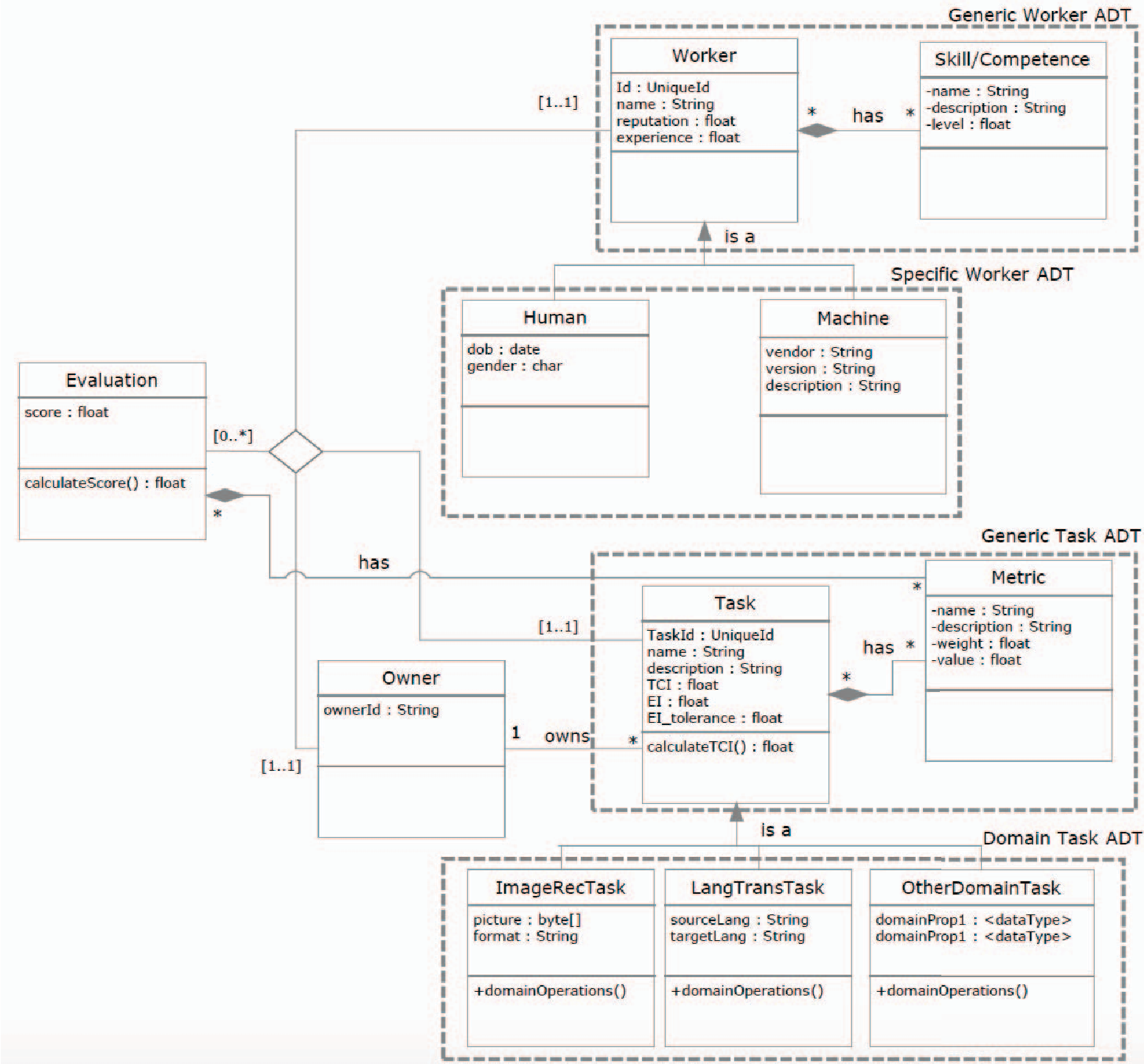 Figure 1: The proposed meta-model showing the relationship between Workers, Tasks, and the Feedback-driven Elastic Index.
The Adaptive Workflow
The operational workflow follows a circular logic:
- Cold Start: Tasks are open to all.
- Feedback Loop: Employers rate the results.
- Learning Service: The system updates the EI for the worker-task pair.
- Recommendation: Future tasks are pushed to the most competent units.
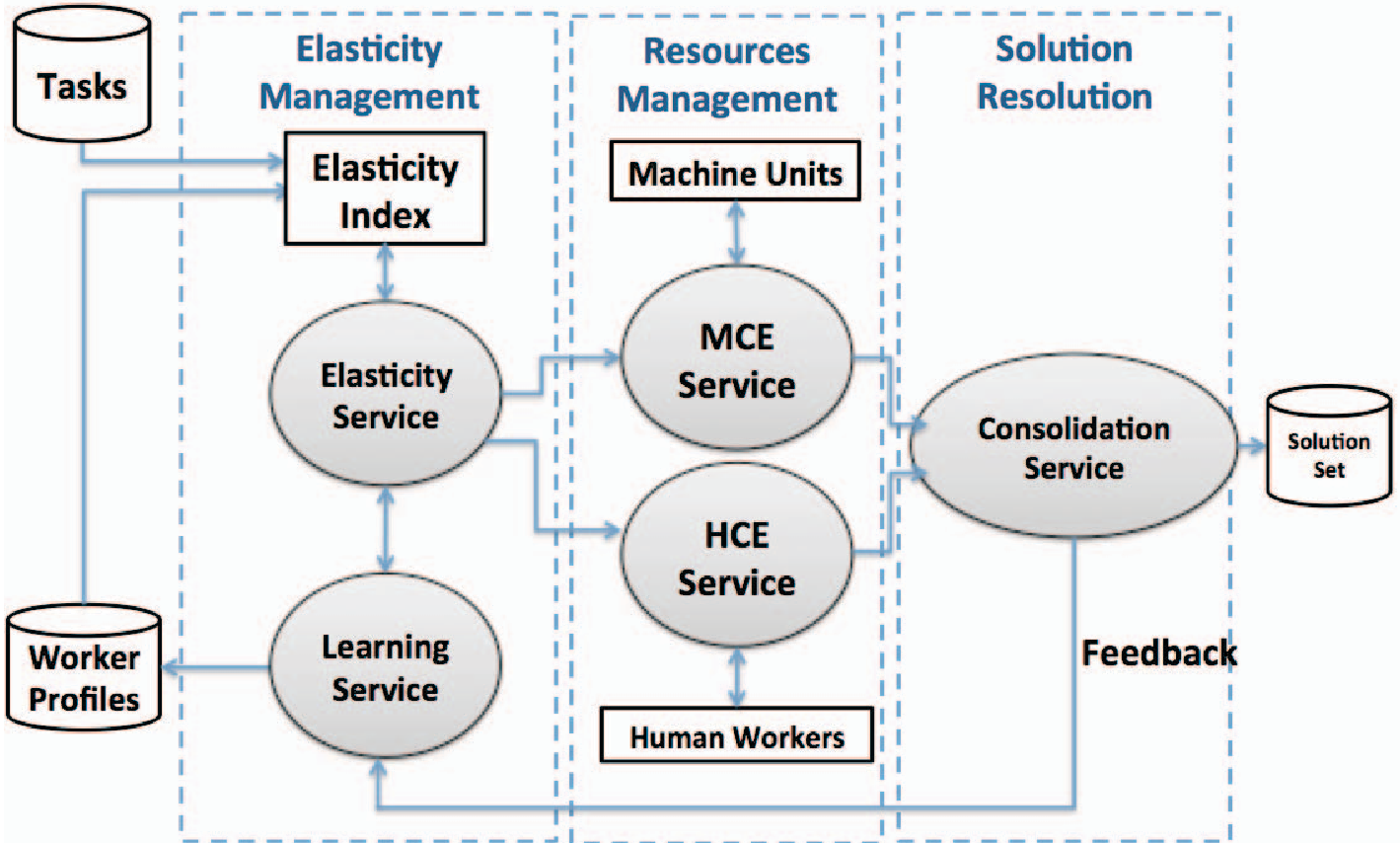 Figure 2: The operational workflow that routes tasks and updates competency scores in real-time.
Experimental Evidence: Success in the Wild
The researchers tested this meta-model across two vastly different domains:
Case I: Face Recognition (Machine-Augmented Human)
- Insight: Machines struggled (14% accuracy) with factors like headgear, lighting, and "background clutter."
- Result: When the machine acted as a "pre-processor" to suggest matches to humans, accuracy skyrocketed to 69%. The meta-model correctly identified that the machine's "suitability" was low for final decisions but high for preliminary filtering.
Case II: Language Translation (Independent Parallelism)
- Insight: Human workers often under-reported their skills.
- Result: The feedback loop was able to "uncover" expert-level workers even when their profiles were modest, ensuring high-quality Portuguese-to-English translations.
Daisy Chaining: Scaling Complex Workflows
One of the paper's most powerful insights is the concept of Daisy Chaining. By stacking these elastic workflows, complex projects can be broken down. For example, a machine worker can filter 10,000 images, a human worker can tag the remaining 500, and a second "Expert" human can verify high-stakes results—all controlled by the same underlying meta-model.
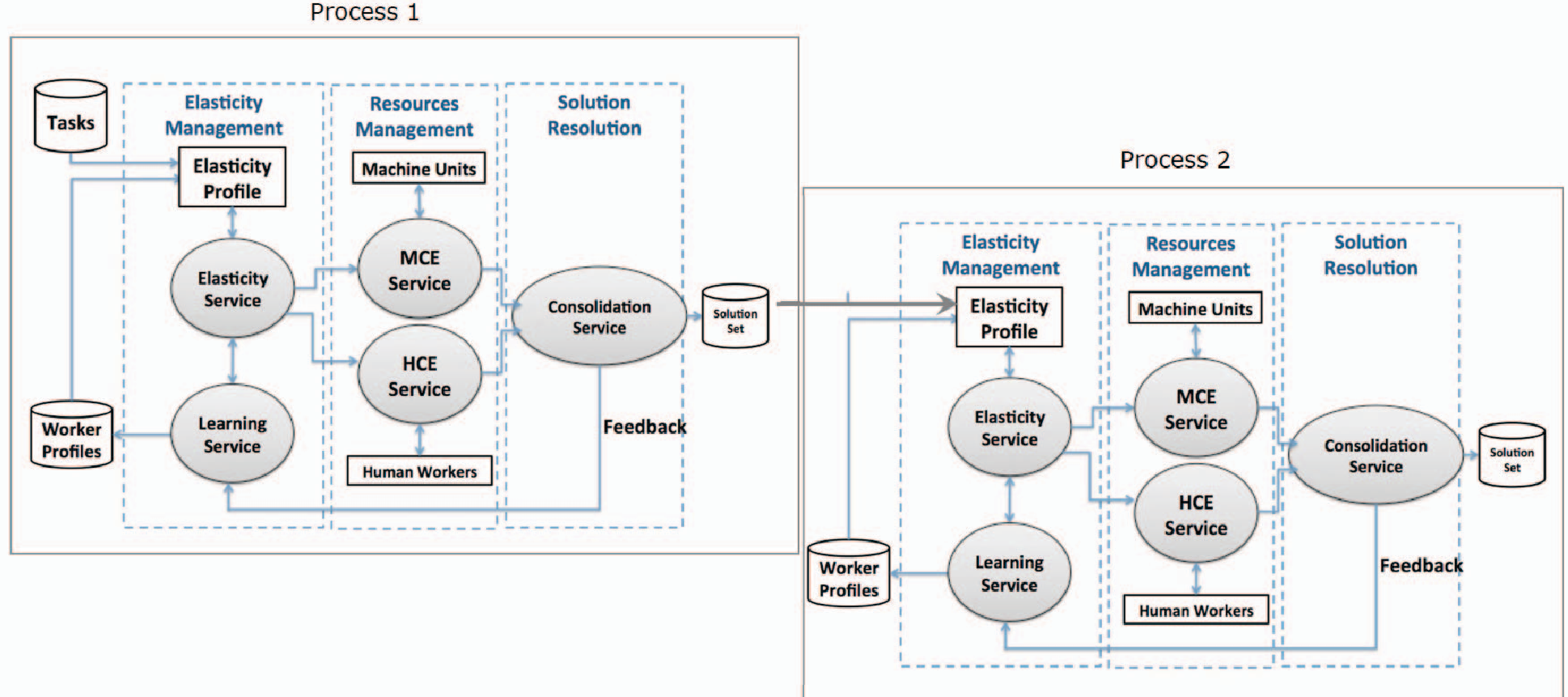 Figure 3: Daisy chaining multiple elastic workflows to handle sequential, multi-stage crowdsourcing projects.
Critical Insight & Conclusion
The value of this research lies in its abstraction. By moving away from domain-specific tools and toward a universal Worker-Task ADT, the authors provide a blueprint for the next generation of "Crowdsourcing OS."
Limitations: The model heavily relies on the quality of "Employer Feedback." If rewards or ratings are biased, the Elastic Index could degrade. Furthermore, calculating the Task Complexity Index (TCI) still requires some initial human expertise to define the right metrics (e.g., Face Angle vs. Image Quality).
Future Outlook: As we enter the era of Large Language Models (LLMs), this framework is more relevant than ever. LLMs can be plugged into this model as "Machine Workers," and the Elastic Index will determine when a task is too complex for an LLM and must be escalated to a human expert.