
RMD: Balancing Price, Time, and Influence in Viral Marketing
5387_Revenue Maximization with Deadline in Viral Marketing.
This paper introduces the Revenue Maximization with Deadline (RMD) problem, focusing on viral marketing over social networks. It proposes a novel framework that integrates pricing strategies, social influence propagation, and time-delay factors to optimize product promotion within a specific timeframe.
TL;DR
Viral marketing is no longer just about "getting the word out"; it's about making money before the clock runs out. This paper introduces the Revenue Maximization with Deadline (RMD) problem, a sophisticated model that integrates social network topology, propagation time-delays, and pricing strategies to maximize revenue within a fixed window.
Background & Motivation
Most existing research in social networks focuses on Influence Maximization (IM)—finding the most influential people to start a trend. However, from a business perspective, the number of clicks matters less than the total revenue.
The authors identify a critical gap: Time and Price are the "forgotten dimensions."
- Time-Delay: Information doesn't travel instantly. Every "hop" in a network takes time.
- Price Sensitivity: My willingness to buy a product changes based on how many of my friends recommend it (Evaluation Increment).
- Deadlines: Marketing campaigns have end dates. If a friend recommends a product after the sale ends, that revenue is lost.
Methodology: The RMD Framework
The paper formalizes the process into two steps:
- Step 1: Information Propagation: Influencers (seeds) are chosen and given the product for free. They spread awareness to neighbors.
- Step 2: Purchase Decision: A user buys the product only if their evaluation (initial value + social influence) exceeds the price , and the information reaches them before the deadline .
Key Mathematical Insight: The Evaluation Increment
The final evaluation of a user is calculated as: Where is the boost in value provided by an influential friend .
Optimization Strategies
Since finding the global optimum is computationally expensive (), the authors propose three heuristic strategies:
- Out-Degree Strategy (ODS): Picks seeds with the most connections.
- Price-First Strategy (PDS): Prioritizes users who already have a high valuation of the product.
- Time-First Strategy (TDS): Selects users who can spread information the fastest (shortest paths).
 Figure 1: The logic flow of new product adoption in social networks under time constraints.
Experiments and Results
The researchers tested their model on realistic datasets (Facebook and Highschool networks).
1. Performance of Heuristics
The PDS (Price-First Strategy) emerged as the winner among heuristics. It achieved revenue levels nearly identical to the exhaustive baseline but at a fraction of the computational cost. This suggests that targeting users who are "almost ready to buy" is a highly efficient seeding strategy.
2. The Impact of Deadlines
Unexpectedly, the relationship between the deadline and the optimal price is not a simple linear scale. While more time generally allows for more revenue, the "optimal price" fluctuates as the network reaches different "clusters" of users over time.
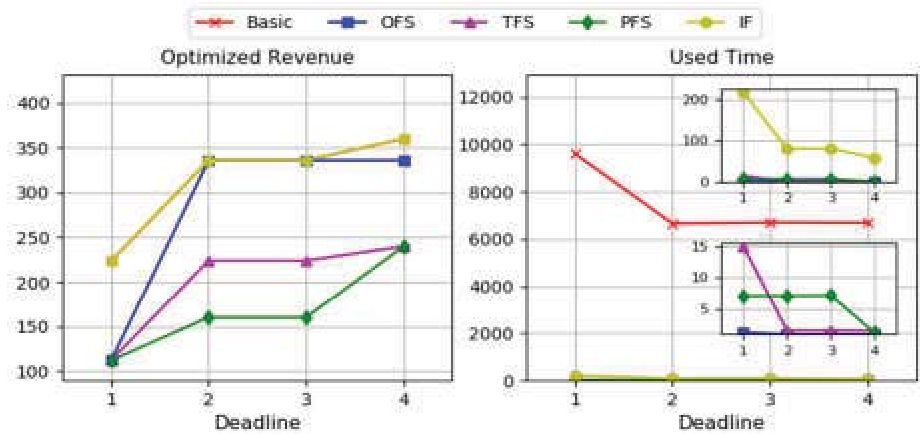 Figure 2: Performance comparison of various optimization strategies on the Highschool dataset.
Critical Analysis & Takeaways
Summary of Contribution
This paper shifts the viral marketing discourse from pure "influence" to "profitability." By introducing the Sensible Marketing Deadline (SMD) concept, authors provide a tool for managers to estimate the shortest possible time required to achieve maximum revenue.
Limitations
- Uniform Pricing: The model assumes a single price for all users. In modern e-commerce, dynamic or personalized pricing (discounts for specific users) would be a natural next step.
- Static Topology: Social networks change; the model assumes the graph remains static during the campaign.
Conclusion
If you are running a 48-hour flash sale, you shouldn't just pick the person with the most followers. You need to pick the person who is "fastest" and whose followers "value quality." The RMD model provides the mathematical foundation to prove why timing is everything in the social economy.