
Reverse Encoding: Maximizing Circular Buffer Efficiency for On-Chip Bus Tracing
17768_A Reverse-Encoding-Based On-Chip Bus Tracer for Efficient Circular-Buffer Utilization.
This paper introduces a "Reverse-Encoding" algorithm for on-chip bus tracers that enables efficient circular-buffer utilization for pre-triggering (Pre-T) traces. The method achieves 100% buffer utilization and significantly extends trace depth by reversing the reference dependency in differential compression, ensuring that overwriting the oldest data doesn't invalidate the remaining trace.
TL;DR
Debugging modern Systems-on-a-Chip (SoC) requires capturing signals before a failure occurs (Pre-triggering). However, standard compression fails when circular buffers wrap around. This paper presents a Reverse-Encoding algorithm that ensures 100% buffer utilization by reversing data dependencies—recording 4.86x more trace data than industry standards with negligible hardware overhead.
The "Initial Value" Paradox in Circular Buffers
In on-chip tracing, we face a storage crisis: trace data is massive, but on-chip memory is expensive. Lossless differential compression is the standard solution—storing one uncompressed value () and then just the differences ().
The paradox arises in Pre-triggering (Pre-T) traces. To capture the events leading up to a crash, the tracer uses a circular buffer. Once the buffer is full, it wraps around and overwrites the oldest data. In forward encoding, that oldest data is . Once is gone, every subsequent becomes a meaningless "offset from nothing."
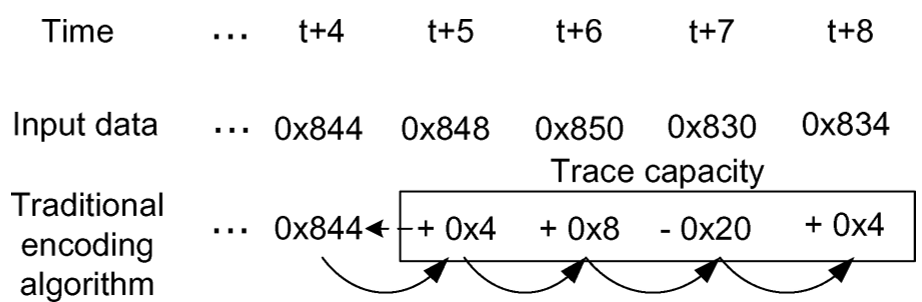 Fig 1: Traditional forward encoding where the loss of the initial datum 0x844 invalidates the entire buffer.
The Core Insight: Reverse Encoding
The authors propose a deceptively simple yet brilliant shift: Reverse the reference order. Instead of encoding "How does this value differ from the past?", the system encodes "How does this value differ from the future?".
1. Differential & Slice Compression
In reverse encoding, the tracer calculates the difference between the current datum and the next datum. When the trace stops at a trigger, the very last datum is recorded uncompressed. Because the wrap-around only deletes the oldest relative differences (not the base reference at the end), the remaining data stays decodable.
2. Dictionary-Based Compression
For dictionary methods, reversing the order is hardware-intensive. Instead, the authors use a Delayed Recording strategy. An uncompressed value is only written to memory when it is evicted from the dictionary. This ensures the "base" value always follows the "indexed" values in the buffer's physical sequence, protecting it from being overwritten before its dependent indexes.
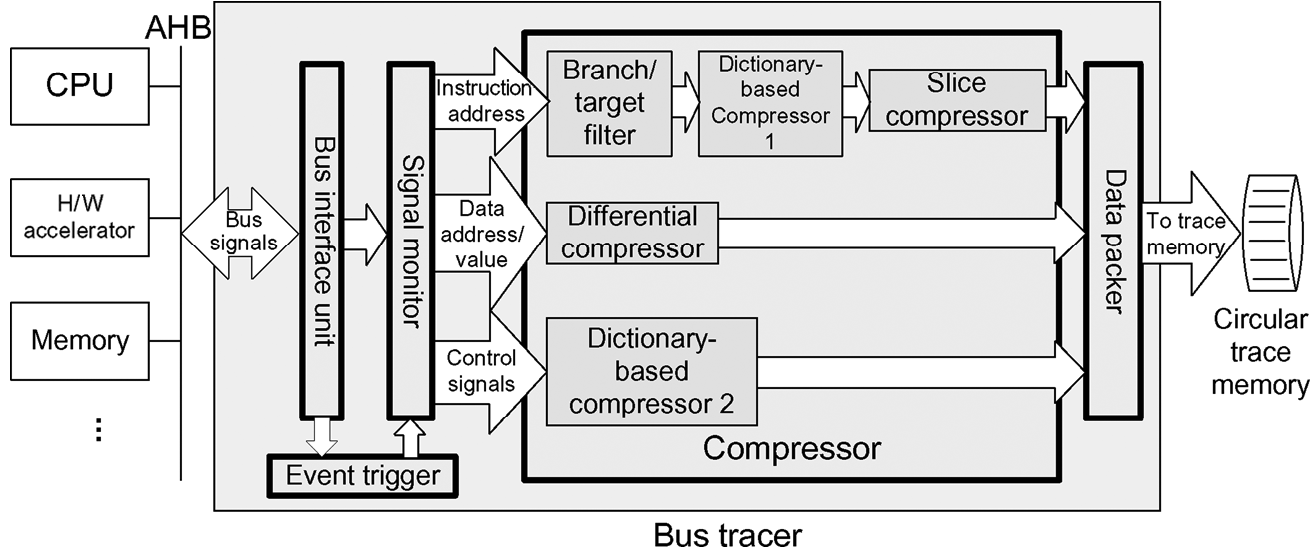 Fig 2: Comparison of Forward vs. Reverse reference logic.
Hardware Implementation & Architecture
The proposed tracer is integrated into an Advanced High-performance Bus (AHB) environment. The architecture consists of a Signal Monitor, a multi-stage Compressor (Dictionary -> Slice -> Differential), and a Data Packer.
By using a two-stage decompression flow, the software reads the buffer backward, starting from an address_pointer that identifies the last (uncompressed) packet.
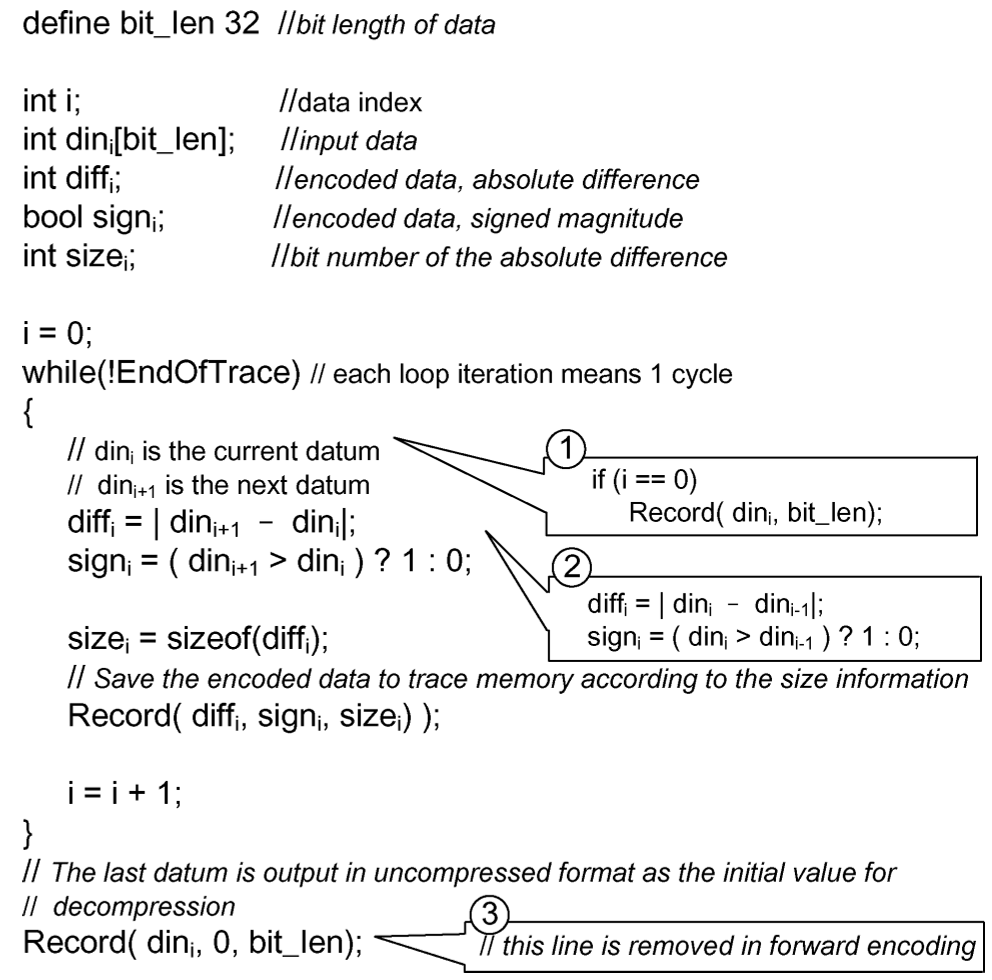 Fig 3: Hardware architecture for the real-time AHB bus tracer.
Experimental Performance
The tracer was tested on a 3-D graphics SoC using TSMC 0.13-μm technology.
- Utilization: Achieved 100% utilization of the circular buffer, whereas "Periodical Triggering" (the previous SOTA) wasted memory due to segment management.
- Trace Depth: Captured 437 cycles in a 1KB buffer, compared to 358 cycles for Periodical Triggering and only 90 cycles for uncompressed tracers.
- Efficiency: The tracer runs at 500 MHz, easily matching high-speed bus requirements while consuming only 43K gates (roughly 4% of a total SoC area).
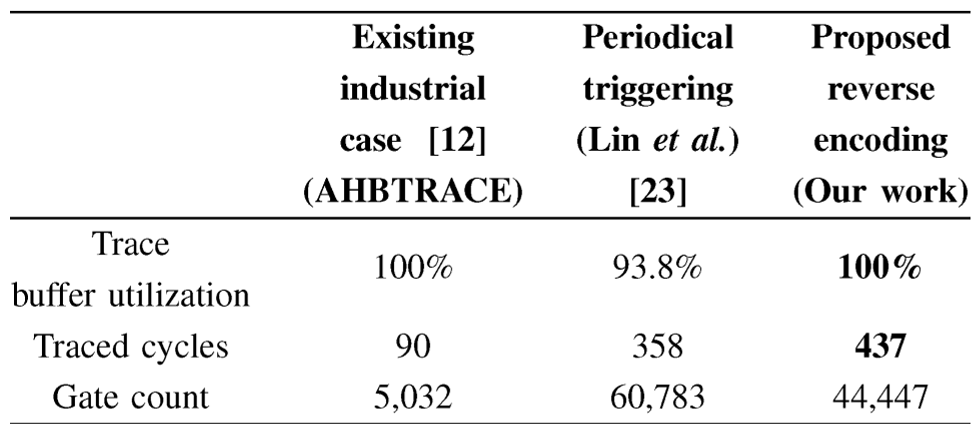 Table 1: Performance comparison showing the Trace Depth advantage of Reverse Encoding.
Critical Insight
The brilliance of this work lies in achieving high-end functionality with minimal hardware "tax." While other solutions tried to solve the wrap-around problem by adding complex "ping-pong" buffers or lossy signatures, this paper solves it by mathematically transforming the encoding direction. It proves that in hardware design, a change in logic flow is often more powerful than adding more transistors.
Conclusion
The Reverse-Encoding Tracer provides a lossless, full-utilization solution for Pre-T debugging. It is currently one of the most cost-effective ways to implement deep-trace capabilities in consumer electronics SoCs where both silicon area and debugging visibility are at a premium.