
Revisiting Facebook: From Social Hub to Information Scrapbook
Revisiting Facebook: A Study on Changes in Social Network Usage
This research investigates the shifting usage patterns of Facebook through semi-structured interviews with 20 users in South Korea. The study identifies a critical transition from "social communication" to "information consumption" and highlights how outdated UI/UX fails to meet these evolving needs.
TL;DR
Facebook is no longer a place for "socializing" in the traditional sense. This study reveals a fundamental shift in user intent: people are moving away from active communication and toward passive information consumption. However, Facebook's "classic" blue UI and ad-heavy News Feed are creating friction, leading to social media fatigue and a user exodus.
Background Positioning
While early 2010s research hailed Facebook as the king of "Social Capital," this 2019 study acts as a diagnostic report on the platform's aging pains. It positions the decline of Facebook not just as a loss of interest, but as a failure of the platform's UX to evolve alongside its users' life cycles and changing digital habits.
Problem & Motivation: The Fatigue of the News Feed
The authors identify a "vicious circle": as friends post less, the community feedback loop breaks, leading others to stop posting. Participants highlighted two primary pain points:
- Service Environment: The News Feed has become a "minefield" of advertisements and untrustworthy, manipulated information.
- Social Environment: As users move from school to the workplace, their social boundaries change, and a platform designed for tight-knit groups becomes "messy" and "unnecessary."
Methodology: Qualitative Insights
The researchers interviewed 20 participants aged 22–30, performing thematic analysis on their interview transcripts.
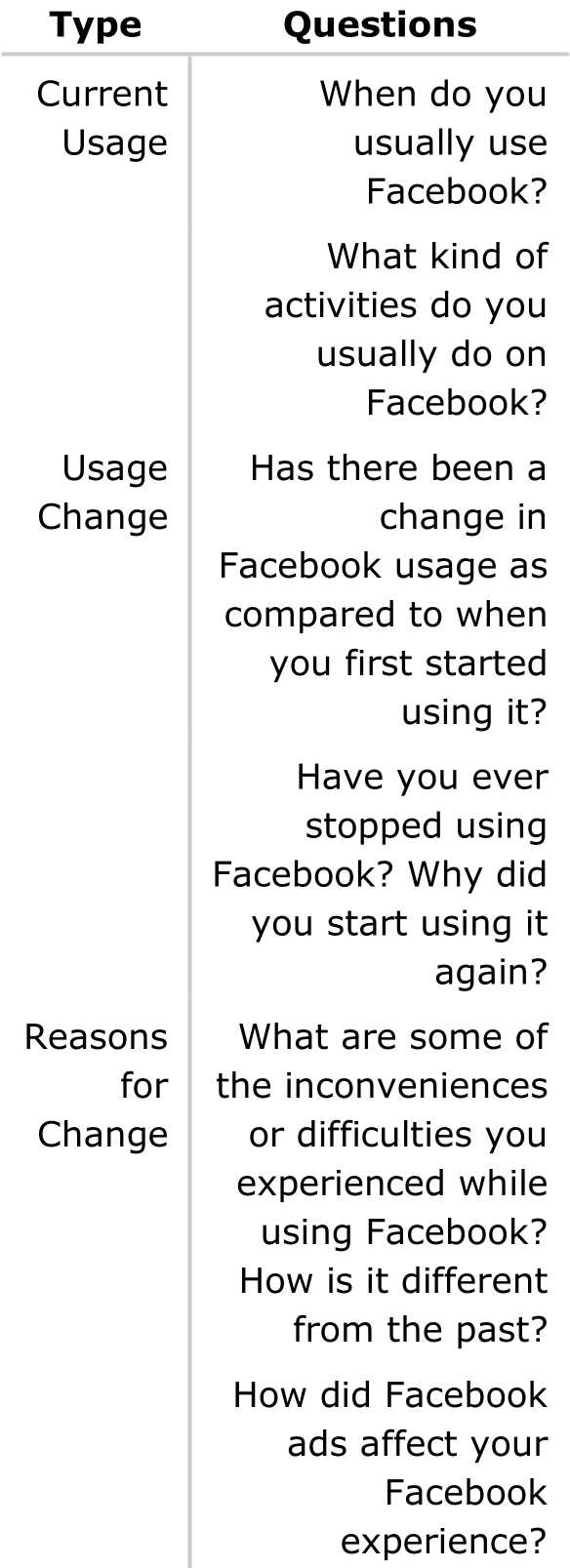
The study utilized Open Coding to extract key concepts, allowing the researchers to see beyond the "what" (declining usage) and into the "why" (loss of trust and change in life-stage needs).
Key Findings: Consuming Rather than Communicating
The most striking discovery is the pivot in user intent. Users now treat Facebook as a scrapbooking tool.
- Information Gathering: 18 out of 20 participants use the app to find restaurants, home training videos, or work resources.
- UI Rigidness: Users expressed frustration that while their habits changed, Facebook remained "always blue" and "classic," lacking the photo-editing or keyword-organized features seen in competitors.
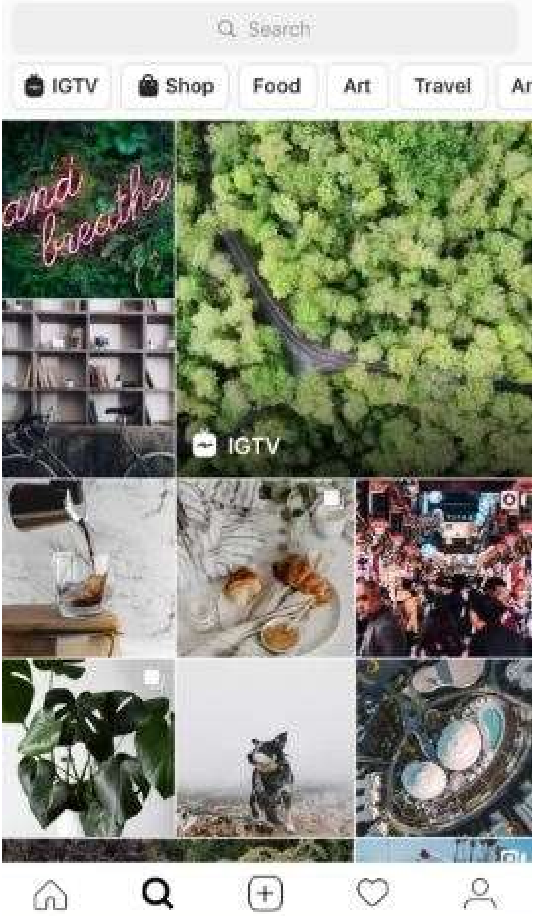 Figure 1: Comparison of how competitors like Instagram utilize hashtags and keywords to facilitate content consumption, a feature Facebook lacks according to the study.
Critical Analysis & Conclusion
Takeaway
The era of the "Social Graph" (who you know) is being superseded by the "Interest Graph" (what you like). The study suggests that for an SNS to survive long-term, its UI must minimize "fatigue" by allowing users to selectively consume content rather than forcing a cluttered, ad-driven feed upon them.
Limitations
The sample size (n=20) is small and culturally specific to South Korea. Furthermore, as a 2019 study, it predates the global explosion of short-form video content (TikTok), which has since accelerated the shift toward passive consumption even further.
Future Work
The authors suggest that future SNS design must focus on Curated Consumption. Designers should provide tools that help users organize "saved" information more effectively, rather than just focusing on "shares" and "likes."