
Gamifying Privacy: Using Crowdsourcing to Break the Privacy Paradox
A Rewarding Framework for Crowdsourcing to Increase Privacy Awareness
The paper introduces a Rewarding Framework (RF) integrated into the CAP-A crowdsourcing portal, aimed at increasing digital privacy awareness. By combining intrinsic and extrinsic rewards (points, badges, leaderboards) based on the REWARD ontology, it motivates users to perform complex privacy tasks such as annotating Privacy Policy (PrP) documents.
TL;DR
Privacy Policies (PrPs) are the "unread manifestos" of the digital age. This paper presents the Rewarding Framework (RF) within the CAP-A portal, a system that uses gamification, tiers, and the REWARD ontology to turn the tedious task of reading privacy policies into a rewarding community activity. The result? A massive 286% average increase in privacy awareness among users.
The "Privacy Paradox" and the Engagement Wall
We all claim to care about our data, yet we click "I Accept" in milliseconds. This is the Privacy Paradox. The primary barrier isn't just apathy; it's the sheer complexity and length of PrP documents. While crowdsourcing (having many users annotate parts of a policy) is a logical solution, most people find it incredibly boring.
Previous works relied on paid crowdsourcing (like Amazon Mechanical Turk), which is expensive and often lacks high-quality "intrinsic" motivation. The authors of this paper argue that to truly raise awareness, we need a framework that balances Intrinsic Motivation (learning, social recognition) with Extrinsic Rewards (points, badges, leaderboards).
Methodology: The Engineering of Motivation
The core of this research is a four-tiered task system designed to match a user's expertise with the difficulty of the task.
1. The REWARD Ontology
Instead of a hard-coded point system, the authors used an ontology-based approach. This allows the system to be agile. For instance, if a specific pilot project needs more users to annotate a specific app category, they can apply a "Boost Parameter" to increase points for those tasks without rewriting the code.
2. Tiered Task Management
To ensure quality, the RF locks "sophisticated" tasks behind experience walls:
- Level 1: Basic tasks (e.g., completing a profile).
- Level 2: Social tasks (e.g., voting on credibility).
- Level 3 & 4: High-level annotation and GDPR concept identification—reserved for "Expert" or "Guru" tiers.
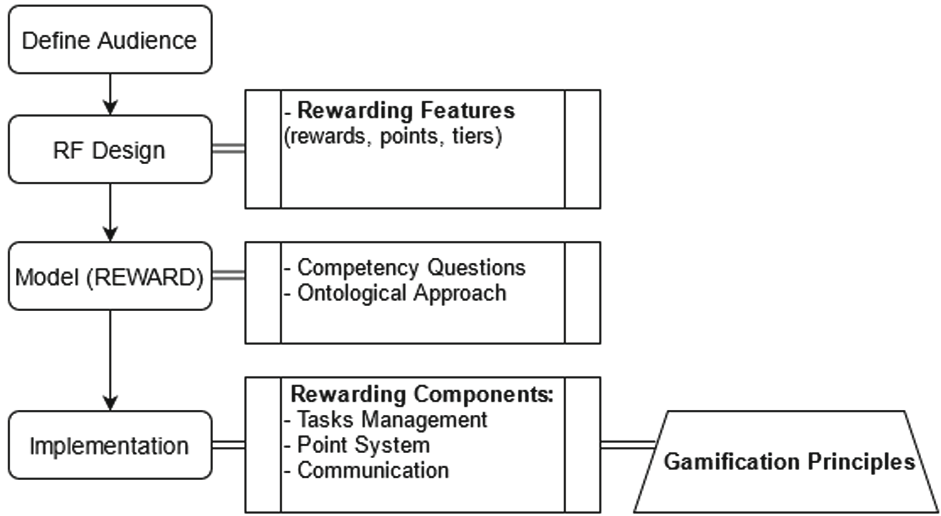 Figure 1: The Rewarding Framework integrated into the CAP-A Portal architecture.
Experiments: Does it Actually Work?
The validation involved six pilots (e.g., Saferinternet4Kids, Devstaff) and a dedicated empirical evaluation.
Engagement Results
The engagement metrics were impressive. Users were asked to complete 10 tasks; on average, they completed 41. This suggests that the gamification Loop (Tasks -> Points -> Tiers -> Feedback) effectively keeps users "in the loop."
Awareness Impact
The study used the Privacy Awareness Index (PAI) to measure knowledge before and after using the portal. The results were striking:
- Pragmatists: +286% increase in awareness.
- Unconcerned Users: +288% increase in awareness.
- Fundamentalists (Already aware): +151% increase.
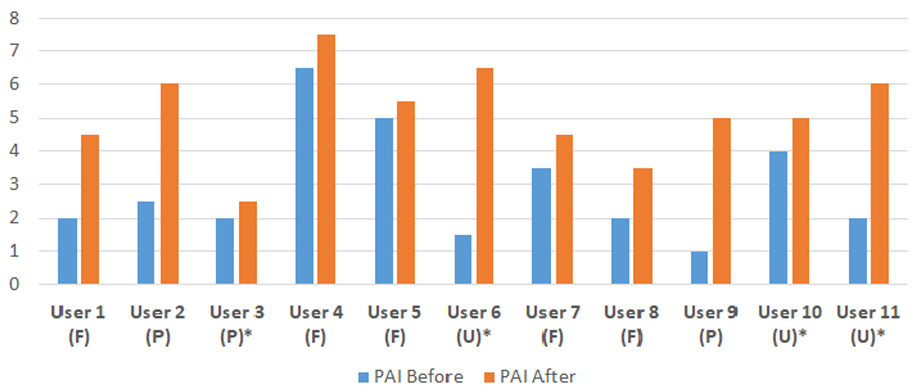 Figure 2: Significant PAI growth across different user classes (Fundamentalists, Pragmatists, Unconcerned).
Critical Insight: Why This Matters
The breakthrough here isn't just "giving points for tasks." It is the Task Leveling strategy. By preventing "Baby" users from attempting complex legal annotations (Level 4), individual users don't feel overwhelmed, and the community data remains high-quality.
Limitations & Future Work
The authors noted that Annotation (Level 3/4) is still perceived as difficult compared to simpler tasks like "expressing expectations." Future work will likely focus on "UX Nudging"—finding even more attractive ways to present legal text, perhaps through better annotator interfaces or team-based rewards.
Conclusion
The CAP-A Rewarding Framework proves that privacy awareness doesn't have to be a chore. By treating privacy policy analysis as a collective intelligence task supported by a solid gamification ontology, we can move from "blindly accepting" to "knowingly engaging" with the digital ecosystem.