
Beyond Checklists: Using Design Fiction Memos to Unmask the Politics of UX Ethics
ACM Reference Format: Richmond Y. Wong. 2021. Using Design Fiction Memos to Analyze UX Professionals' Values Work Practices: A Case Study Bridging Ethnographic and Design Futuring Methods. In CHI Conference on Human Factors in Computing Systems (CHI
This paper introduces "Design Fiction Memos" as a qualitative analysis method that bridges ethnography and speculative design. By applying this method to a case study of UX professionals, the author reveals how organizational power dynamics and "invisible labor" shape the way ethics and values are handled in large technology companies.
TL;DR
Ethical design is often taught as a series of workshops and checklists. But in the real world of Big Tech, it's a messy battle of corporate power, invisible labor, and social survival. This paper by Richmond Y. Wong introduces Design Fiction Memos—a method that turns ethnographic interviews into fictional corporate artifacts (like Slack logs and company memos) to analyze the systemic forces that often silence ethical concerns.
The "Values Gap" in UX Practice
Why do well-intentioned designers often fail to stop harmful products? Most academic research focuses on the outputs of design. However, Wong argues that the real friction lies in the organizational "somewhere". UX professionals at large companies are rarely the ultimate decision-makers. They are stuck between their personal values and the rigid OKRs (Objectives and Key Results) of their employers.
The author noticed that traditional ethnographic reports (long text summaries) often fail to capture the visceral, emotional weight of being the only person "in the room" raising a "Debbie Downer" concern.
Methodology: The Design Fiction Memo
Borrowing from the qualitative tradition of "memoing"—where researchers write down quick insights during analysis—Wong created Design Fiction Memos. These are not just fantasies; they are "diegetic prototypes" grounded in real interview data.
The Two Modes of Analysis:
- Realization: Taking a specific story from an interviewee (e.g., a manager ignoring an ethical concern) and "designing" the email response. This forces the researcher to inhabit the social dynamics of the moment.
- Extension: Taking a core concept (e.g., "invisible ethics work") and imagining a tool like an "Ethics Work Tracker" to see what new problems (like performative ethics) might emerge.
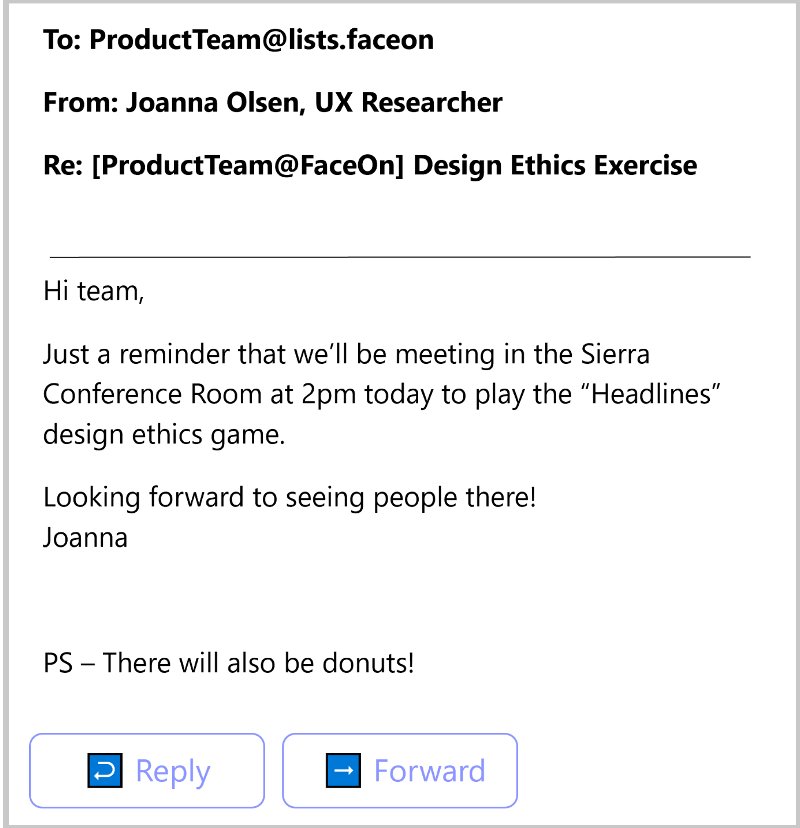 In this memo, the researcher explores how ethical workshops (like the "Headlines" activity) might succeed in building culture while still failing to unlock corporate funding for responsible AI.
Key Insights: The Hidden Cost of "Being Ethical"
1. The Paradox of the "Debbie Downer"
One striking design fiction, Ike the Icon, parodies Microsoft's Clippy. Ike pops up to warn designers about "problematic decisions."
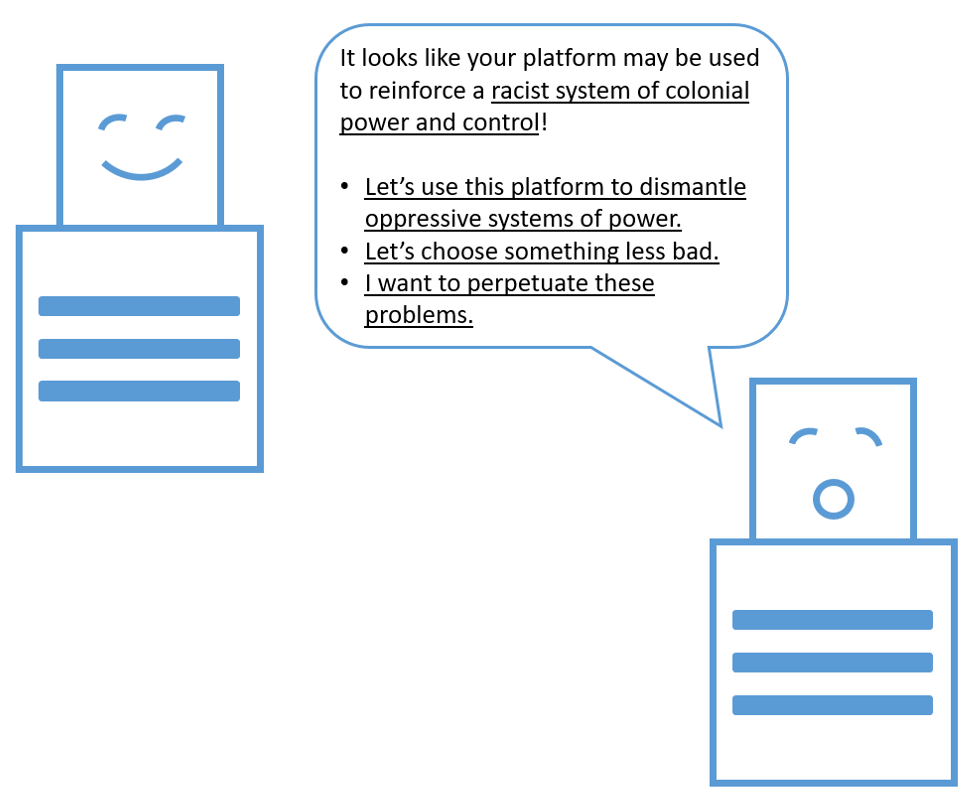 This fiction highlights a painful reality: human designers who constantly raise ethical flags are often socially penalized. By imagining an automated bot doing this work, the author reveals just how much emotional labor we expect humans to perform for "free."
2. The Visibility of Labor
The Ethics Work Tracker (modeled after a GitHub contribution graph) asks: What if our diversity and inclusion work counted as "productivity"?
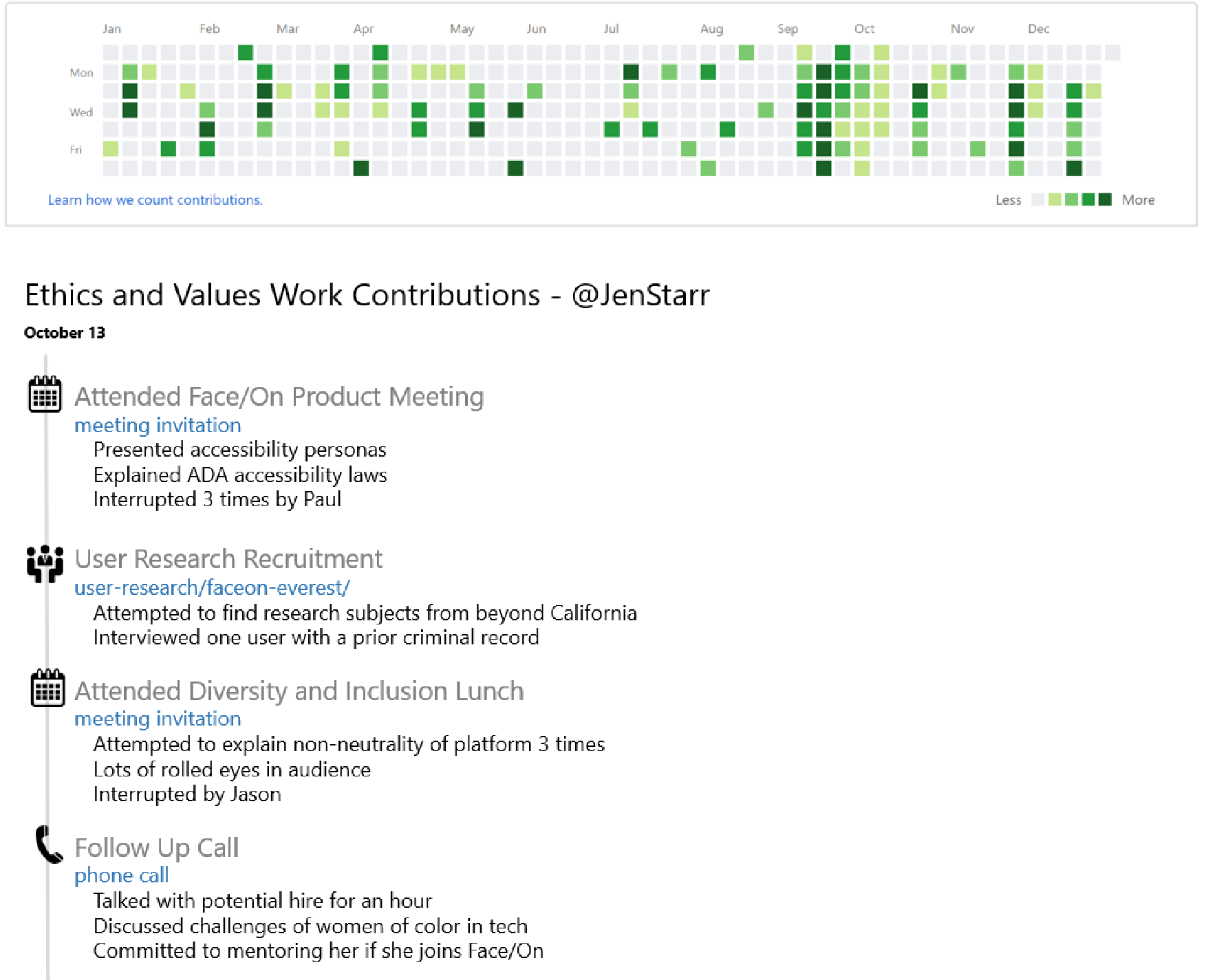 The memo illustrates that values work is often "shadow labor"—gendered, unrecognized, and exhausting. If we track it, it risks becoming a performative metric; if we don't, it remains a burden borne by the marginalized.
3. Corporate "Strikebreaking"
In the Anchorton Consulting fiction, a company helps other firms "outsource" ethically sensitive tasks. If a designer refuses to work on a surveillance project, Anchorton provides a "contractor without qualms." This shifts ethics from a collective social responsibility to a mere "personal preference" that can be market-optimized away.
Critical Analysis: Why This Matters
The brilliance of this paper is its refusal to offer "easy" design solutions. Instead, it "stays with the trouble."
- For Researchers: It provides a blueprint for bypassing corporate NDAs to share critical stories through fiction.
- For Designers: It validates their struggle, proving that their failure to "fix" a product's ethics is often a result of structural power asymmetry, not a lack of design skill.
Conclusion: A New Lens for HCI
Wong’s "Design Fiction Memos" prove that the tools of the future aren't just for imagining flying cars or cyberpunk dystopias. They are analytical lenses we can use to look inward at our own offices, Slack channels, and power structures. To build truly ethical technology, we must first design more equitable workplaces.
Takeaway: The next time you use an ethical design checklist, remember—the document isn't the solution; the political coalition you build to enforce it is.