
AXIS: Why "Too Much Information" is Killing Your Ridesharing Experience
Explaining Ridesharing: Selection of Explanations for Increasing User Satisfaction
This paper introduces AXIS (Automatic eXplainer for Increasing Satisfaction), a machine learning-based agent designed to select optimal explanations for ridesharing users. By comparing shared rides with alternatives like private taxis or public transit, AXIS aims to bridge the gap between service utility and user perception, ultimately achieving state-of-the-art results in human satisfaction metrics.
TL;DR
Why do people hate UberPool even when it saves them money? It’s a matter of perception. This paper argues that instead of just optimizing routes, we need to optimize explanations. By moving away from "Information Overload" and toward psychologically-informed AI, the authors developed AXIS, an agent that selectively tells you exactly why your shared ride was a good choice, significantly boosting user satisfaction over "perfectly rational" AI.
The "Rationality" Trap in Human-AI Interaction
In classical game theory, a rational agent follows the Perfect Bayesian Equilibrium (PBE). In the context of ridesharing, if an AI wants to satisfy a user, the PBE suggests it must reveal everything—every cost and every delay of every alternative.
However, humans aren't "Econs." We are subject to anchoring effects and framing. Telling a user that public transit was 10 shared ride, even if the shared ride saved them 20 minutes of walking. The pain of the "lost" $5 outweighs the "gain" in time.
Methodology: From Signaling Games to Neural Networks
The authors tackled this by first proving that a "rational" agent is insufficient, then building AXIS (Automatic eXplainer for Increasing Satisfaction).
1. The Signaling Game Model
The authors modeled the interaction as a game between Nature (the actual prices/times), the Agent (the AI), and the Passenger. They proved through Lemma 1 and Theorem 1 that in a pure theoretical setting, the agent must reveal the truth to prevent the passenger from assuming the worst-case scenario.
2. The AXIS Architecture
AXIS moves beyond the "tell-all" approach. The authors defined 16 classes of explanations based on:
- Alternative: Taxi vs. Public Transit.
- Criterion: Time vs. Cost.
- Visualization: Absolute ($ saved) vs. Relative (% saved).
- Perspective: Shared ride saving vs. Alternative costing more.
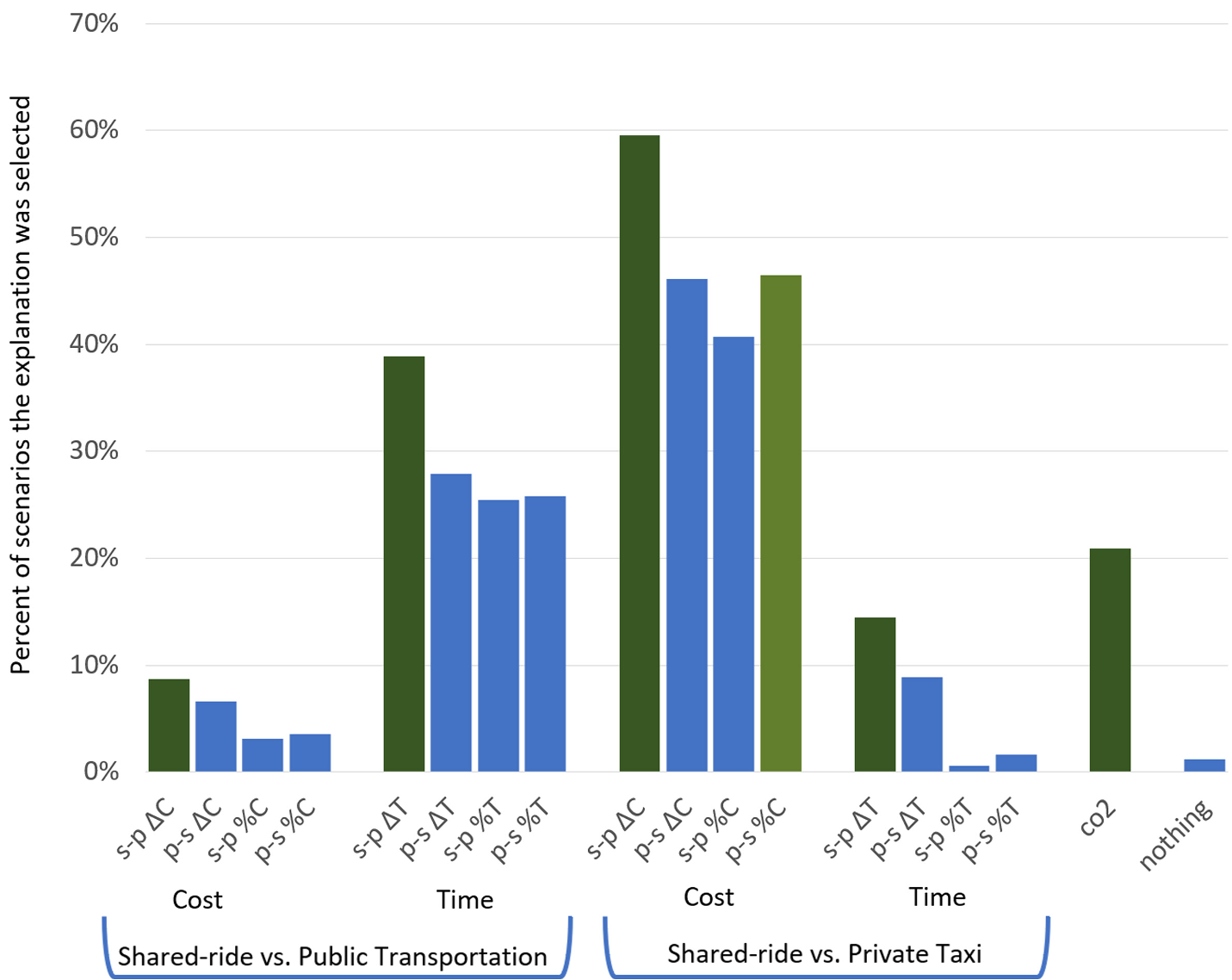 Figure 1: Human preferences show a clear bias toward cost comparisons with taxis and time comparisons with public transit.
They trained a Neural Network on human feedback to pick a subset of these 16 options that maximize the "feel-good" factor of the ride.
Experiments: Real-World Scenarios
Using New York City taxi data (JFK Station as origin), the authors generated thousands of shared-ride scenarios. They then pitted AXIS against:
- The PBE Agent: Provides all raw data.
- Random Agent: Picks explanations randomly.
Performance Results
The results were conclusive. AXIS didn't win by just talking more; it won by talking smarter.
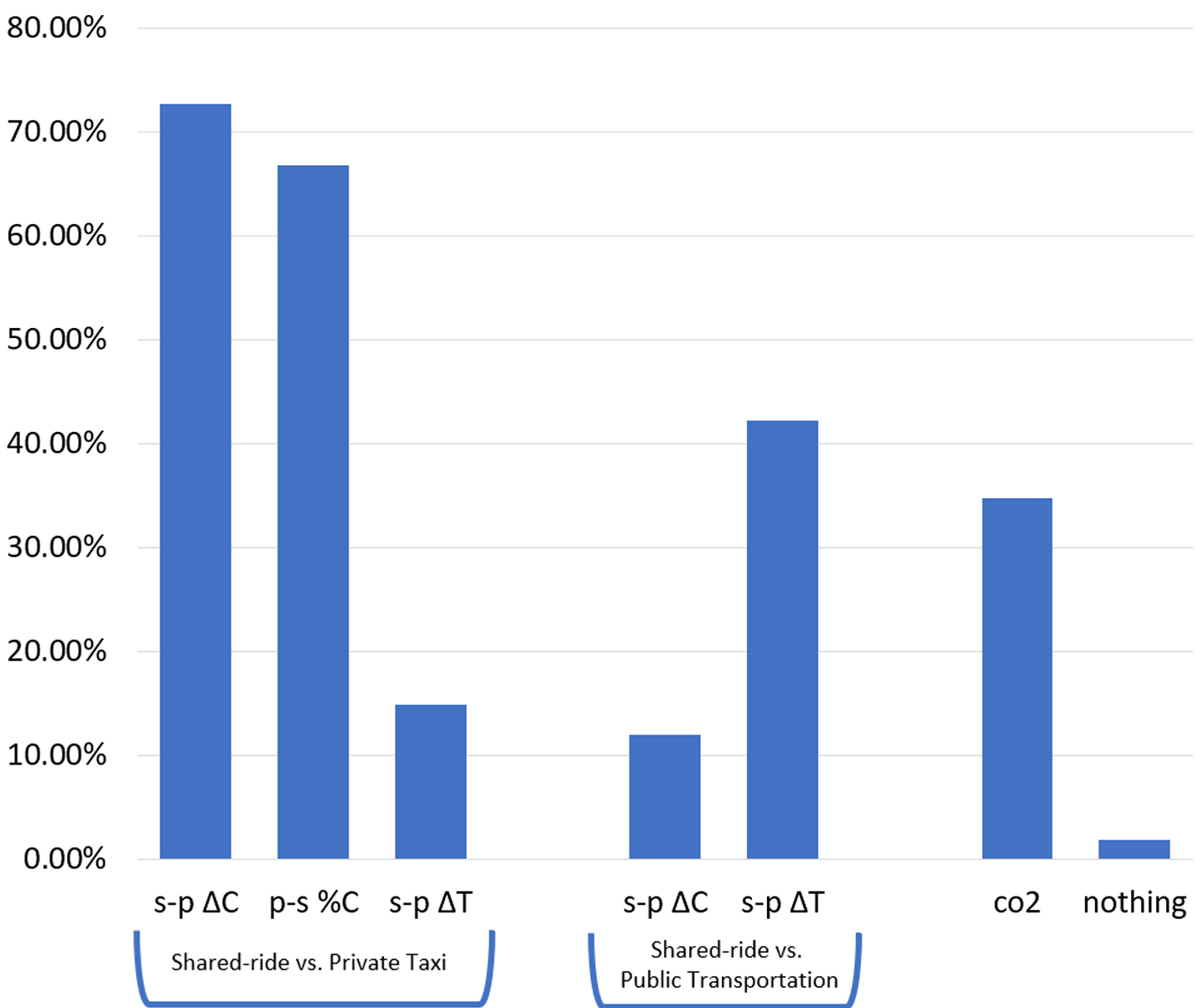 Figure 2: AXIS significantly outperforms both the "optimal" PBE agent and random baselines.
Case Study Example:
- PBE Agent: "A taxi would cost 2.5 and takes 26 mins." (Too much noise).
- AXIS Agent: "A private taxi would have cost 83% more." (High impact, clear anchor).
The Takeaway: Selective Transparency
The core insight of this research is that Explainable Multi-Agent Systems (x-MASE) should not aim for 100% transparency, but for strategic communication. By understanding that users compare shared rides to taxis (luxury) for cost and to buses (utility) for time, AXIS aligns its "AI logic" with "Human logic."
Limitations & Future Work
While successful, AXIS currently treats all users as a monolith. The authors suggest that future versions should include User Modeling—realizing that a business traveler might care more about the 5 minutes saved, while a student cares more about the 50% cost reduction.
Senior Editor's Note: This paper is a vital reminder that in the "Smart City" of the future, the bottleneck isn't just the algorithm that routes the cars, but the interface that communicates with the humans inside them.