
The Ripple Effect: How Facebook Fan Pages Turn News into Virality
Investigating the ripple effect in virtual communities: An example of Facebook Fan Pages
This study investigates the "ripple effect" in virtual communities by integrating Uses and Gratifications (U&G) theory with the Dual Mediation Hypothesis (DMH). Using Structural Equation Modeling (SEM) on 599 Facebook Fan Page users, it identifies how perceived news entertainment and informativeness drive multi-dimensional eWOM intentions through attitudes toward the news and the Fan Page.
TL;DR
This research decodes why some brand posts go viral while others vanish. By combining psychology (U&G Theory) with communication models (Dual Mediation Hypothesis), the authors demonstrate that the "Ripple Effect"—the exponential spread of messages through social networks—is driven by a specific sequence: Informativeness/Entertainment → Interestingness → Fan Page Attitude → eWOM Intentions.
Problem & Motivation
In the era of social networking sites (SNSs), Word-of-Mouth has shifted from "one-to-one" to "many-to-many." However, most marketers struggle to understand why users decide to click "Share" or "Comment." Previous research focused heavily on satisfied customers (post-purchase), but on platforms like Facebook, the battle for attention happens before consumption.
The authors' insight is simple yet profound: A Facebook Fan Page is not just a notice board; it's a vehicle for "Interestingness." If a brand's news doesn't stir curiosity, it fails to influence the user's perception of the brand page itself, effectively killing the ripple effect at the source.
Methodology: The Core Engine of Diffusion
The researchers utilized a robust Structural Equation Modeling (SEM) approach, surveying 599 active fans in Taiwan. They broke down the process into three stages:
- The Inputs: Perceived News Entertainment (is it fun?) and Perceived News Informativeness (is it useful?).
- The Mediator: The "Interestingness" dimension of the attitude toward the news.
- The Outputs: Three types of eWOM:
- Giving: Sharing original thoughts/skills.
- Passing: Forwarding the content to other websites/friends.
- Obtaining: Seeking advice or facts on the page.
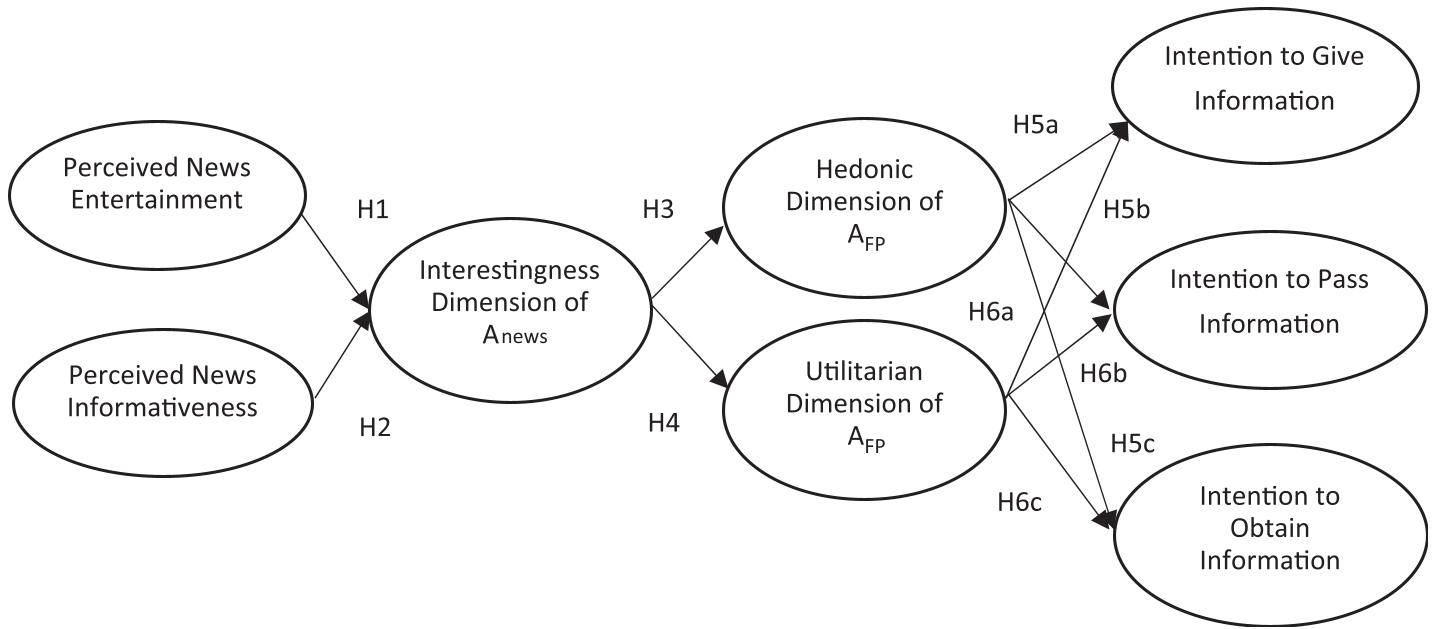 Figure 1: The proposed conceptual framework integrating U&G and DMH.
Why Context Matters: Hedonic vs. Utilitarian
One of the most striking findings is the split between Hedonic (pleasure-seeking) and Utilitarian (goal-oriented) attitudes.
- The Hedonic Powerhouse: If users find the Fan Page "fun" and "exciting," they are willing to engage in all forms of eWOM. They become your unpaid marketing department.
- The Utilitarian Wall: If a page is merely "helpful" or "functional," users will seek and pass information, but they will not "give" information. They treat the page as a resource to be mined, not a community to contribute to.
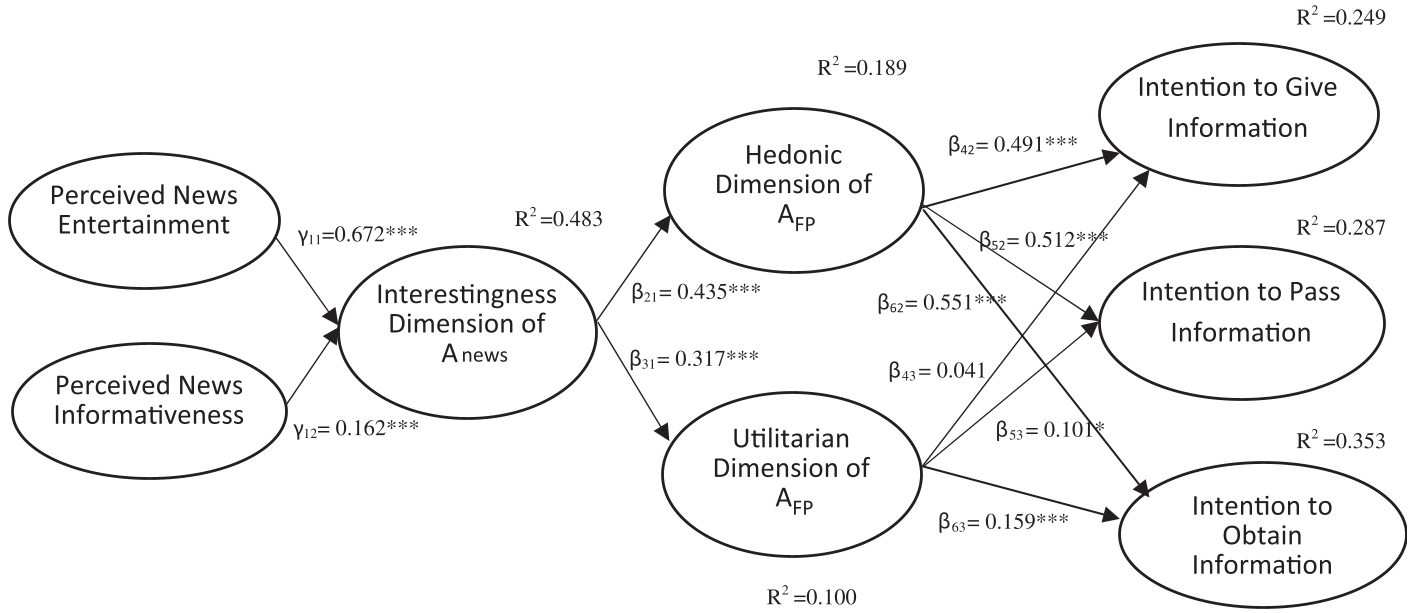 Figure 2: Empirical results showing the path coefficients of the structural model.
Critical Analysis & Industry Impact
Key Takeaways for Managers:
- Interestingness is the Filter: Even the most informative post will fail if it isn't framed as "interesting." This is the gatekeeper for user attention.
- Don't just be a Wiki: If your Fan Page is purely utilitarian, you gain followers but lose the "Ripple Effect." You must inject entertainment (celebrity endorsements, aesthetic product designs) to trigger the "Giving" branch of eWOM.
- eWOM is Not Monolithic: Marketers should track "Likes" (Passing), "Comments" (Giving), and "Inquiries" (Obtaining) as distinct metrics, as they are driven by different psychological triggers.
Limitations & Future Outlook
The study focuses on Facebook, which in 2026 operates differently than in 2015. High-speed video (Reels/TikTok) has further compressed the "Interestingness" window. Future research should explore how algorithmic friction (how social media algorithms limit reach) affects the organic ripple effect described here.
Conclusion
The "Ripple Effect" isn't accidental; it's a byproduct of strategic content design that balances utility with pleasure. To make your brand's voice "loud" in a crowded digital space, focus on the bridge between news content and page attitude—the often-overlooked factor of Interestingness.