
Deciphering Diabetes: Machine Learning Insights into the Qatari Population
Identification of Potential Risk Factors of Diabetes for the Qatari Population
This study utilizes machine learning on the Qatar Biobank (QBB) cohort to identify population-specific risk factors for diabetes. By analyzing 237 multi-modal variables, the authors discovered 25 key features and developed predictive models achieving an F1-score of approximately 0.85.
TL;DR
Diabetes is the third leading cause of death in Qatar, presenting both a health and economic crisis. This research leverages the Qatar Biobank (QBB) dataset to move beyond generic risk factors. By applying advanced feature selection (LASSO and GBM), the authors identified 25 specific risk factors—led by HbA1c, Glucose, and LDL-Cholesterol—and built classifiers that achieve an 0.85 F1-score, proving that a compact set of biomarkers can effectively drive regional screening efforts.
The Motivation: Why Localized Data Matters
Standard diabetes screening often relies on universal indicators. However, the interplay of genetics, environment, and lifestyle varies significantly across regions. In Qatar, where non-communicable diseases cost the economy over $36 billion annually, identifying "region-specific" markers is not just an academic exercise—it is a public health necessity.
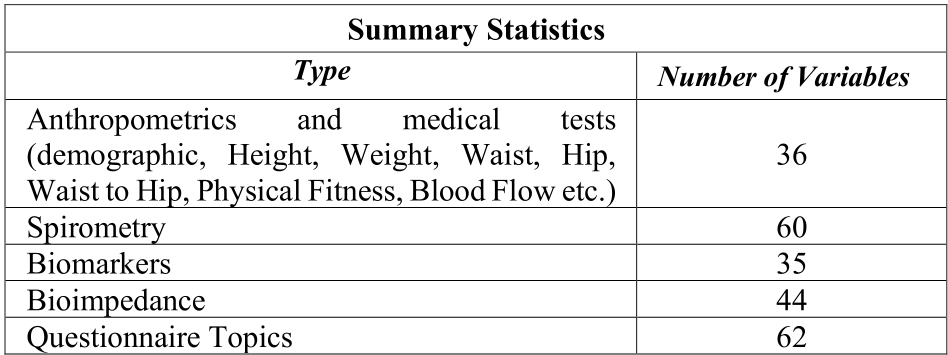
Prior works focused on isolated sets of variables (like physical measurements only). This study is the first to aggregate anthropometrics, spirometry, biomarkers, bioimpedance, and self-reported questionnaires for a holistic view.
Methodology: From 237 Variables to the "Vital Few"
The core technical challenge was high dimensionality: having 237 variables for 3,200 participants creates noise. The authors employed a rigorous two-step pipeline:
- Feature Selection (FS):
- LASSO: Used L1 regularization to shrink less important coefficients to zero.
- Gradient Boosting Machine (GBM): Averaged feature importance over 10 iterations with early stopping to prevent overfitting.
- Ensemble Ranking: A custom scoring method () combined the ranks from both FS techniques to determine the final priority of factors.
Model Architecture & Feature Breakdown
The data included a rich variety of sources, summarized below:
Evaluation: The Power of Three
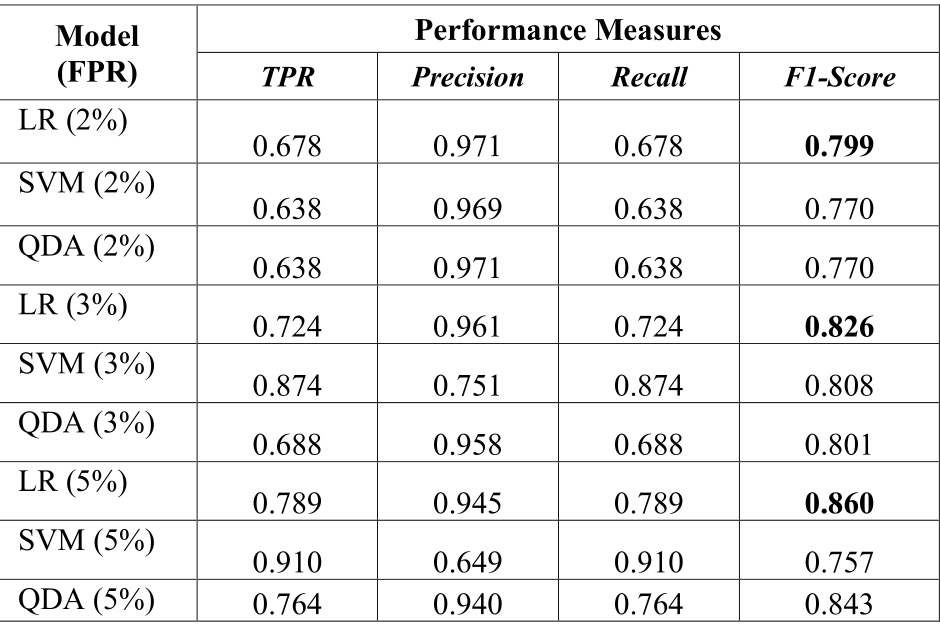
The researchers tested three classifiers: Logistic Regression (LR), Support Vector Machines (SVM), and Quadratic Discriminant Analysis (QDA).
A critical finding was the Saturated Performance: Increasing the number of features from 3 to 10 did not significantly boost accuracy. This suggests that HbA1c, Glucose, and LDL-Cholesterol contain the vast majority of the predictive "signal" for this population.
Key Performance Highlights:
- Logistic Regression showed the most balanced performance at various False Positive Rates (FPR).
- Even at a strict 2% FPR, the models maintained an F1-score of ~0.80.
Deep Insight & Future Outlook
The identification of LDL-Cholesterol alongside traditional glycemic markers (HbA1c, Glucose) underscores the strong link between lipid profiles and diabetes in the Qatari cohort. Interestingly, the list of 25 also included HandGrip-Left (anthropometric) and Vitamin D, suggesting that physical strength and micronutrient levels are non-negligible variables in the local context.
Limitations: The study did not differentiate between Type 1 and Type 2 diabetes due to dataset constraints. Future research integrating genomic data with these clinical biomarkers could provide an even more granular "Early Warning System."
Conclusion: This work serves as a blueprint for localized precision medicine. By focusing on the identified 25 factors, Qatar can optimize its clinical screening protocols, focusing on the biomarkers that count the most for its people.