
Building the Next-Gen Robo-Advisor: Integrating Cryptocurrencies via LSTM and Markowitz Models
Implementation of Robo-Advisor Services for Different Risk Attitude Investment Decisions Using Machine Learning Techniques
This paper introduces a specialized Robo-Advisor architecture that integrates cryptocurrencies into automated portfolio management using Machine Learning. By combining LSTM neural networks for price forecasting and the Markowitz Mean-Variance model for asset allocation, the system achieves an annual return of up to 31.8% for risk-seeking investors.
TL;DR
This research tackles the "black box" nature of automated financial advisors by proposing a transparent, modular Robo-Advisor specifically designed for the cryptocurrency market. By leveraging LSTM neural networks for forecasting and the Markowitz model for portfolio optimization, the system provides tailored investment plans that yielded up to 31.8% annual returns in simulated environments.
Problem & Motivation: The Gap in Automated Wealth Management
Since 2008, Robo-Advisors like Betterment and Wealthfront have revolutionized passive investing for stocks and bonds. However, they have largely bypassed the $2 trillion cryptocurrency market. Novice investors entering the crypto space often face two major hurdles:
- Extreme Volatility: The "hype" cycle leads to massive losses for those without a disciplined exit or entry strategy.
- Information Asymmetry: Unlike traditional stocks, crypto prices are driven by unique factors like mining difficulty, network supply, and "scam" potential.
The authors' insight was to move beyond simple trend-following and create a system that filters assets via a "DeadCoins" protocol and uses deep learning to understand the correlation between trading volume and price.
Methodology: A Three-Tiered Intelligence Architecture
The proposed Robo-Advisor is structured into three distinct functional modules to ensure scalability and data integrity:
1. The ETL (Extract-Transform-Load) Module
This acts as the system's "immune system" and data pipeline. It fetches real-time data from CryptoCompare but uniquely cross-references it with DeadCoins to exclude fraudulent or defunct projects. This ensures the portfolio only considers "live" assets with genuine market cap.
2. The Calculation Module (LSTM Forecasting)
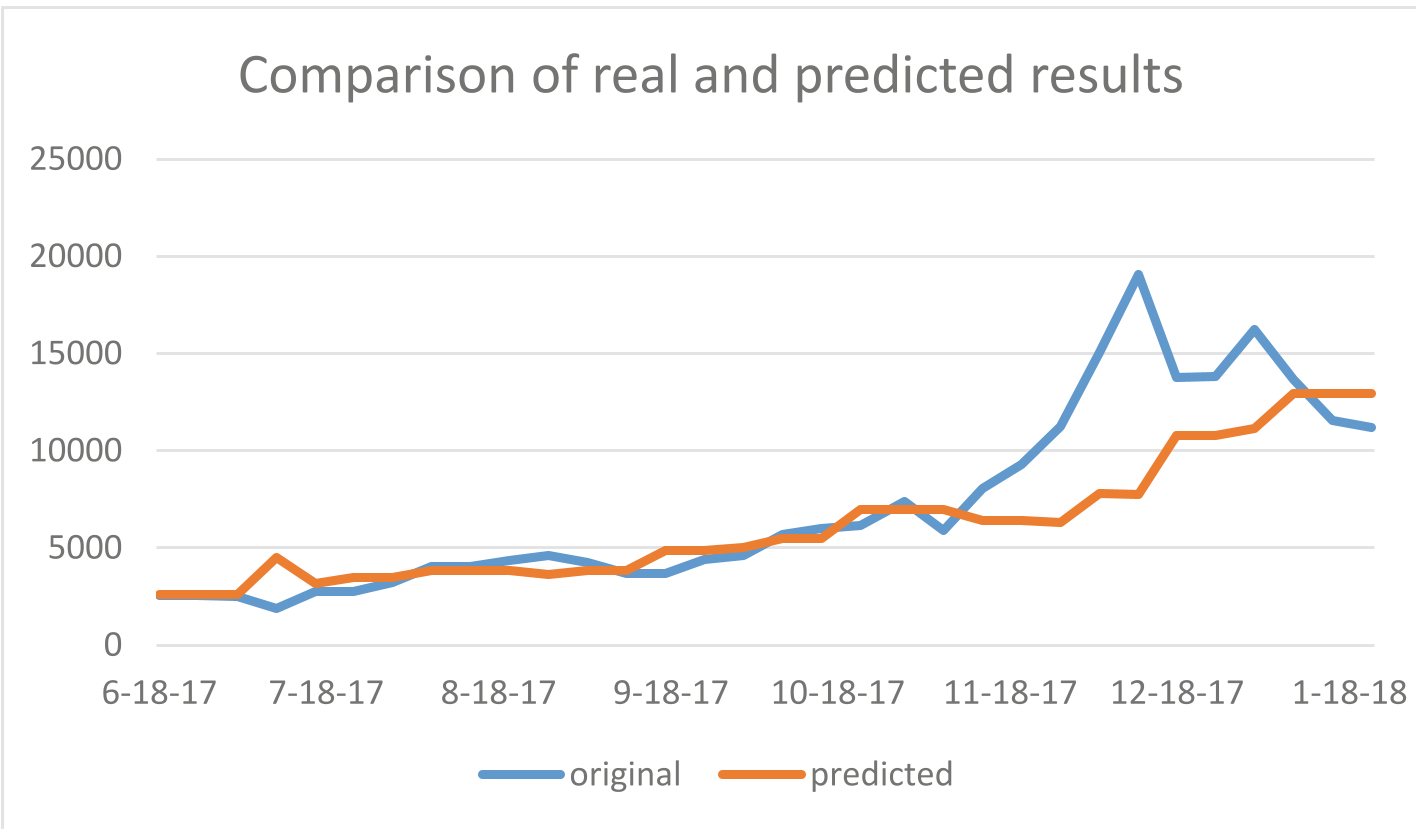
Instead of predicting price in a vacuum, this module uses a two-step Long Short-Term Memory (LSTM) approach:
- Phase A: Predict future trading volume.
- Phase B: Feed the predicted volume into the price model to generate a multi-day forecast.
 Note: The high-level design highlights the flow from raw data to the LSTM-driven logic.
3. The Investment Plan Module (Markowitz Optimization)
Using the forecasted prices, the system applies the Markowitz Mean-Variance Model. It calculates a covariance matrix for assets like BTC, ETH, LTC, NEO, and BCH to find the "Efficient Frontier" for different investor types.
Experimental Results & SOTA Comparison
The authors validated their approach using historical data from 2017 to 2018. The Results were categorized by investor "Risk Attitude":
- Risk-Averse: Diversified across 4 coins (heavily weighted in BCH and BTC). Result: 23.7% APY with very low daily risk (0.44%).
- Risk-Seeking: Concentrated 100% in high-momentum assets (BCH). Result: 31.8% APY.
- Hybrid: A balanced mix yielding 16.5% APY.
 Figure: The Linear Regression baseline achieved a 61% R^2 score, providing a foundation for the more complex LSTM predictions.
Critical Analysis & Conclusion
Takeaway
The integration of Machine Learning (ML) into Robo-Advisory services transforms cryptocurrencies from speculative gambles into quantifiable financial instruments. The transition from manual "trading" to algorithmic "asset allocation" is the primary value driver here.
Limitations
- Factor Sensitivity: The model relies heavily on historical covariance, which can break down during "Black Swan" events or total market crashes where all correlations tend toward 1.0.
- Execution Costs: The paper does not deeply account for "slippage" or exchange fees which can eat into the 0.6% - 0.8% daily yields.
Future Outlook
The next step for this technology lies in Sentiment Analysis. By integrating social signals from platforms like X (Twitter) or Discord into the LSTM's feature set, the Robo-Advisor could potentially front-run "hype-driven" price surges before they reflect in the trading volume.