
Beyond the Screen: How We Perceive a Robot's Personality and Why Fairness Trumps Compliance
Validation of Robot Interactive Behaviors Through Users Emotional Perception and Their Effects on Trust
The paper investigates how three distinct robot interaction styles—Friendly, Neutral, and Authoritarian—affect human emotional perception and trust in a Socially Assistive Robot (SAR) performing cognitive tests. Using the Pepper robot, the study validates that these styles are accurately perceived across Valence, Arousal, and Dominance dimensions, while surprisingly finding that Friendly behavior elicits higher trust than the Authoritarian style.
TL;DR
Can a robot’s "attitude" change how much you trust it? This study utilizes the humanoid robot Pepper to test three interaction styles: Friendly, Neutral, and Authoritarian. While the Authoritarian style has been shown in previous work to improve user performance on cognitive tests, this new research reveals that it significantly damages human trust and likeability compared to a Friendly approach.
Background: Tuning the Robotic Persona
Socially Assistive Robots (SARs) are moving into healthcare and therapy. In these settings, a robot isn't just a tool; it's a "social agent." Designers often experiment with different personalities to see what gets the best results. Should a robot be a supportive friend or a strict proctor? This paper seeks to validate if humans actually perceive these intended personalities correctly and how that perception influences the bedrock of healthcare: Trust.
Problem & Motivation: The Perception Gap
The core issue in HRI (Human-Robot Interaction) design is the Perception Gap. A designer might program a robot to be "assertive" by giving it a loud voice and fixed gaze, but a user might perceive it as "aggressive" or "unreliable." If we don't validate these emotional perceptions, we cannot truly understand why certain interaction styles lead to better or worse task outcomes.
Methodology: Engineering Social Cues
The researchers used a Pepper robot to simulate three distinct styles during a cognitive assessment task (Attentive Matrices). They manipulated several variables to create these "personas":
- Friendly: High-pitched voice, yellow eyes (Joy), encouraging feedback ("You're doing great!"), and open gestures.
- Authoritarian: Green-yellow eyes swapped for Red (Anger/Authority), medium-high pitch, fixed gaze on the user, and "recalls" or pressure-filled feedback ("Time is running out").
- Neutral: Monotone voice, white eyes, averted gaze, and no social feedback.
 Figure 1: Visual comparison of Neutral, Friendly, and Authoritarian robot settings.
The study utilized crowdsourcing, collecting data from 288 participants who watched videos of these interactions. They measured emotional dimensions using the Self-Assessment Manikin (SAM):
- Valence (Pleasantness)
- Arousal (Intensity)
- Dominance (Degree of control)
Results: The Trust Paradox
The results effectively validated the researchers' design choices for emotional perception:
- H1 Confirmed: The Friendly robot was high in Valence; the Neutral robot was low in Arousal; the Authoritarian robot was high in Dominance.
- The Trust Surprise (H2 Refuted): In previous studies, users actually performed better on cognitive tests with an Authoritarian robot. The researchers hypothesized this was because users "trusted" the authority more. They were wrong. The data showed that the Friendly robot was perceived as significantly more trustworthy, intelligent, and safe.
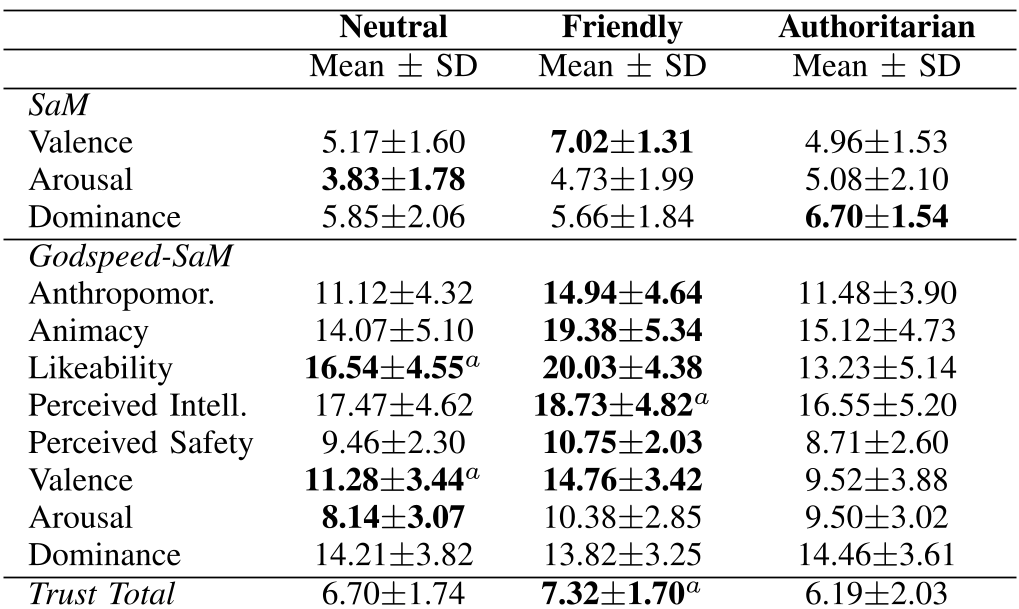 Table 1: Detailed breakdown of SAM and Godspeed scores across the three styles.
Key Insights on Trust:
- Gender Differences: Male participants generally reported higher trust in the robot than female participants.
- Familiarity Matters: Users who had previously interacted with robots reported much higher trust levels than "newcomers."
- Likeability vs. Efficiency: Just because a robot makes you work harder (Authoritarian) doesn't mean you trust it more. In fact, the "strict teacher" vibe produced the lowest likeability scores.
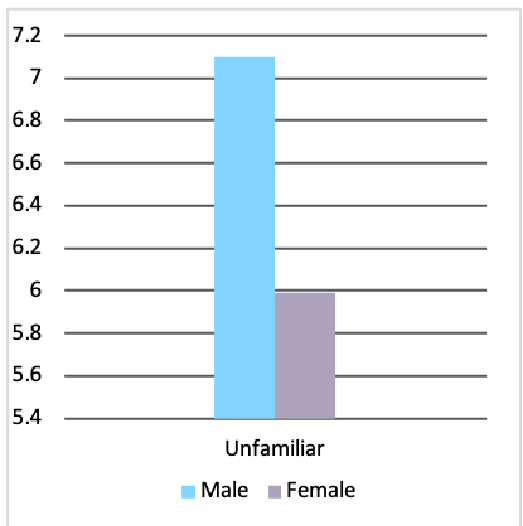 Figure 2: Trust scores differentiated by gender and familiarity with robots.
Critical Analysis & Conclusion
This paper provides a vital reality check for Social Robotics. It proves that we can successfully "engineer" a robot's perceived emotion through simple cues like eye color and speech rate.
The Takeaway: High performance in a task does not equate to a high-quality relationship. If a SAR is meant for long-term care, a Friendly style is paramount for maintaining trust. However, if the goal is a one-time high-intensity task, an Authoritarian style might be more "effective" despite being less "trusted."
Limitations: The study used video-based observation rather than physical interaction. Trust and Dominance might feel very different when a 4-foot tall robot is standing 2 feet away from you in real life. Future work must bridge the gap between "perceiving" a style on screen and "experiencing" it in person.