
Paro the Seal: How Social Robots Rewire the Social and Physiological Health of the Elderly
Robot therapy in a care house - its sociopsychological and physiological effects on the residents
This paper investigates the effects of "Robot Therapy" on elderly residents in a care house using the seal robot Paro. By deploying Paro for over 9 hours daily, the study measures sociopsychological and physiological impacts through social network analysis and urinary hormone tests (17-KS-S and 17-OHCS).
TL;DR
Loneliness isn't just a feeling; it’s a physiological stressor. This seminal study explores how Paro, a seal-shaped "Mental Commit Robot," acts as a social catalyst in care houses. By tracking both the "social fabric" of residents and their hormone levels through urinary tests, the research proves that robot therapy increases community density and significantly improves the body's biological response to stress.
Positioning: This work is a foundational exploration in Robot-Assisted Activity (RAA), moving beyond simple "novelty" effects to provide rigorous physiological evidence of a robot's therapeutic value.
Problem & Motivation: The Barrier to Animal Therapy
While the benefits of Animal-Assisted Therapy (AAT) are well-documented—ranging from improved relaxation to better vital signs—nursing homes (especially in Japan) often reject live animals due to concerns over allergies, infections, and bites.
The researchers hypothesized that a robot designed specifically for "mental commitment" could bypass these safety hurdles while still providing the emotional benefits of a living creature. Their intuition was twofold:
- The robot would act as an "icebreaker," encouraging residents to leave their rooms and talk to one another.
- This increased social integration, combined with the tactile joy of the robot, would manifest in measurable biological markers of health.
Methodology: The Science of "Mental Commitment"
1. The Paro Architecture
Paro isn't just a toy; it’s a sophisticated sensor-actuator system designed to mimic the vulnerability and responsiveness of a baby harp seal.
- Sensory Suite: Tactile fur sensors, light sensors, and speech recognition.
- Behavioral Layers: It uses a proactive/reactive system to ensure its actions are "life-like" but unpredictable enough to maintain interest over time.
- Reinforcement Learning: Paro remembers how a user prefers to interact; if you stroke it, it reinforces that behavior.
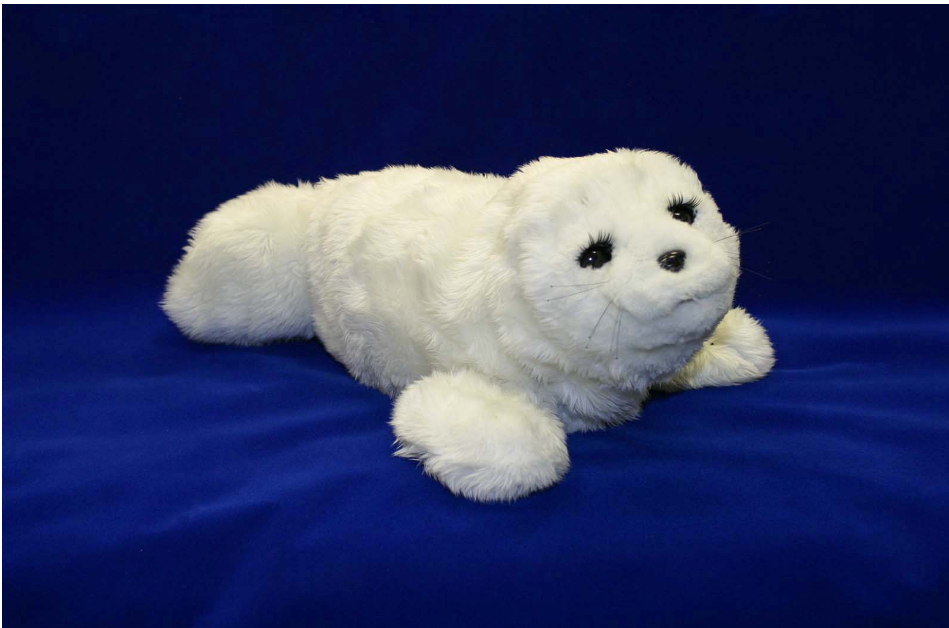 Fig 1: The Paro Seal Robot used in the care house experiment.
2. Measuring the "Social Fabric"
The study used the Free Pile Sort method. Residents were given cards with names of other residents and asked to group them. By mapping these groups, the researchers could calculate the "Density of the Social Network"—a mathematical representation of how connected the community was before and after Paro’s arrival.
Experimental Results: Better Health Through Interaction
The experiment ran for one month with 12 subjects (average age 77.5). The results were analyzed across two primary dimensions:
1. Sociopsychological Impact
The social network density rose from 0.24 to 0.27. While this seems modest, qualitative interviews revealed a dramatic shift for some residents. "Subject J," who formerly stayed in her room, began visiting public areas specifically to interact with Paro and, consequently, her neighbors.
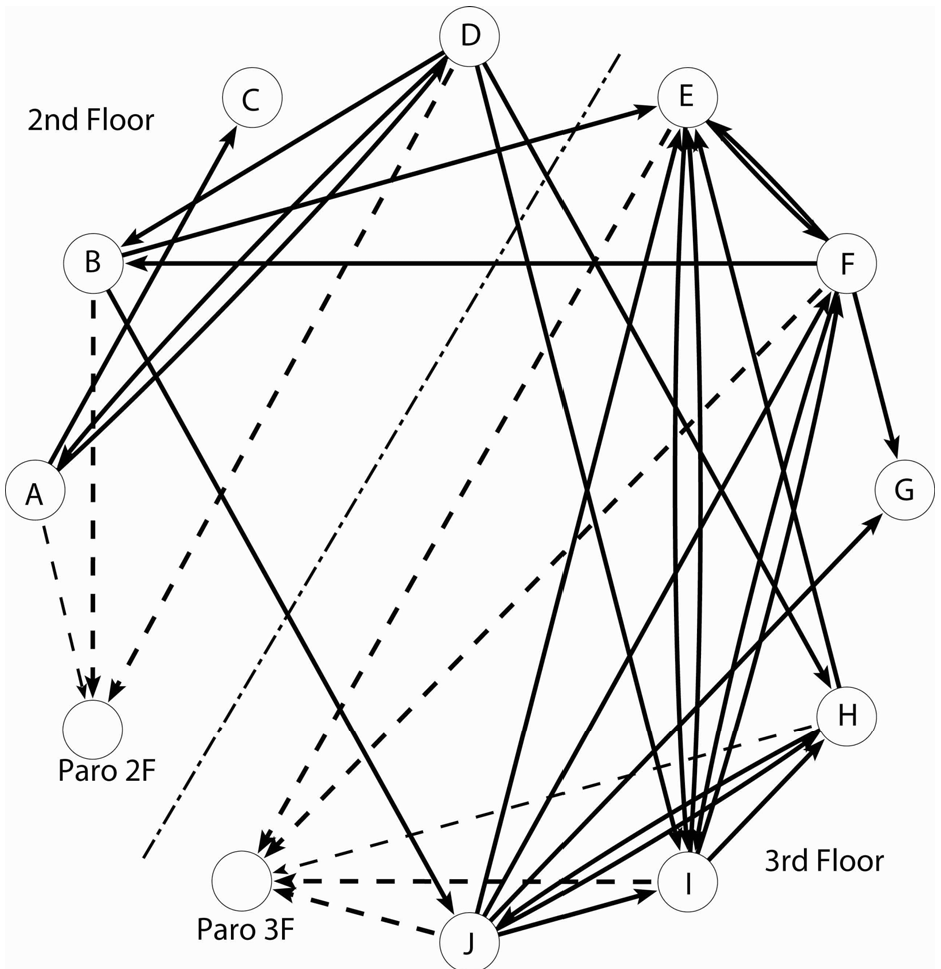 Fig 2: Sociograms showing the increase in ties (lines) between residents after Paro's introduction.
2. Physiological "Repair and Recovery"
Instead of just measuring cortisol (the "stress hormone"), researchers looked at 17-KS-S (a marker of repair) and 17-OHCS (a marker of wear and tear).
- Key Finding: The ratio of 17-KS-S/17-OHCS—the "index of vital reaction to stress"—improved significantly from 0.18 to 0.26 (p < 0.01).
- Interpretation: This indicates that the residents' bodies were essentially becoming more resilient and better at "repairing" the daily toll of psychological stress.
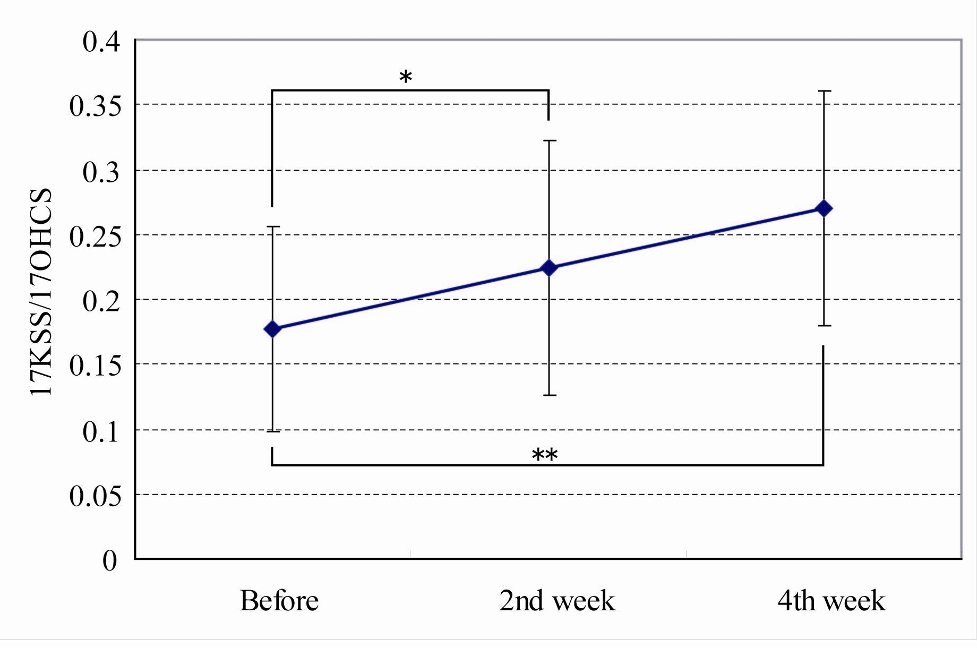 Fig 3: The upward trend of the 17-KS-S/17-OHCS ratio suggests improved physiological resilience.
Critical Analysis & Takeaways
The brilliance of this study lies in its holistic view of health. It acknowledges that a robot's primary value in a communal setting isn't just the one-on-one interaction, but its role as a social focal point.
Limitations:
- Sample Size: With only 9-12 subjects, the statistical power is limited, though the p-values remain significant.
- Duration: One month is short for observing permanent social restructuring.
Future Outlook: This research paved the way for the "Socially Assistive Robot" (SAR) industry. It suggests that for elderly care, we don't necessarily need humanoids that can "do laundry"; we need emotive agents that can bridge the social gap between humans. PARO serves as a reminder that the most effective technology is often the one that brings us back to each other.