
Designing Robotic Agents with Social Perception: Quantifying Smile and Gaze in ASD Therapy
Design of a robotic agent that measures smile and facing behavior of children with Autism Spectrum Disorder
This paper presents a social robotic system designed to quantify social behaviors in children with Autism Spectrum Disorder (ASD). The system integrates a wearable facial EMG device for smile detection and a humanoid robot (NAO) equipped with vision-based head-orientation algorithms to measure "facing behavior" during naturalistic free play.
TL;DR
Researchers have developed a multi-modal robotic system that uses wearable EMG sensors and computer vision to automatically measure social engagement in children with Autism Spectrum Disorder (ASD). By correlating "smiles" with "facing behavior," the system provides an objective, quantitative tool for therapists, reducing the reliance on subjective manual video annotation and moving closer to autonomous robotic therapy.
Background: The Challenge of Sensing Social Intuition
Socially Assistive Robots (SAR) are transformative tools for ASD therapy, but they remain "blind" to the subtle nuances of human emotion. Most robotic interventions today are controlled behind the scenes by human operators (the "Wizard-of-Oz" method). To make robots truly interactive and minimize therapist burnout, we need a way to quantify Social Synchrony—the alignment of positive affect (smiling) and attention (gaze/facing).
Methodology: The Fusion of Wearables and Vision
The researchers proposed a dual-layered approach to solve the sensing gap:
- Wearable Smile Detection: Unlike camera-based systems that fail when a child turns away, the authors used a custom-designed headband with dry-type active electrodes. By measuring Electromyography (EMG) signals from the facial muscles, the system can detect a smile even if the child is running or facing away from the robot.
- Vision-Based Facing Behavior: The robot (a NAO humanoid) uses its onboard camera to track the child's head orientation. It creates a "conical focus area" extending from the child's face; if the robot's face falls within this cone, it logs a "facing" event.
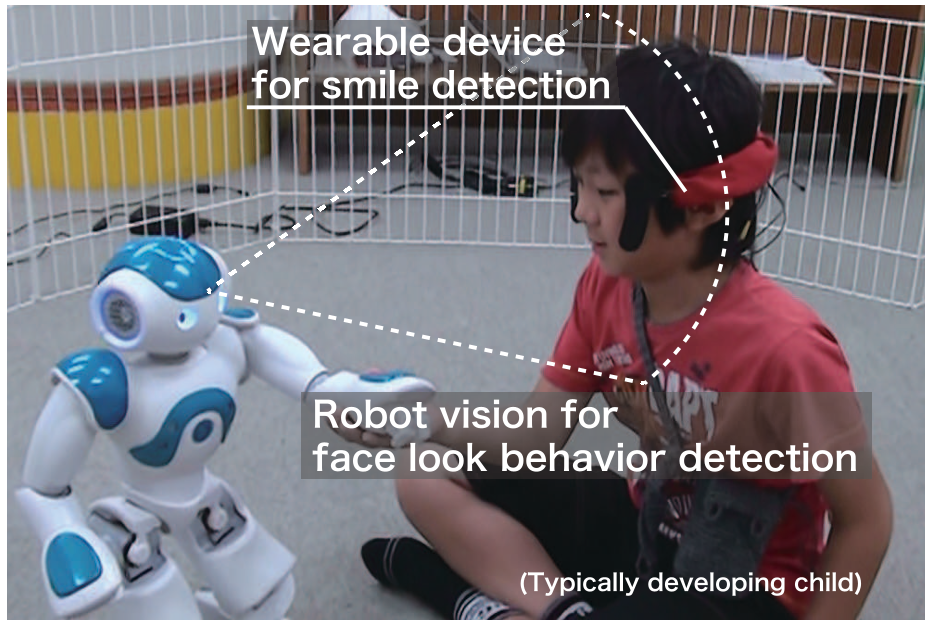 Fig 1: The participant wears the EMG headband while interacting with the NAO robot, which captures head orientation.
Quantitative Evidence over Subjective Observation
The study's core value lies in its validation against human experts. In a pilot study with 10 children with ASD, the smile detection algorithm achieved an F-measure of over 0.7, placing its reliability on par with professional human coders.
The system's real magic happens when it analyzes the synchronization of these signals. For instance, the data revealed a "socially disconnected" profile in specific participants (like P3), who smiled frequently but rarely while facing the robot. This quantitative "Social Synchrony" metric is a powerful diagnostic and progress-tracking tool for clinicians.
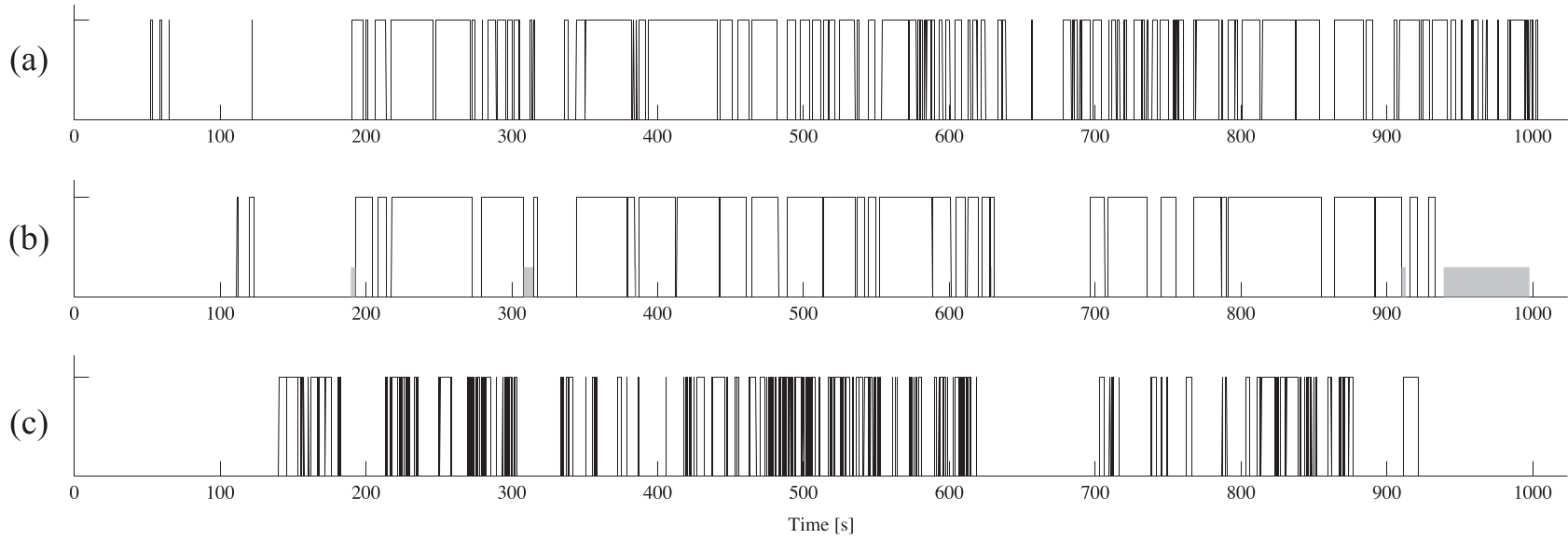 (a) Automated Smile Detection, (b) Human Coder Comparison, (c) Facing Behavior. The overlap represents true social engagement.
Critical Insight & Future Outlook
While the system is robust, it faces the "tactile hypersensitivity" hurdle common in ASD—three participants struggled with the comfort of the headband, leading to signal noise. However, the shift from wet electrodes (requiring sticky gels) to dry electrodes is a massive leap forward for clinical usability.
The Takeaway: This research moves the needle from "Robots as Toys" to "Robots as Diagnostic Instruments." By quantifying social behaviors in real-time, we can eventually build "Tailor-made Interventions" where the robot adjusts its behavior—perhaps doing a funny dance or speaking—the moment it detects a child's gaze drifting or a smile fading.
Deep Analysis of Synchronization
The paper calculates a specific ratio (): the percentage of facing behavior that occurs simultaneously with a smile. This metric is a goldmine for understanding individual differences in the ASD spectrum.
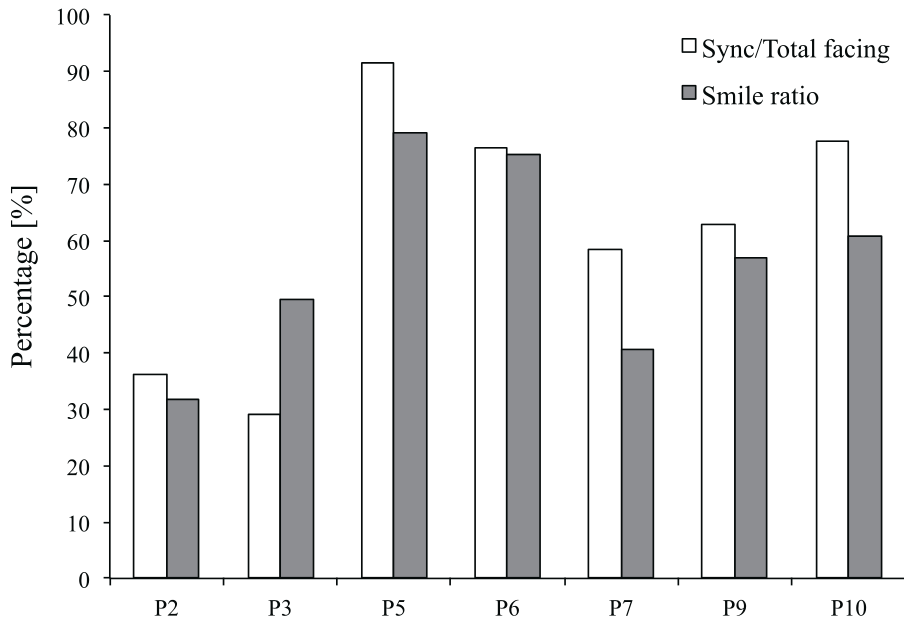 Fig 7: Comparison between average smile duration and synchronized social engagement. Large gaps indicate a lack of coordination between affect and gaze.
In conclusion, through the fusion of wearable physiological sensing and robot vision, we are entering an era of Evidence-Based Therapeutic Intervention, where the "Robot Therapist" is finally starting to see the world through the child's eyes.