
Zenbo the Math Tutor: Transforming Primary Math via Robotic Self-Regulated Learning
Development of Robotic Quiz Games for Self-Regulated Learning of Primary School Children
This paper presents the development of an AI-driven math quiz game using the Zenbo robot and Scratch programming to facilitate Self-Regulated Learning (SRL) among 5th-grade primary school students. By integrating a companion robot into the curriculum, the study achieves a personalized "r-Learning" environment that encourages student autonomy and engagement in mathematics.
TL;DR
As the COVID-19 pandemic accelerated the shift toward independent study, the challenge of keeping young children motivated without constant adult supervision became paramount. This paper introduces a Zenbo-based robotic quiz game designed to foster Self-Regulated Learning (SRL) in 5th graders. By blending the engagement of a game with the physical presence of an AI companion, the researchers created a "Human-Robot Interaction" (HRI) environment that makes math review less of a chore and more of a social experience.
Background: Beyond the Screen
Self-Regulated Learning (SRL) is a critical 21st-century skill, yet most digital tools for children are "flat"—constrained by screens, mice, and keyboards. The authors argue that r-Learning (Robot-aided Learning) offers a "dynamic, friendly, and stereoscopic" alternative. Unlike a laptop, a robot like Zenbo can make eye contact, use body language, and respond to voice, which reduces the psychological barrier for shy students and increases the "Perceived Enjoyment" of difficult subjects like mathematics.
The Problem: The Motivation Gap in Early SRL
Traditional educational technology often fails primary schoolers for two reasons:
- Lack of Affection Regulation: Computers don't sense or respond to a child's frustration or boredom.
- Focus on Older Leaners: Most SRL frameworks are built for university students who already possess metacognitive skills. This study targets the "critical years" (Kindergarten to 6th Grade) where neural plasticity is highest and learning habits are formed.
Methodology: Co-Designing with the End User
The researchers didn't build the system in a vacuum. They utilized a Zenbo Scratch programming environment and involved a triad of stakeholders:
- Teachers: To ensure the 10 math items aligned with the 5th-grade curriculum.
- Parents: To monitor interaction flow and "Perceived Usefulness."
- Students: To provide immediate feedback on the fun factor (Perceived Enjoyment).
System Architecture & Workflow
The system follows a structured loop: Zenbo presents a math problem the student responds via voice or screen Zenbo provides immediate affective feedback (praise or encouragement) final score processing.
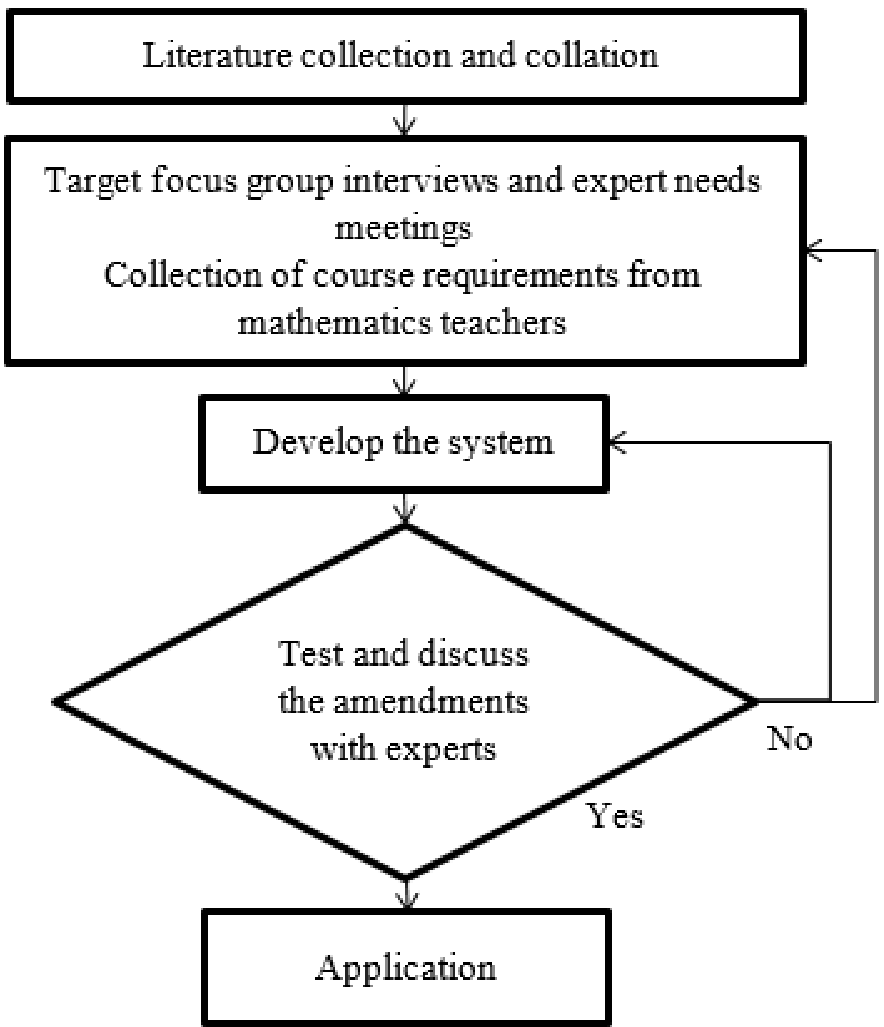 Figure 1: The iterative development flow of the robotic quiz system.
Key Insights from the Field
The integration of AI robots in the classroom or at home serves three distinct roles:
- The Tutor: Delivering content and instructions.
- The Teaching Assistant (TA): Handling repetitive quiz tasks.
- The Peer Tutor: Acting as a "learning partner" that makes mistakes and learns alongside the child, which significantly lowers performance anxiety.
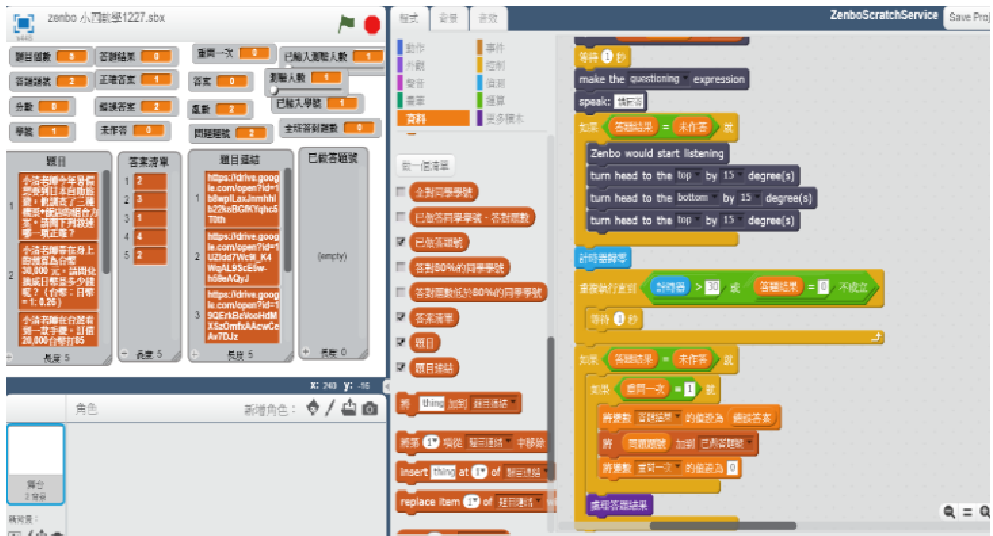 Figure 2: Logic implementation within the Zenbo Scratch platform showing how questions and answers are synthesized.
Results and Takeaways
The study confirms that Perceived Usefulness and Perceived Enjoyment are the two pillars of technology acceptance in education. Students who interacted with Zenbo were more willing to participate in "reviewing" activities because the robot felt like a "friend" rather than a "test."
- Quantifiable Progress: The system effectively tracked pupil progress across 10 specific math modules, providing data for teachers to identify learning gaps.
- Affection Regulation: The robot's cute expressions helped shy students engage more actively than they would with a human teacher.
Critical Analysis & Future Outlook
While the study provides a robust proof-of-concept, it acknowledges a major hurdle: AI Maturity. Current robots are not yet fully autonomous "teachers" and function best as TAs.
Future Work: The next frontier involves State-Space Models (SSM) or more advanced NLP to allow for "dialogical reasoning"—where the robot doesn't just ask "What is 5+5?" but can explain why a student's logic was flawed. As AI moves from scripted Scratch blocks to Large Language Models (LLMs), the "Companion Robot" will become an indispensable part of the home-learning ecosystem.
Conclusion: This research proves that when it comes to early childhood education, the medium is just as important as the message. A robot that "smiles" when you get a math problem right might be the key to unlocking a lifelong love for STEM.