
Designing Robots for the Silver Tsunami: Why Utility Trumps Companionship
Robots for Older Adults: According to User's Required
This paper presents a user-centric design methodology for assistive robotics tailored to the elderly, utilizing data mining and clustering to align robot development with actual lifestyle patterns. The study identifies distinct user archetypes and reveals a preference for utilitarian safety functions over social or entertainment-oriented features.
TL;DR
As Japan faces a critical labor shortage due to an aging population, robots are often hailed as the ultimate solution. However, this paper reveals a stark reality: what engineers build (social companions) is not what the elderly want (safety tools). By analyzing the daily life rhythms of hundreds of Japanese seniors, researchers from Tokyo Metropolitan University have mapped out a blueprint for robots that truly "fit" into the lives of older adults.
The "Alignment Gap" in Assistive Robotics
In the world of Human-Robot Interaction (HRI), there is a persistent myth that the elderly are lonely and need "talking partners" or "entertainment bots." This paper identifies this as a fundamental misunderstanding. For many seniors, technology is a double-edged sword: it offers convenience but can be alienating if it doesn't match their existing lifestyle rhythm.
The authors argue that we shouldn't ask "What can a robot do?" but rather "What does this person’s day look like, and where does a robot naturally belong?"
Methodology: From Life Logs to Robot Clusters
The researchers didn't just ask about robots; they first asked about life. By clustering data from 592 participants, they identified specific gender-based lifestyle models.
The Archetypes
- Male Groups: Ranged from "Focus on Interest" (heavy users of tech for hobbies) to "Morning-type around house" and "Active Workers."
- Female Groups: Mostly categorized as "Morning-type" (focused on housework and mealtime) or "Own Pace of Life."
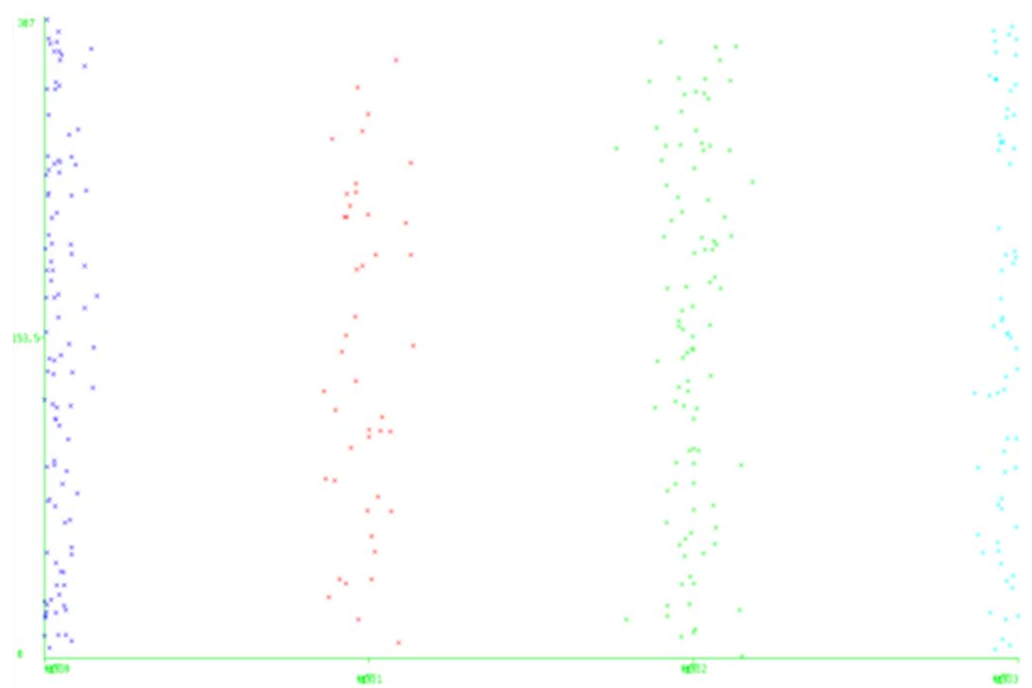
These clusters are crucial because a robot for a "Worker" needs to prioritize information efficiency, while a robot for a "Morning-type person" needs to assist with housework without disrupting their established routines.
The "Ideal" Robot Image: Surprising Results
When 600 seniors were asked about their "ideal" robot, the results challenged the common industry focus on high-fidelity social AI.
1. Form and Size
Contrary to the push for life-sized humanoids, most users preferred something the size of a "little dog" or small enough to be "put on hand." The image of a robot was split between a Humanoid (familiarity) and a Cleaning Robot (utility).
2. The Death of "Social AI"
Perhaps the most striking finding is the functional ranking. While developers love building conversational agents, the users explicitly rejected them.
| Rank | Desired Function | Positive Response |
|---|---|---|
| 1 | House Safety Check | 71% |
| 2 | Urgent Messaging | 67% |
| 3 | Visitor Notification | 57% |
| ... | ... | ... |
| Last | Entertainment/Talking Partner | ~45% Negative |
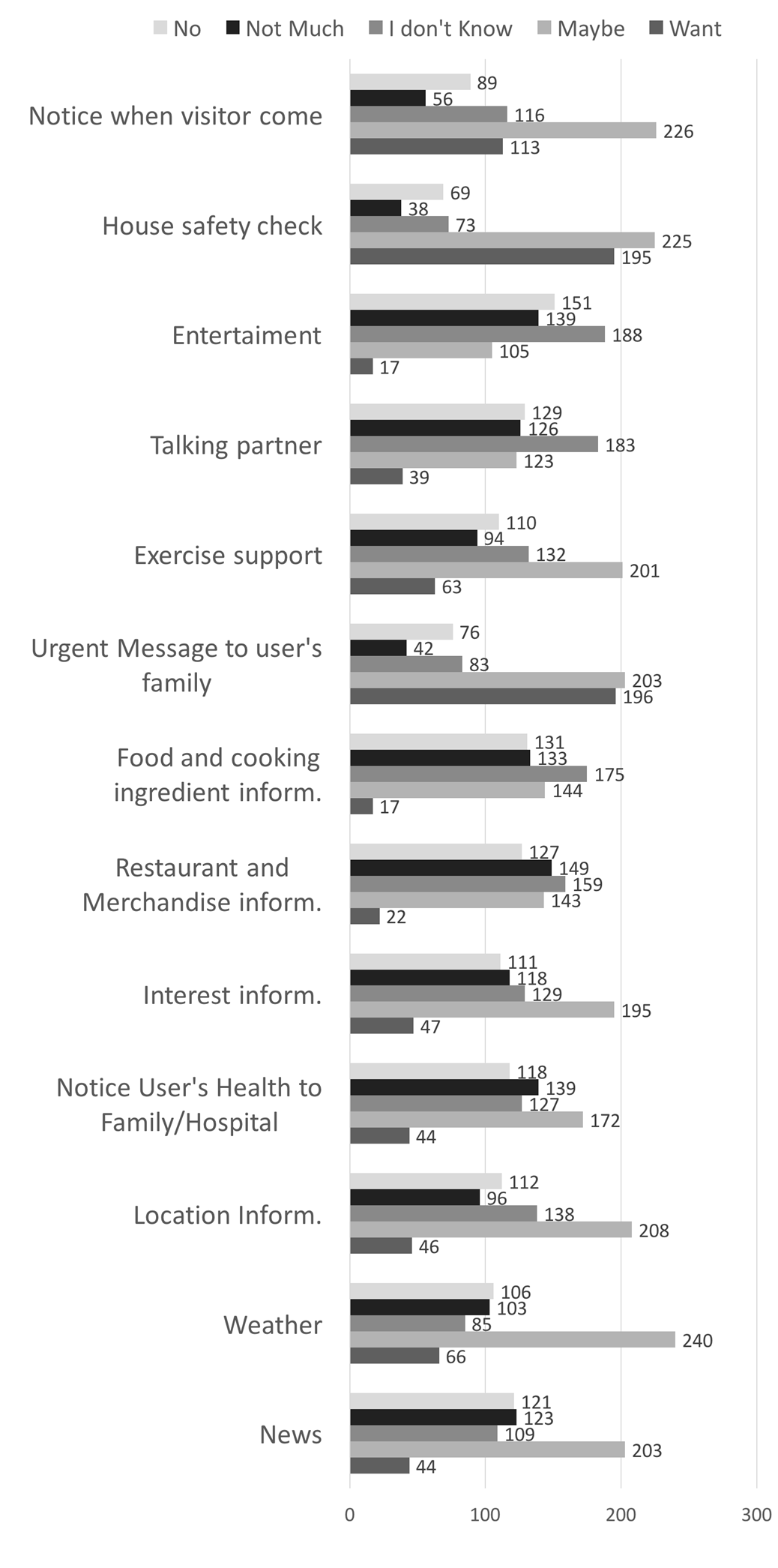
The elderly do not want a robot to be their friend; they want it to be their guardian.
Critical Analysis & Conclusion
This paper serves as a vital self-criticism for the robotics community. The high rejection rate for "Talking Partner" functions (43%) suggests that the "Uncanny Valley" isn't just about appearance—it’s about social utility. Older adults value their "own pace of life" and view intrusive "social" robots as potentially disturbing.
Takeaways for Future Devs:
- Function over Form: Prioritize sensors for safety (smoke, falls, security) over complex conversational natural language processing.
- Respect the Routine: Use the lifestyle modeling provided in this paper to ensure robots operate during the "down-times" of the specific user cluster.
- Subtle Integration: The preference for dog-sized robots suggests that assistive tech should occupy the "peripheral" space of a home, not the "central" social space.
In conclusion, the future of geriatric robotics isn't a C-3PO-style butler, but a vigilant, dog-sized guardian that knows when to help and, more importantly, when to stay quiet.