
Robust ESR: Conquering Babble Noise in Human-Computer Interaction
Robust emotional speech classification in the presence of babble noise
This paper presents a robust Emotional Speech Recognition (ESR) system tailored for realistic, noisy environments, specifically targeting the challenges of babble noise. Utilizing the EmoDB (German) and SES (Persian) datasets, the authors evaluate 286 acoustic features and employ Sequential Floating Forward Selection (SFFS) to identify optimal feature subsets, achieving high classification accuracy with Bayes and SVM classifiers.
TL;DR
Current Emotional Speech Recognition (ESR) systems often crumble outside the lab. This research addresses babble noise—the "cocktail party" interference—by rigorously testing 286 acoustic features across German and Persian languages. By leveraging the SFFS selection method, the authors identified a robust "golden set" of features that maintain high accuracy even when the noise is as loud as the speech itself (0 dB SNR).
The Challenge: Why Babble Noise is an ESR Killer
In academic settings, ESR systems rarely face the chaos of a cafeteria or a busy street. Babble noise is uniquely difficult because:
- Non-stationarity: Unlike the steady hum of an engine, babble changes rapidly.
- Spectral Overlap: Since the noise is composed of human speech, it occupies the same frequency bands as our target signal.
- The Lombard Effect: Humans change their vocal pitch and intensity when speaking in noise, creating a mismatch between "clean" training data and "noisy" real-world use.
Methodology: Mining for Robustness
The researchers didn't just look at standard Mel-frequency Cepstral Coefficients (MFCCs). They performed a deep dive into 286 features categorized into:
- Prosodic: Pitch and energy contours (durations of plateaus and slopes).
- Spectral: Energy ratios across sub-bands (specifically focusing below 3950 Hz).
- Perceptual: RASTA-PLP (RelAtive SpecTrAl Perceptual Linear Prediction), which mimics the human auditory system's ability to filter out steady background noise.
Feature Selection Pipeline
To avoid the "curse of dimensionality" and overfitting, the authors used Sequential Floating Forward Selection (SFFS). This algorithm iteratively adds and removes features to find the subset that maximizes the Correct Classification Rate (CCR).
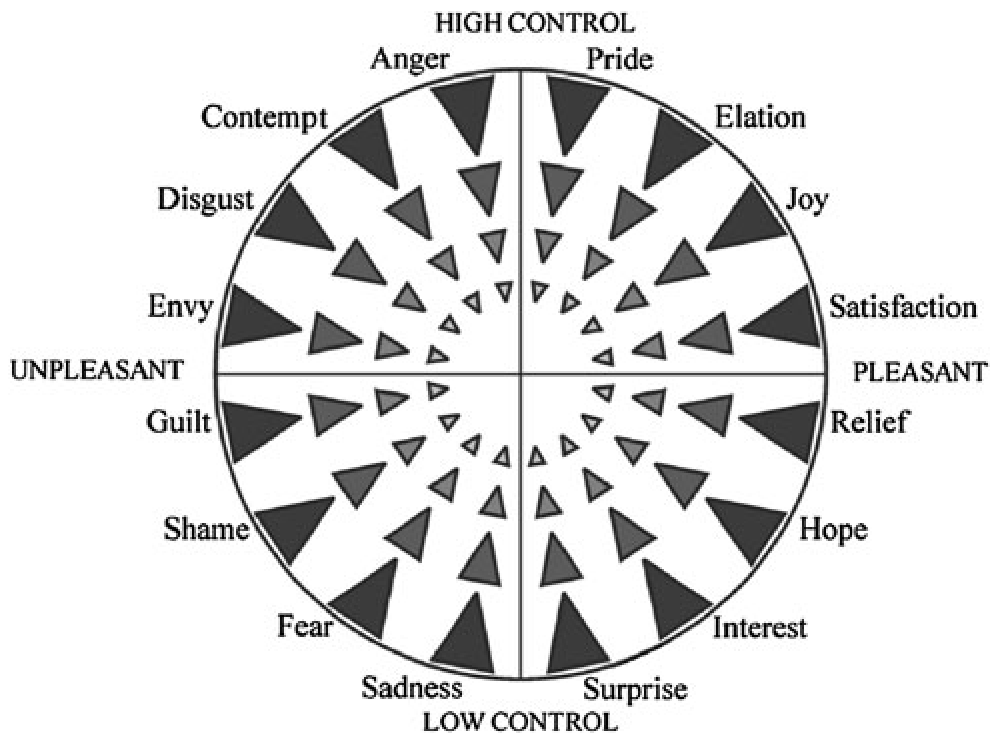 Figure 1: The dual framework approach comparing Clean (FW 1) and Noisy (FW 2) scenarios.
Key Findings: The "Golden Features"
The study revealed that while Prosody (Pitch/Energy) is great for clean speech, LPC and RASTA-PLP related features are the true heroes in babble noise.
Specifically, features like Median duration of pitch maxima and Energy ratios in the 600-3950 Hz range remained relatively stable. Interestingly, at SNR = 0 dB, only five features changed by less than 5% compared to clean speech—all of them were spectral energy parameters below 4 kHz.
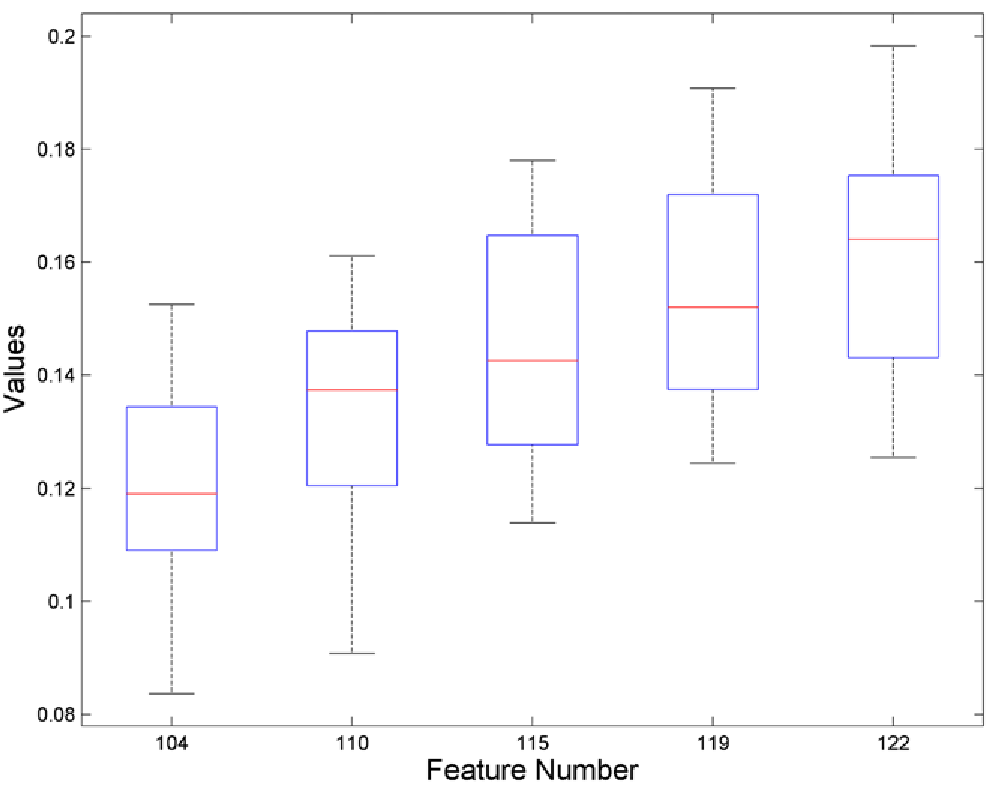 Figure 2: Distribution of difference values for the most robust features at 0 dB SNR.
Implementation & Results
The researchers tested several classifiers: Bayes, K-Nearest Neighbor (KNN), Gaussian Mixture Models (GMM), Artificial Neural Networks (ANN), and Support Vector Machines (SVM).
- Multi-class Results: The Bayes classifier proved most effective for multi-class emotion detection (e.g., distinguishing between Anger, Happiness, and Sadness).
- Binary Results: For "one-vs-rest" classification (e.g., detecting if a user is "Angry" or "Not Angry"), the SVM with a Gaussian Radial Basis Kernel achieved a massive 86.27% CCR for the EmoDB dataset at 10 dB SNR.
Comparison Table: Accuracy across SNRs
| Classifier | EmoDB (0 dB) | SES (0 dB) | EmoDB (10 dB) | SES (10 dB) |
|---|---|---|---|---|
| Bayes (Multi) | 62.90% | 59.35% | 78.13% | 67.60% |
| SVM (Binary) | 78.42% | 62.94% | 86.27% | 77.29% |
Critical Insight: Why Does This Work?
The success of the spectral energy features (600–3950 Hz) is likely due to the Lombard Effect. As background noise increases, speakers naturally boost their energy in these specific bands to be heard. By focusing the ESR system on these bands, the model effectively "leans into" the natural human adaptation to noise, rather than being confused by it.
Conclusion & Future Outlook
This paper moves ESR from theoretical curiosity toward practical reliability. By isolating the most robust features across different languages (German and Persian), it provides a blueprint for building voice assistants and security systems that actually work in the "real world."
Limitations: The study uses synthetic babble noise additive to clean signals. Future work should explore the real Lombard effect, where actors record speech while actually hearing noise, to capture the nuanced changes in vocal quality that artificial overlays cannot replicate.