
AHS: Mastering the Art of Finding Super-Spreaders in Complex Social Networks
A robust method to discover influential users in social networks
The paper introduces Adjustable multi-Hops Spreading (AHS), a robust centrality measure designed to identify influential users in social networks. By decoupling a node's impact into direct and indirect influence and integrating them via an adjustable parameter, AHS consistently outperforms traditional metrics like Degree, Betweenness, and K-shell across diverse network topologies and spreading probabilities.
TL;DR
Identifying "opinion leaders" is critical for everything from viral marketing to stopping the spread of fake news. However, classic metrics like Degree Centrality or K-shell are notoriously brittle—they work in some networks but fail in others. This paper introduces Adjustable multi-Hops Spreading (AHS), a robust method that splits influence into "Direct" and "Indirect" components. By tuning a single parameter, AHS adapts to any network structure, consistently outperforming traditional SOTA methods.
The Problem: Why Traditional Centrality Fails
In network science, we often ask: What makes a node influential?
- Degree Centrality (DC) says: "It's the number of friends you have."
- Closeness/Betweenness says: "It's how central you are to the network's paths."
- K-shell (KS) says: "It's about being in the core of the network."
The authors observed a frustrating reality: these metrics are highly sensitive. A metric that identifies spreaders perfectly in a collaboration network (like AstroPh) might fail miserably in a trust network (like PGP). This is because the effectiveness of a metric depends on the spreading probability () and the degree distribution. Most existing methods treat these as static, leading to misjudgments when the "rules of the game" change.
Methodology: The AHS Approach
The authors' core insight is that influence isn't a single value—it's a composition of two distinct forces:
- Direct Influence (DI): The immediate impact on your neighbors.
- Indirect Influence (IDI): The "ripple effect" reaching nodes 2, 3, or 4 hops away.
The AHS Formula
Instead of a fixed calculation, they propose:
Here, is the "magic" adjustable parameter.
- In networks with many low-degree but strategically placed nodes, a smaller emphasizes the indirect "ripple effect."
- In dense, hub-heavy networks, a larger prioritizes the sheer power of direct neighbors.
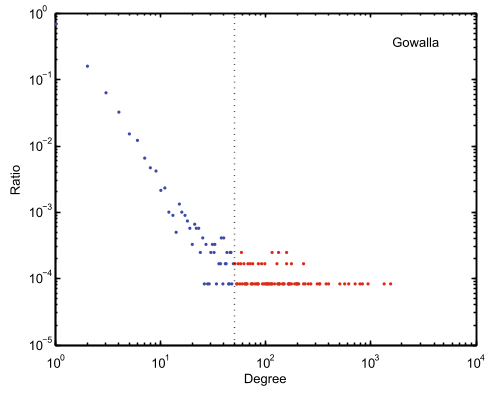 Figure 1: Visualization of the Direct vs. Indirect influence zones explored by the AHS method.
Why AHS is Better: Evidence from the Field
The researchers tested AHS against five major baselines across eight real-world social networks (including Youtube, Slashdot, and Coauthor).
1. Robustness Across Probabilities
Most metrics' performance (measured by Kendall’s ) fluctuates wildly as the infection probability increases. As shown in the performance charts, AHS (with an optimized ) maintains a consistently high correlation with the actual spreading results obtained via SIR simulations.
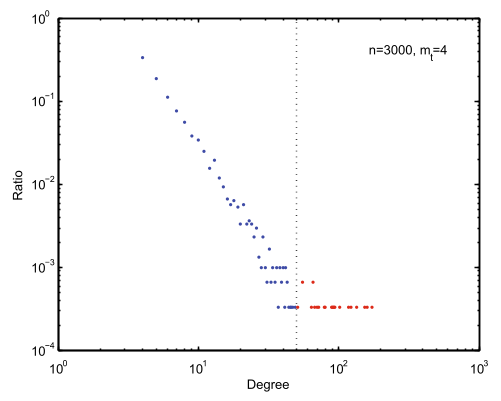 Figure 2: Superiority of AHS (highest values) compared to standard centralities in BA networks.
2. The Power of "Distinguish Ability"
A common problem with K-shell decomposition is "ranking ties"—thousands of nodes might end up with the same score, making it impossible to pick the best spreader. AHS provides a fine-grained ranking, effectively separating nodes that other methods would lump together.
Critical Insights & Future Outlook
Takeaway: The "one-size-fits-all" approach to centrality is over. Influence is a dynamic property that emerges from the interplay of local connectivity and global topology.
Limitations: The primary challenge for AHS is pre-determining the optimal for a completely unknown network. While the paper provides blueprints (e.g., use large for negative assortativity/hub-heavy networks), automating the selection of based on a quick structural scan would be a significant next step.
Conclusion: AHS strikes a sophisticated balance between the efficiency of local metrics and the accuracy of global paths. It is a powerful tool for researchers and marketers alike who need a "Swiss Army knife" for social network analysis.