
Robust Privacy: Safeguarding Images Against Facebook's Lossy Algorithms
Robust Privacy-Preserving Image Sharing over Online Social Networks (OSNs)
This paper presents a robust DCT-domain image encryption framework specifically designed for privacy-preserving photo sharing on Facebook. By preemptively accounting for Facebook's lossy operations (e.g., JPEG transcoding with Quality Factor 71), the method achieves SOTA reconstruction fidelity and storage efficiency compared to generic encryption schemes.
TL;DR
Uploading an AES-encrypted image to Facebook results in a corrupted mess because Facebook re-compresses every file. This paper introduces a DCT-domain encryption framework that "embraces" Facebook’s lossy pipeline. By aligning encryption with JPEG structures and using an optimized shrinkage factor to prevent pixel overflow, the authors achieve high-fidelity reconstruction (33.9dB PSNR) with a negligible 2.0% storage increase.
Context: The "Lossy Channel" Problem
Sharing photos on Online Social Networks (OSNs) is a privacy minefield. While traditional encryption (like AES) offers data security, it produces "unfriendly" bitstreams. When Facebook’s servers attempt to resize or transcode these files, the lack of JPEG-format compatibility leads to massive data loss, making the original image unrecoverable.
The authors position this work as a transition from Format-Agnostic to Processing-Aware encryption.
The "Facebook Investigation": Reverse-Engineering the Black Box
Before designing the solution, the team performed a massive upload-and-compare test using 1,338 UCID-v2 images to map Facebook's behavior. Their findings were pivotal:
- Resizing: Triggered if dimensions exceed 2048px.
- Compression: All encrypted images are forced into JPEG with a Quality Factor (QF) of 71.
- Format Conversion: Everything is converted to the pixel domain before processing, causing "Pixel Overflow" if coefficients are randomized.
Methodology: Synergy Over Resistance
The core of the paper is a two-pronged DCT encryption strategy:
1. DC and AC Scrambling
- DC Coefficients: Instead of XORing (which changes values), the system uses key-driven cyclical shifts. This preserves the values while destroying spatial correlation, ensuring that Facebook's DPCM encoding doesn't explode in file size.
- AC Coefficients: These are XORed with a keystream but only for nonzero values, preserving their positions and run-lengths. This maintains JPEG compatibility and storage efficiency.
2. Solving the Pixel Overflow (The Secret Sauce)
Randomizing DCT coefficients often results in pixel values outside the [0, 255] range. Facebook clips these values, causing permanent distortion. The authors introduced DCT Shrinkage:
- They established an optimization framework to find a shrinkage matrix .
- Through offline training, they determined optimal factors (0.3 for DC, 0.75 for AC) to "pull" pixel values back into the valid range before upload.
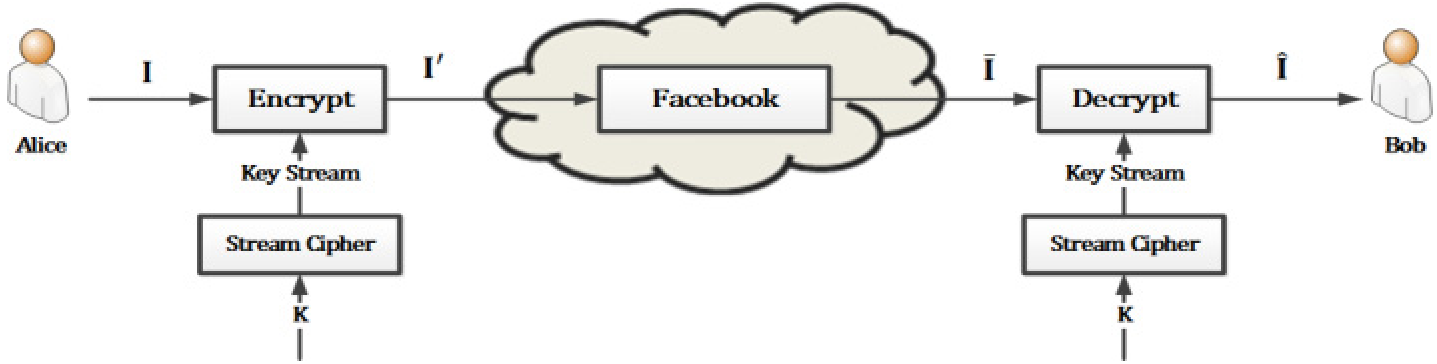 Fig 1: Overview of the Robust Privacy-Preserving System Model.
Experimental Results: Performance That Matters
The proposed method was tested against SOTA competitors like P3 and Cryptagram.
Quality vs. Storage
- Fidelity: At ~34 dB, the quality is nearly indistinguishable from a standard JPEG upload.
- Efficiency: Most previous "robust" schemes like Cryptagram consume 9x to 30x more storage space. This method’s 2% overhead is a game-changer for scalability.
 Fig 2: Visual results showing the total destruction of semantic meaning in encrypted images versus high-fidelity reconstruction.
| Method | Storage Overhead | Avg PSNR (dB) |
|---|---|---|
| Proposed | 2.0% | 33.90 |
| P3 (T=10) | 16.0% | 34.12 |
| Cryptagram | 921% - 3177% | Error-prone / ∞ |
| Secure JPEG | 5.6% | 26.62 |
Critical Insight & Conclusion
The brilliance of this paper lies in its pragmatism. Instead of fighting Facebook's compression, it uses the platform's own "Transcoder" logic to its advantage.
Limitations: The scheme requires a small location map (metadata) to be shared. Furthermore, while it provides "Perceptual Security" (stopping humans and standard AI from seeing the content), it is not "Cryptographically Secure" in the sense of Indistinguishability under Adaptive Chosen Plaintext Attacks (IND-CPA), which is a common trade-off in multimedia security.
Future Outlook: As OSNs move toward AI-based super-resolution and enhancement filters, "Processing-Aware" encryption must evolve to handle non-linear, deep-learning-based distortions.