
Robust Social Recommendation: Defending Against Shilling Attacks and Social Noise
Robust Social Recommendation Techniques: A Review
This paper provides a comprehensive review of robust social recommendation techniques, focusing on the mitigation of shilling attacks and the management of multiple relationship types. It proposes a future research framework integrating multi-dimensional relationship modeling and anti-interference algorithms to enhance recommendation accuracy and system trust.
TL;DR
Social recommendation leverages interpersonal relationships to solve the "cold start" problem, yet it remains fragile. This paper reviews how malicious "shilling attacks" (fake users/ratings) and "noise relationships" (undifferentiated social ties) compromise system integrity. It proposes a transition from simple social integration to a Robust Social Recommendation framework that models multidimensional ties and filters malevolent interference.
The Vulnerability of the "Social" Signal
Traditional Collaborative Filtering (CF) struggles when data is sparse. Social recommendation was hailed as the "silver bullet"—by using your friends' preferences to predict yours, systems could theoretically bypass the cold-start hurdle.
However, the authors point out a critical flaw: Trust is not uniform, and social links are cheap.
- Shilling Attacks: Attackers can easily create "water armies" (fake accounts) and establish random links to legitimate users to promote or demote specific items.
- Relationship Simplification: Most algorithms treat a "spouse" relationship the same as a "random Twitter follow." This lack of nuance introduces significant noise, leading to recommendation failure.
Methodology: Building a Robust Framework
The paper advocates for a shift toward Robustness. The core methodology involves moving from a 1D view of social links to a multidimensional, probability-based approach.
1. Modeling the Infrastructure of Attacks
To defend, one must understand the attack. The authors suggest using complex network modeling to simulate how fake users are injected into the social graph. By understanding these "injection strategies," we can design better detection classifiers (supervised and semi-supervised) using features like Rating Degree Mean Agreement (RDMA).
2. Multidimensional Relationship Estimation
Instead of a binary link (friend/not friend), the framework proposes using Tensor Decomposition and Probabilistic Graphical Models to estimate the probability and strength of various relationship types.
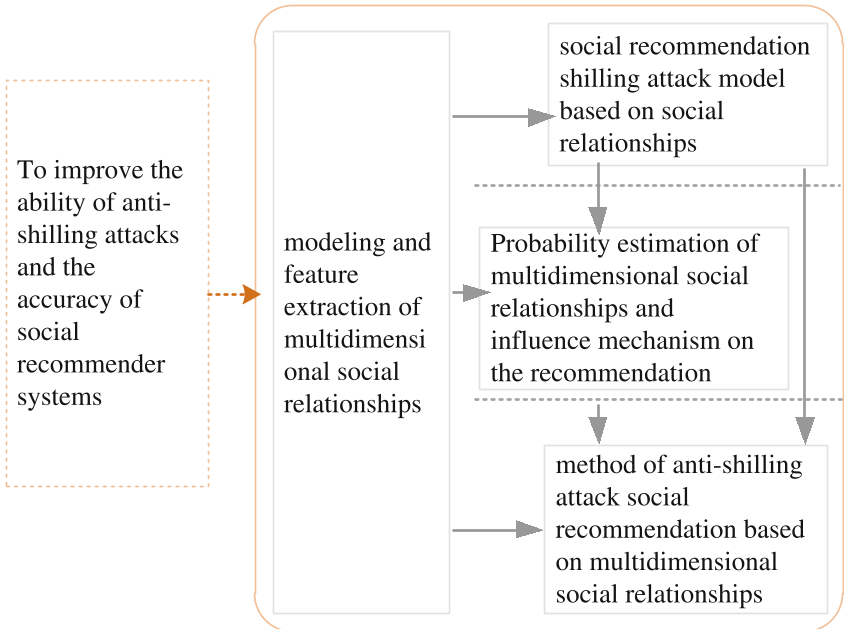 Figure 1: The proposed future research framework architecture.
Literature Insights & Experimental Context
The review categorizes the evolution of the field:
- Memory-based: Directly utilizing trust values or heat diffusion (e.g., thermal diffusion theories) to find nearest neighbors.
- Model-based: Using Matrix Factorization (MF) or Social Bayes Personalized Rank (SBPR) to treat social links as implicit constraints on preference vectors.
The critical takeaway from the summarized results is that Trust-based Clustering and Random Link Detection are no longer optional—they are essential components to ensure that the "social" in social recommendation actually provides value rather than vulnerability.
Critical Analysis & Future Outlook
While the paper provides a solid roadmap, it also acknowledges a major limitation: the arms race between attackers and defenders. As attackers move beyond "random link" strategies to more sophisticated, human-mimicking behaviors, static detection models will fail.
The Path Forward:
- Multi-View Learning: Utilizing registration info, content publication, and network structure simultaneously to identify "shills."
- Context-Aware Trust: Recognizing that trust is domain-specific (you might trust a friend for movie advice but not for financial products).
- Integration with Deep Learning: While this 2016 review focuses on Matrix Factorization and Tensors, the future clearly lies in Graph Convolutional Networks (GCNs) that can naturally propagate trust and filter noise in non-Euclidean spaces.
Conclusion
Social recommendation is a powerful tool for personalization, but its reliance on "trust" is its greatest weakness. By implementing the robust framework proposed—focusing on relationship strength, attack modeling, and multidimensional probability—we can build systems that are not just accurate, but also resilient to the ever-evolving landscape of digital manipulation.