
From Logos to Pathos: How Movies and Telephony Reshaped the Human Soul
The Role of Movies and Telephony in the History of Communication Media
The paper explores the historical transition of human communication from logic-driven ("Logos") to emotion-driven ("Pathos"). It identifies the invention of movies and telephony in the late 19th century as the critical catalysts for this shift, which has now culminated in the rapid rise of social networks and digital gaming.
TL;DR
Is modern communication making us more emotional and less logical? According to Ryohei Nakatsu and Chamari Edirisinghe, the answer is a resounding "yes." This paper argues that our current obsession with fragmented, emotional social media updates isn't a byproduct of the Internet alone. Instead, the seeds were sown in the late 19th century with the birth of movies and telephony, which broke the dominance of the "logical" printed word and returned humanity to a state of "emotional" connection.
The Great Divide: Logos vs. Pathos
To understand where we are going, the authors look back to Greek philosophy. Plato famously compared the human spirit to a chariot:
- The Driver (Logos): Represents the rational, logical aspect of the human spirit.
- The Horses (Pathos): Represents emotions—both noble passions and dark instincts.
For centuries, Western society viewed the "Driver" (Logic) as the hallmark of humanity. The invention of written characters and Gutenberg’s printing press reinforced this, as books required structured, linear, and rational arguments.
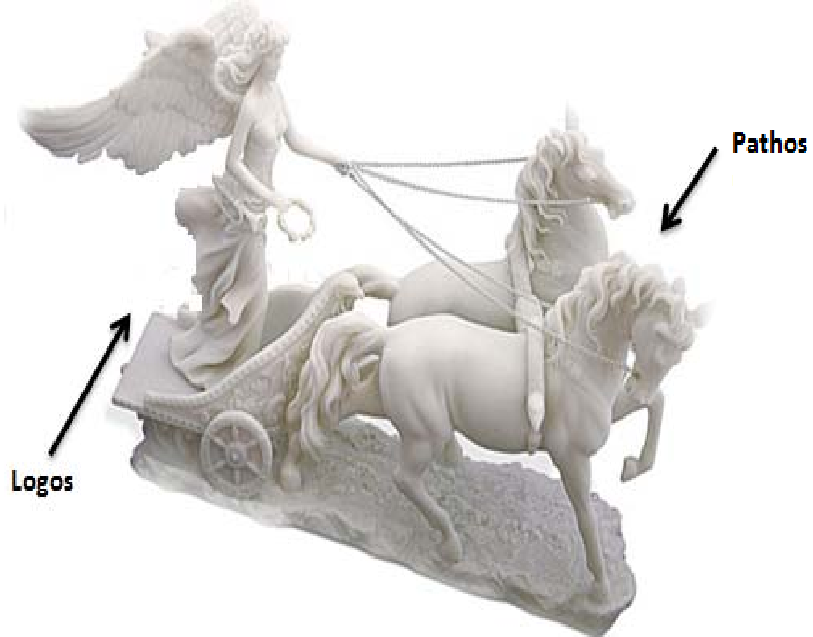 Figure 1: The Chariot Allegory—Logic as the driver of emotional horses.
The 19th Century Disruption: The True Origin of Social Media
The paper posits a provocative thesis: The true revolution wasn't the Internet; it was the 1870s-1890s.
- Telephony: Before the telephone, long-distance communication was "snail mail"—textual, composed, and logical. The telephone allowed people to transmit the texture of a voice, capturing emotion and real-time connection across distances.
- Movies: While books required literacy and logical processing, movies used visual symbolism and soundtracks to appeal directly to the "Pathos" of the brain. The cinema became a place of shared emotional experience that bypassed social class and intellectual barriers.
Digital Acceleration: Twitter as Modern "Waka"
The authors bridge the gap between ancient Japan and modern Silicon Valley. They compare the 140-character constraint (of early Twitter) to Japanese Waka poetry. Just as 7th-century Japanese aristocrats used brief, highly structured poems to exchange sentiments rather than logical arguments, modern users use social media to signal "presence" and "feeling."
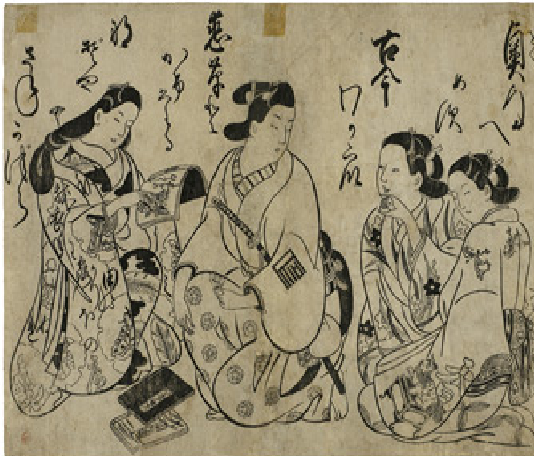 Figure 2: Historical Japanese Waka—a precursor to modern emotional micro-blogging.
Methodology: The Strata of History
The authors utilize a historical-comparative method, identifying three major eras of communication technology:
- Era of Characters: Focused on logical dispersal of information via print.
- Era of Voice/Visuals: Introduced by movies/telephony, refocusing on emotional impact.
- Era of Networks: (Current) Where digital games and social media accelerate the "Pathos" shift.
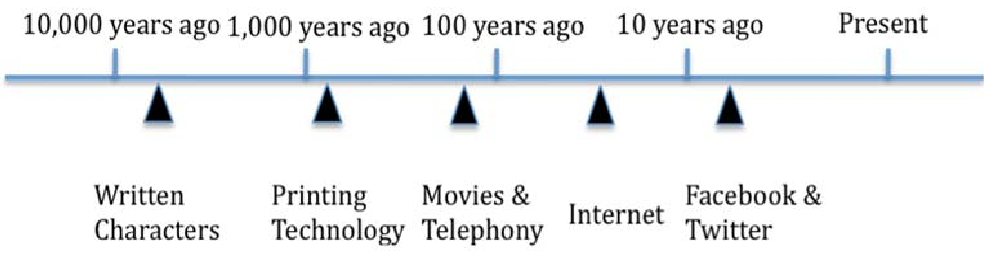 Figure 3: Timeline of the evolution from logical print to emotional digital media.
Critical Insight: The "Why" Behind the Shift
Why did we move toward Pathos? The authors argue it was driven by accessibility and democratization. Logical communication (literacy and high-level prose) was historically a tool of the elite. Movies and telephones were affordable and accessible to the less literate, focusing on universal human emotions rather than exclusive intellectual logic. Modern social media has simply perfected this "individual-oriented emotional engagement."
Conclusion & Future Outlook
The paper concludes that we have entered an era where being "connected" is more important than being "informative." While this fosters cross-cultural empathy, it also risks an "inordinate incapability" of expressing rational thoughts.
The big question for the future: Will the pendulum swing back? As we prepare for the next generation of AI and immersive media, we must ask if we are ready for a world moving further away from the "Driver" of logic and deeper into the "Passion" of the horses.